
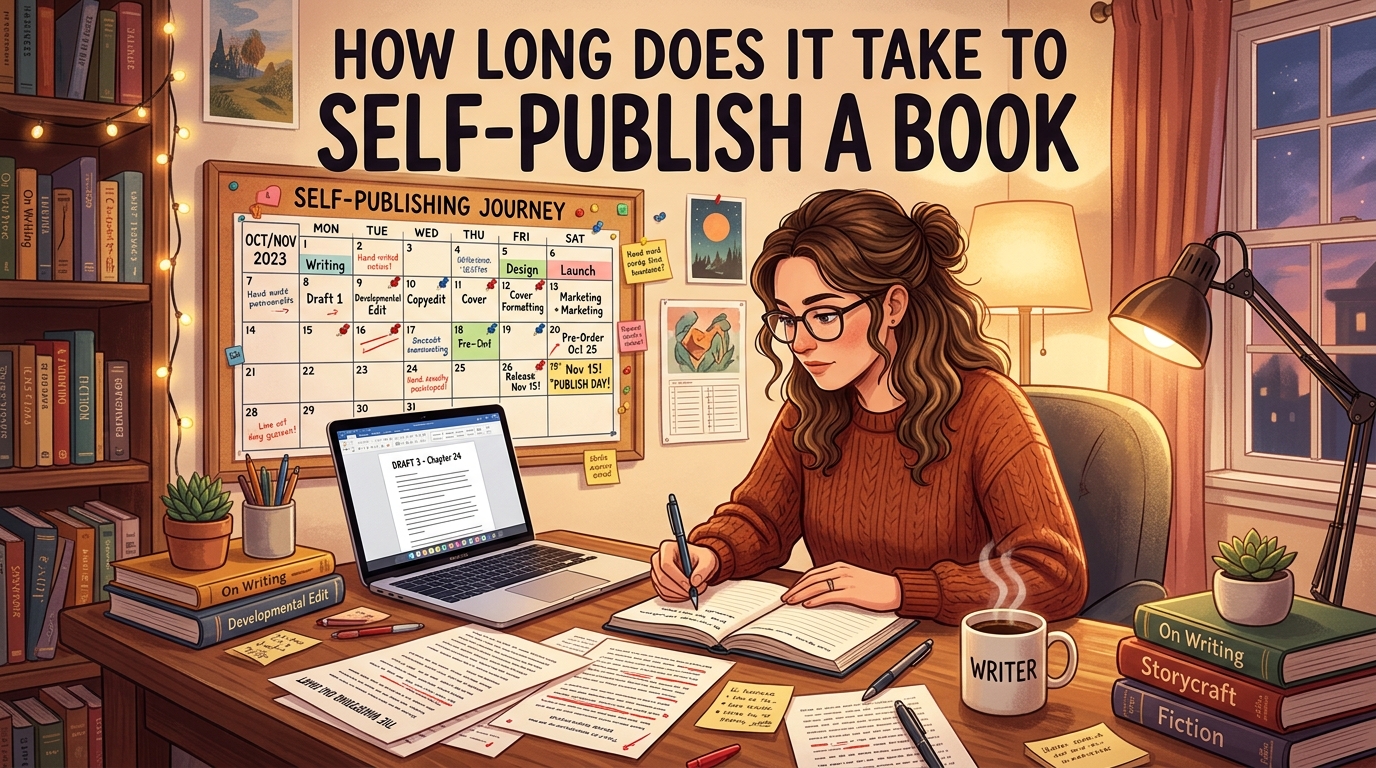
Self-publishing has changed the publishing industry in ways that would have seemed impossible just a decade ago. Writers no longer need to wait endlessly for approval from literary agents or traditional publishing houses before sharing their work with readers. Today, authors can write, edit, design, publish, and market their books independently through digital platforms that provide worldwide access. Yet one question continues to surface among aspiring authors: how long does it actually take to self publish a book?
The answer is not as simple as attaching a fixed number of weeks or months to the process. Self-publishing timelines vary dramatically depending on the writer’s goals, experience, genre, budget, and publishing strategy. Some authors complete the journey within a few weeks, while others spend years polishing their manuscript before release. The process involves much more than simply writing a book and uploading it online. Editing, revisions, cover design, formatting, ISBN registration, platform setup, launch preparation, and marketing all influence the timeline.
Many new authors assume self-publishing is instant because online platforms advertise fast publication. Technically, a manuscript can be uploaded in a single day, but creating a professional-quality book that readers trust requires far more preparation. Readers today expect self-published books to meet the same standards as traditionally published titles. That means authors must carefully plan every stage of production if they want long-term success.
Understanding the realistic timeline of self-publishing helps writers avoid frustration and rushed decisions. It also allows authors to create achievable goals instead of becoming overwhelmed midway through the process. Whether someone is writing fiction, nonfiction, memoirs, children’s books, or business guides, knowing how long each stage takes can make the entire publishing experience smoother and more rewarding.
Understanding the Full Self-Publishing Timeline
Self-publishing is not a single action. It is a chain of interconnected stages that together shape the final product. The total timeline depends on how efficiently these stages are completed and whether the author is working alone or with professionals.
For most writers, the process includes manuscript writing, editing, proofreading, cover design, formatting, publishing setup, printing decisions, and marketing preparation. Each phase can take weeks or months depending on the depth of work involved. Fiction books often require multiple revisions and developmental edits, while nonfiction books may require fact-checking and research updates. Authors balancing full-time jobs or personal commitments usually take longer than full-time writers.
The average self-published book typically takes anywhere from six months to two years from idea to publication. Shorter projects may be completed faster, while complex novels or heavily researched nonfiction books often require more time. Fast publishing is possible, but speed should never come at the cost of quality.
The Writing Stage and How Long It Usually Takes
Writing Speed Varies From Author to Author
The writing phase is often the longest part of the self-publishing journey. Some writers finish ma5nuscripts quickly because they already have detailed ideas, outlines, or prior experience. Others spend months developing characters, structure, pacing, or research material.
A first-time author usually needs more time than an experienced writer because the learning curve is steep. Understanding storytelling, dialogue, pacing, grammar, and structure takes practice. Many writers also struggle with consistency, especially when writing around work schedules or family responsibilities.
An average novel between 70,000 and 100,000 words may take anywhere from six months to a year to complete. Nonfiction books can sometimes move faster if the author already possesses expertise on the topic. However, nonfiction may also require interviews, data collection, or source verification, which can extend the timeline.
Daily Writing Habits Matter
The speed of completion often depends on writing habits. Writers who consistently produce even 500 to 1,000 words per day tend to finish significantly faster than those who write irregularly. Consistency usually matters more than intensity. A writer who produces smaller amounts daily often completes projects more efficiently than someone waiting for inspiration.
Writers who outline their books beforehand also tend to save time during drafting. Without a roadmap, many authors rewrite chapters repeatedly because the story direction keeps changing. Planning can reduce major revisions later in the process.
Editing Takes Longer Than Most Writers Expect
Developmental Editing Requires Patience
After finishing the manuscript, many authors assume publication is close. In reality, editing is often the most time-consuming stage after writing. Professional editing can take several rounds before the book is truly ready.
Developmental editing focuses on structure, pacing, clarity, character development, and storytelling flow. For nonfiction, it examines organization, argument strength, and readability. This process alone may take several weeks or even months because substantial rewrites are often necessary.
Some authors underestimate how emotionally demanding editing can be. Receiving feedback and rewriting sections takes patience, especially when major structural changes are suggested. Rushing through this phase usually results in weaker books.
Copyediting and Proofreading
Once developmental revisions are complete, copyediting addresses grammar, sentence structure, punctuation, and consistency. After that, proofreading catches smaller remaining errors before publication.
Professional editors often have scheduling delays because many work with multiple clients simultaneously. Authors may need to book editors weeks or months in advance. Depending on manuscript length, editing timelines usually range from two weeks to several months.
The editing process is one of the strongest indicators of a book’s eventual success. Readers quickly notice poor grammar or inconsistent writing, and negative reviews often stem from inadequate editing rather than weak ideas.
Book Cover Design and Why It Matters
A Cover Influences Reader Decisions
Book cover design may appear like a quick step, but creating an effective cover often requires careful planning. Readers judge books visually before reading descriptions or sample pages. An unprofessional cover can reduce sales immediately, regardless of content quality.
Professional designers usually need time to understand genre expectations, branding, typography, and visual tone. Fiction covers often require custom artwork or stock image licensing, while nonfiction covers focus more heavily on clarity and authority.
The design process may take anywhere from a few days to several weeks depending on revisions and complexity. Authors who work with experienced designers usually receive better results faster because professionals understand industry standards.
Genre Expectations Affect Design Time
Different genres require different visual strategies. Romance, fantasy, thriller, memoir, and business books all follow distinct cover trends. Designers spend time researching market expectations before finalizing concepts.
Some authors delay publication because they repeatedly change their vision during the design process. Clear communication and early planning help avoid unnecessary delays.
Formatting the Manuscript for Publishing
Print and Ebook Formatting
Formatting transforms a manuscript into a professionally readable book. This includes page layout, typography, spacing, chapter structure, headers, margins, and ebook compatibility.
Print formatting differs significantly from ebook formatting. Printed books require precise dimensions and page setup, while ebooks must adapt to different screen sizes and devices. Authors publishing both formats need additional preparation time.
Formatting may take a few days for straightforward books or several weeks for image-heavy, illustrated, or technically complex manuscripts. Mistakes during formatting can create poor reader experiences, including broken text, spacing problems, or unreadable pages.
Why Formatting Should Not Be Rushed
Readers may forgive minor typos, but poorly formatted books appear amateurish immediately. Self-published authors compete in a crowded market, and presentation strongly influences credibility.
Professional formatting helps books resemble traditionally published titles, which builds reader trust and improves reviews.
Publishing Platforms and Upload Timelines
Uploading Is the Fastest Stage
Ironically, the actual publishing stage is often the quickest part of self-publishing. Platforms like Amazon through Kindle Direct Publishing, IngramSpark, and Draft2Digital allow authors to upload manuscripts relatively quickly.
Once files are ready, publication may happen within 24 to 72 hours depending on the platform’s review process. However, this fast upload speed creates the illusion that self-publishing itself is quick, which is misleading. The preparation before uploading is what consumes most of the timeline.
Metadata and Setup Require Attention
Authors must still prepare categories, keywords, descriptions, pricing, author bios, ISBN details, and distribution settings. These elements influence discoverability and sales performance.
Many first-time authors spend additional time learning platform dashboards and distribution systems. Mistakes during setup can affect royalties, visibility, or formatting display.
The Role of Marketing Before Publication
Marketing Should Begin Early
One of the biggest mistakes self-published authors make is waiting until launch day to think about marketing. Successful self-publishing often involves pre-release promotion months before publication.
Authors frequently spend time building websites, social media profiles, email newsletters, advanced reader campaigns, and promotional materials. These activities increase visibility and help generate early momentum.
Marketing preparation can extend timelines, but it often improves long-term results significantly. A professionally marketed launch usually performs better than a rushed release with no audience preparation.
Building an Audience Takes Time
Writers with existing audiences tend to publish more confidently because they already have readers waiting for the book. New authors often need extra months to establish visibility online.
This stage may include networking with reviewers, organizing cover reveals, scheduling promotional interviews, or reaching out to bloggers and influencers. These efforts require coordination and patience.
A Realistic Timeline for Different Types of Authors
The time required to self publish a book often depends on the writer’s experience level and project scope. The following table provides a realistic overview of average timelines for different publishing situations.
| Type of Author or Project | Estimated Timeline |
| Short ebook by experienced writer | 1 to 3 months |
| First-time nonfiction author | 6 to 12 months |
| First-time fiction novelist | 1 to 2 years |
| Memoir with extensive revisions | 1 to 2 years |
| Children’s illustrated book | 6 months to 1 year |
| Fast-release romance or genre fiction | 3 to 6 months |
| Academic or research-heavy nonfiction | 1 to 3 years |
| Multi-author collaborative book | 6 months to 2 years |
These timelines are not fixed rules, but they represent common industry experiences among independent authors.
Why Some Authors Publish Faster Than Others
Experience Changes Everything
Experienced writers understand the publishing workflow better than beginners. They often know how to organize manuscripts efficiently, communicate with editors, and manage production schedules.
First-time authors frequently lose time learning technical skills, researching platforms, and correcting avoidable mistakes. Experience reduces uncertainty and speeds up decision-making.
Budget Also Affects Speed
Authors with larger budgets can outsource editing, formatting, cover design, and marketing simultaneously. Those working independently may need more time because they handle everything themselves.
Hiring professionals can shorten timelines significantly, but it also increases publishing costs. Some writers choose slower timelines intentionally to spread expenses over time.
Self-Publishing Versus Traditional Publishing Timelines
Traditional Publishing Usually Takes Longer
One reason many writers choose self-publishing is speed. Traditional publishing often requires literary agents, proposal submissions, publisher approval, contract negotiations, and long production schedules.
Even after acceptance, traditionally published books may not release for one to two years. Self-publishing eliminates many of these delays because authors control the process directly.
Creative Control Speeds Decisions
Independent authors can make immediate decisions regarding edits, covers, pricing, and release dates. This flexibility allows faster production when desired.
However, complete control also means full responsibility. Without deadlines imposed by publishers, some writers struggle with perfectionism and endless revisions.
Common Delays in the Self-Publishing Process
Perfectionism Can Slow Everything Down
Many writers continuously revise manuscripts because they fear releasing imperfect work. While quality matters, endless editing often delays publication unnecessarily.
At some point, authors must accept that every book can always be improved further. Learning when a manuscript is truly ready is part of becoming a professional writer.
Technical Challenges
Formatting problems, upload errors, printing issues, and file compatibility problems can unexpectedly delay launches. Authors unfamiliar with publishing software often require additional time for troubleshooting.
Waiting for Professionals
Editors, designers, and formatters frequently book projects weeks or months ahead. Delays happen when authors wait too long to schedule services.
Planning ahead is essential for maintaining realistic timelines.
Can You Self Publish a Book Quickly?
Fast Publishing Is Possible
Some authors successfully publish books within a few weeks or months, especially shorter ebooks or serialized fiction. Writers participating in rapid-release publishing strategies intentionally publish frequently to maintain reader engagement.
However, fast publishing usually works best for experienced authors who already understand the process and have reliable professional support.
Quality Should Always Come First
Publishing quickly does not guarantee success. Readers value quality storytelling, polished writing, and professional presentation more than speed alone.
A rushed release filled with editing mistakes or weak formatting can damage an author’s reputation and reduce future sales opportunities.
The Emotional Side of the Timeline
Self-Publishing Requires Mental Endurance
The timeline of self-publishing is not only technical but emotional. Writers often experience self-doubt, burnout, excitement, frustration, and fear throughout the process.
Long projects can become mentally exhausting, especially when revisions feel endless. Some authors lose motivation midway because they expected faster results.
Understanding that publishing takes time helps writers remain patient and focused.
Momentum Matters
Breaking the publishing process into manageable stages often reduces overwhelm. Writers who celebrate progress gradually tend to maintain stronger momentum than those obsessing over the final release date.
Publishing is not only about speed. It is about creating a book that reflects the author’s vision while meeting reader expectations.
The Rise of Self-Publishing in the Digital Era
Technology Has Accelerated Publishing
Modern publishing platforms have dramatically shortened the technical side of book production. Ebook distribution, print-on-demand technology, and global marketplaces allow authors to publish faster than ever before.
Platforms like Amazon Kindle Direct Publishing and Apple Books have simplified access to readers worldwide.
Competition Has Also Increased
While technology makes publishing easier, it also creates more competition. Millions of books are published independently each year, which means authors must invest additional time into quality and marketing to stand out.
Readers today expect professional standards regardless of whether a book is traditionally or independently published.
Final Thoughts
So, how long does it take to self publish a book? The realistic answer is that it depends on the writer, the project, and the level of quality the author wants to achieve. Some books are published within a few months, while others take years to complete. Writing, editing, design, formatting, marketing, and production all influence the overall timeline.
Self-publishing offers speed and creative freedom compared to traditional publishing, but that freedom comes with responsibility. Authors must balance efficiency with professionalism if they want their books to succeed in a competitive market. Rushing the process often leads to disappointing results, while careful preparation improves both reader satisfaction and long-term credibility.
The most successful self-published authors usually treat publishing as a professional process rather than a shortcut. They understand that every stage contributes to the reader’s experience. A well-written manuscript, polished editing, strong cover design, and thoughtful marketing all require time and patience.
Ultimately, the timeline should not discourage aspiring writers. Every published author started with a blank page and uncertainty. What matters most is maintaining consistency, learning throughout the process, and committing to creating the best book possible. Self-publishing is not simply about how fast a book can be released. It is about building something meaningful that readers will remember long after the final page.
