
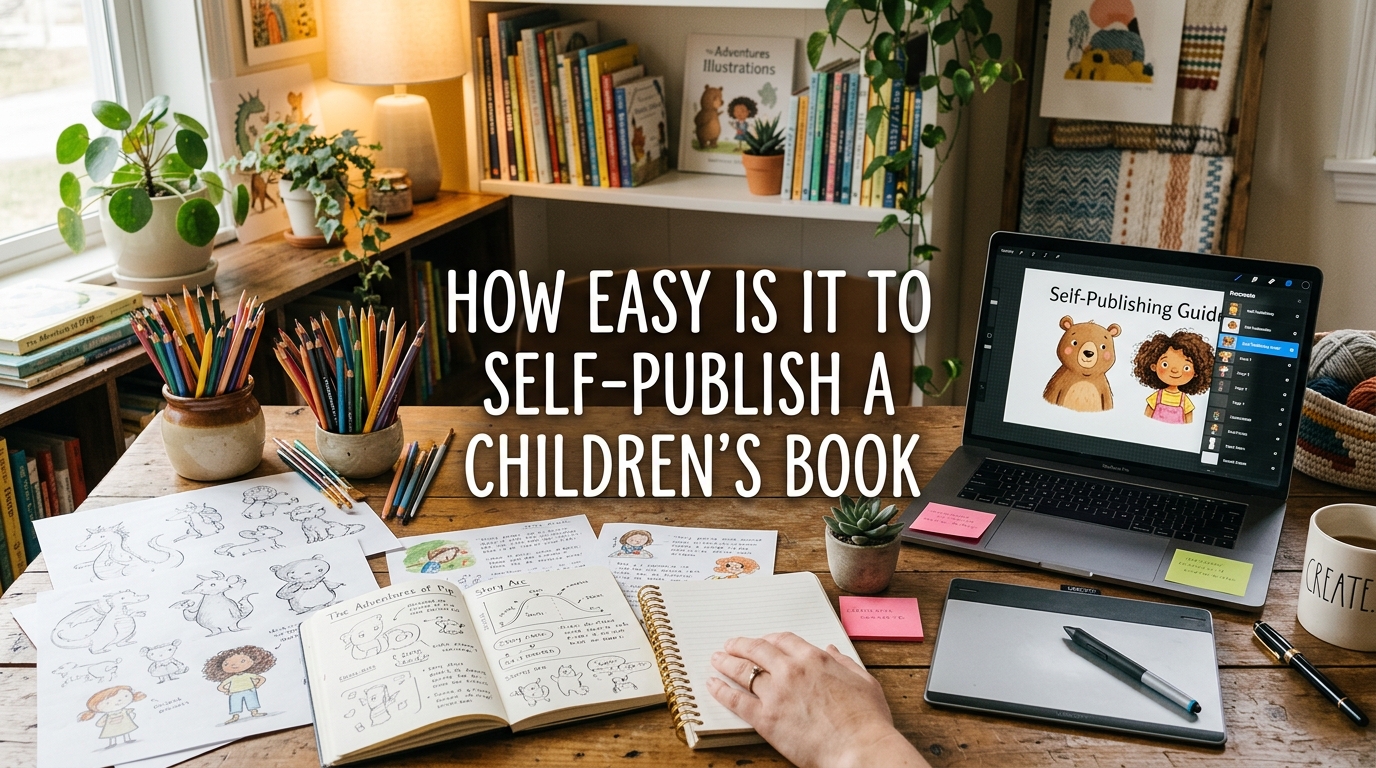
The dream of publishing a children’s book has become more achievable than ever before. Years ago, writers had to depend entirely on traditional publishing houses, literary agents, and long submission processes just to have a chance at seeing their stories in print. Today, the publishing industry has changed dramatically. Independent authors now have access to platforms, tools, designers, illustrators, and global marketplaces that allow them to publish books on their own terms. Because of this shift, many aspiring writers often ask the same question: how easy is it to self publish a children’s book?
The answer is surprisingly layered. On the surface, self-publishing appears simple. A writer can create a manuscript, hire an illustrator, upload files to an online platform, and publish within days. Technology has removed many of the barriers that once prevented independent authors from entering the market. However, publishing a successful children’s book requires much more than simply uploading a document online. It involves storytelling, visual design, editing, formatting, audience understanding, and marketing. A children’s book may look short and simple, but creating one that genuinely connects with children and parents requires creativity, precision, and emotional understanding.
The rise of self-publishing has opened opportunities for writers from all backgrounds. Parents are writing bedtime stories inspired by their own children. Teachers are creating educational books based on classroom experiences. Artists are transforming original characters into colorful picture books. Independent storytellers are now able to share stories that traditional publishers may once have rejected or overlooked. This creative freedom is one of the biggest reasons why self-publishing continues to grow in popularity.
At the same time, the children’s book market has become highly competitive. Thousands of books are published every year, which means quality matters more than ever. Readers may forgive small mistakes in some forms of independent publishing, but children’s books are often judged quickly based on visual appeal, readability, and emotional engagement. Parents want books that feel polished and meaningful. Young readers want stories that entertain, comfort, excite, or inspire them. Because of this, self-publishing can feel both exciting and overwhelming for first-time authors.
Still, the process has become far easier than it once was. Modern publishing platforms have simplified printing and distribution, while freelance websites make it easier to find editors, illustrators, and designers. Marketing tools on social media allow authors to connect directly with readers without massive advertising budgets. For writers willing to learn the process step by step, self-publishing a children’s book is no longer an impossible goal. It is a realistic path that combines creativity with entrepreneurship.
Why So Many Writers Are Choosing Self Publishing
The publishing world has undergone a major transformation over the last decade. Traditional publishing still holds prestige and continues to produce bestselling children’s books, but many writers are now choosing independent publishing because of the freedom it offers. Self-publishing gives authors complete control over their work, from the story itself to the cover design, illustrations, pricing, and release schedule.
One of the biggest frustrations with traditional publishing is the waiting process. Writers often spend years querying literary agents and publishers before receiving a response. Even after acceptance, the book may take another year or two before reaching bookstores. Self-publishing removes those delays entirely. Authors can move from finished manuscript to published book in a matter of weeks or months depending on their preparation.
Creative control is another major reason why writers prefer independent publishing. In traditional publishing, editors and publishers often influence titles, illustrations, themes, and marketing strategies. Some writers appreciate professional guidance, while others prefer maintaining ownership over every creative decision. Children’s books are highly visual and emotionally personal, so many authors want complete involvement in how their stories are presented.
Financial opportunity also plays a role. Traditional publishing typically offers smaller royalty percentages because publishers cover production costs. Self-publishing platforms allow authors to earn higher percentages per sale, especially through digital and print-on-demand systems. While self-published authors must invest in editing and illustrations themselves, they also keep greater control over profits and rights.
The internet has further strengthened the appeal of self-publishing. Social media platforms like Instagram, TikTok, Pinterest, and YouTube allow authors to promote books visually and connect directly with parents, teachers, and readers. Independent authors no longer need massive marketing teams to build audiences. A creative video, engaging storytelling clip, or illustration preview can attract attention organically online.
Understanding the Unique Nature of Children’s Books
Many people assume children’s books are easier to write because they contain fewer words. In reality, writing for children is often more difficult than writing for adults. Every sentence matters. Every illustration contributes to storytelling. Every page turn affects pacing and emotional impact.
Children’s books are divided into different age categories, and each category has unique expectations. Picture books are designed for younger children and are usually read aloud by parents or teachers. These books often rely heavily on rhythm, repetition, emotional warmth, and visual storytelling. Early reader books target children beginning to read independently, which means vocabulary and sentence structure must remain simple yet engaging. Middle-grade books involve more complex plots and character development while still maintaining accessibility for younger readers.
Unlike adult fiction, children’s books depend greatly on illustrations. The artwork is not simply decorative. It actively tells part of the story. Expressions, colors, movement, and visual details help children understand emotions and actions even before they fully understand the words. This makes illustration one of the most important investments in the publishing process.
Because of these differences, self-publishing a children’s book requires an understanding of both literary storytelling and visual communication. Writers must think carefully about pacing, readability, emotional tone, and audience age. A story that feels engaging to adults may not necessarily hold a child’s attention.
Writing a Story That Children Connect With
The heart of every successful children’s book is a meaningful story. Children respond strongly to emotion, imagination, and relatability. Whether the story is humorous, adventurous, educational, or emotional, it must feel authentic from a child’s perspective.
One common mistake first-time authors make is trying too hard to teach a lesson. While many children’s books include positive messages, readers usually connect more deeply when the story feels natural rather than preachy. Children enjoy discovering meaning through characters and experiences rather than direct moral instruction.
Strong children’s stories often revolve around simple but emotionally powerful themes. Fear of the dark, friendship struggles, feeling different, moving to a new place, or learning confidence are common topics because children understand them personally. Fantasy elements, talking animals, magical worlds, and imaginative adventures can make these emotional themes even more engaging.
Language also matters greatly. Children’s writing should feel clear and fluid without becoming overly simplistic. Rhythm is especially important in picture books because many are read aloud repeatedly. Sentences that sound awkward when spoken can weaken the reading experience.
One of the best ways to improve a children’s manuscript is reading it aloud. This helps writers identify pacing issues, repetitive wording, or unnatural dialogue. Since children often experience books through listening before reading independently, the sound of the story matters just as much as the words themselves.
The Importance of Illustrations
Illustrations are often the defining feature of a children’s book. A beautifully illustrated story can immediately attract young readers and parents, while poor artwork can reduce interest even if the writing is strong.
Some authors create their own illustrations, but many hire professional artists. Finding the right illustrator involves more than selecting attractive artwork. The illustration style must match the emotional tone and personality of the story. A humorous story may require exaggerated expressions and vibrant colors, while a bedtime story may benefit from softer visuals and calming tones.
Professional illustration can be expensive, which is one reason some writers hesitate to self-publish children’s books. However, illustration quality significantly affects how readers perceive the book. Parents and educators often judge books quickly based on visual appeal.
Modern freelance platforms have made collaboration easier than ever before. Authors can now work with illustrators from around the world, review portfolios online, and communicate digitally throughout the creative process. Many illustrators provide sketches, color drafts, and revisions before finalizing pages.
The best children’s books create harmony between words and images. Illustrations should not merely repeat the text. Instead, they should expand the story by adding emotional detail, humor, movement, or visual surprises that enrich the reading experience.
Editing and Professional Quality
One of the biggest myths about self-publishing is that editing is optional. In reality, professional editing is essential, especially in children’s publishing where every word carries weight.
A short children’s book with grammar mistakes, awkward pacing, or confusing dialogue can lose readers quickly. Parents, teachers, and librarians expect polished books that feel professionally made.
Editing usually involves several stages. Developmental editing focuses on story structure, emotional flow, and readability. Copyediting improves grammar, punctuation, and sentence clarity. Proofreading catches final errors before publication.
Because self-published authors do not have traditional publishing teams overseeing quality control, responsibility falls entirely on the creator. This may seem intimidating at first, but it also gives authors freedom to shape the final product exactly as they envision it.
Many writers also use beta readers before publishing. Feedback from parents, teachers, or children themselves can reveal how audiences genuinely respond to the story. Sometimes a scene that feels funny to adults may confuse younger readers, while a simple emotional moment may resonate deeply with children.
Designing and Formatting the Book
Formatting a children’s book involves far more than arranging text on pages. Layout design affects readability, storytelling rhythm, and visual engagement.
Picture books especially require careful planning because page turns create suspense, humor, and emotional timing. Designers must consider where text appears, how illustrations interact with the words, and how each spread flows visually.
Typography also matters greatly. Fonts should be readable while matching the tone of the story. Oversized or decorative fonts may look attractive but can reduce readability for younger audiences.
Print size is another important decision. Many children’s books use larger dimensions to showcase illustrations effectively. Hardcover editions are especially popular because they feel durable and visually appealing.
Digital formatting for ebooks can be more complicated because illustrated pages must display correctly across devices. Some children’s authors prefer focusing mainly on print editions because physical books often create stronger experiences for younger readers.
Choosing the Right Publishing Platform
Self-publishing platforms have simplified book distribution dramatically. Authors no longer need warehouses or large print orders to sell books internationally.
Amazon Kindle Direct Publishing remains one of the most widely used platforms because of its accessibility and global reach. Authors can publish both ebooks and print books through print-on-demand services, which means books are printed only when customers order them.
IngramSpark is another popular platform, particularly for authors interested in bookstore and library distribution. Many independent bookstores prefer ordering through Ingram because it integrates with retail systems already used throughout the industry.
Other platforms such as Barnes & Noble Press, Lulu, and Blurb also offer useful features depending on an author’s goals. Some focus on customization, while others prioritize retail distribution or premium print quality.
The good news for independent authors is that modern platforms make distribution easier than ever. Writers can now sell books internationally without handling shipping or inventory themselves.
Marketing a Self Published Children’s Book
Publishing a book is only the beginning. Marketing determines whether readers actually discover it. This is one area where many first-time authors feel overwhelmed because creative storytelling skills do not automatically translate into marketing confidence.
Fortunately, modern marketing tools have made promotion more accessible. Social media allows authors to showcase illustrations, storytelling clips, and behind-the-scenes content directly to audiences. Children’s books perform especially well on visual platforms because artwork naturally attracts attention.
Author websites also help establish credibility. A professional online presence allows readers, parents, and educators to learn more about the author and future projects.
School visits, library readings, and community events remain highly effective forms of promotion. Children connect strongly with authors who engage directly through storytelling sessions and interactive readings.
Reviews are especially important in children’s publishing because parents rely heavily on recommendations before purchasing books. Positive reviews can greatly increase visibility and trust.
Marketing may feel difficult initially, but many self-published authors gradually build audiences through consistency and authentic engagement rather than massive advertising budgets.
Financial Expectations and Investment
One reason people ask whether self-publishing is easy is because they want to understand the financial reality involved. Technically, anyone can publish a book at very low cost using free tools and print-on-demand services. However, producing a professional-quality children’s book often requires investment.
Illustrations are usually the largest expense because full-color artwork takes significant time and skill. Editing, formatting, cover design, and marketing may also involve costs.
The advantage of self-publishing is flexibility. Authors can decide how much they want to invest and which tasks they prefer handling themselves. Some writers learn design skills independently, while others outsource everything professionally.
Print-on-demand technology reduces financial risk because authors no longer need to print thousands of copies upfront. Books are created only after purchase, allowing creators to avoid large inventory expenses.
While self-publishing does not guarantee profit, it gives authors full ownership of their work and long-term earning potential.
Is Self Publishing a Children’s Book Actually Easy?
Self-publishing a children’s book is easier today than it has ever been before. Technology has removed many traditional barriers, giving writers direct access to publishing tools and global audiences. Anyone with determination, creativity, and internet access can technically publish a book independently.
However, easy access does not automatically create quality. Successful children’s books require strong storytelling, engaging illustrations, professional editing, thoughtful formatting, and consistent marketing. The process involves creativity as well as business strategy.
The encouraging reality is that authors no longer need permission from traditional gatekeepers to share meaningful stories. Writers can create books that reflect personal experiences, unique perspectives, and imaginative ideas that may not fit mainstream publishing trends.
For those willing to learn the process and invest effort into quality, self-publishing can become not only manageable but deeply rewarding.
Comparison Between Traditional Publishing and Self Publishing
| Aspect | Traditional Publishing | Self Publishing |
| Creative Control | Limited | Full |
| Publishing Speed | Slow | Fast |
| Royalties | Lower | Higher |
| Upfront Costs | Publisher Covers | Author Covers |
| Marketing Responsibility | Shared | Mostly Author |
| Illustration Decisions | Publisher Controlled | Author Controlled |
| Distribution Access | Wide Retail Networks | Platform Based |
| Ownership Rights | Partial | Full |
| Flexibility | Limited | High |
| Accessibility | Competitive | Open to Everyone |
Conclusion
Self-publishing a children’s book is no longer an impossible dream reserved for industry insiders. The modern publishing landscape has made it possible for independent writers, parents, educators, and storytellers to create professional books and reach readers worldwide. What once required agents, publishers, and expensive printing systems can now be achieved through online platforms and creative collaboration.
At the same time, creating a truly memorable children’s book still requires dedication. Strong storytelling, meaningful illustrations, professional editing, and thoughtful marketing remain essential. Children may be young readers, but they respond deeply to authenticity, imagination, and emotional honesty.
The real beauty of self-publishing lies in the freedom it provides. Authors can tell stories that matter personally to them without waiting for approval from traditional publishing gatekeepers. They can create books that comfort children, inspire creativity, encourage learning, and build emotional connection.
So, how easy is it to self publish a children’s book? The process itself has become remarkably accessible. The challenge is no longer getting published. The challenge is creating something children will genuinely love and remember.
FAQs
Q1: What does self-publishing a children’s book mean?
A: Self-publishing a children’s book means the author independently handles writing, designing, illustrating, and distributing the book using online publishing platforms without going through a traditional publishing house.
Q2: Is it easy to self-publish a children’s book today?
A: Yes, it is much easier today because platforms like Amazon KDP and IngramSpark allow authors to publish books quickly, but creating a high-quality children’s book still requires effort in writing, illustration, and editing.
Q3: Do I need an illustrator to publish a children’s book?
A: If your book is a picture book or heavily visual, then yes, you will need an illustrator, either by hiring a professional or collaborating with an artist to create engaging visuals for children.
Q4: How much money does it take to self-publish a children’s book?
A: The cost varies widely depending on illustration, editing, and design, but most self-published children’s books require some investment, especially for professional artwork and formatting.
Q5: Can a self-published children’s book become successful?
A: Yes, many self-published children’s books succeed when they have a strong story, appealing illustrations, proper editing, and effective marketing to reach parents, teachers, and young readers.
