
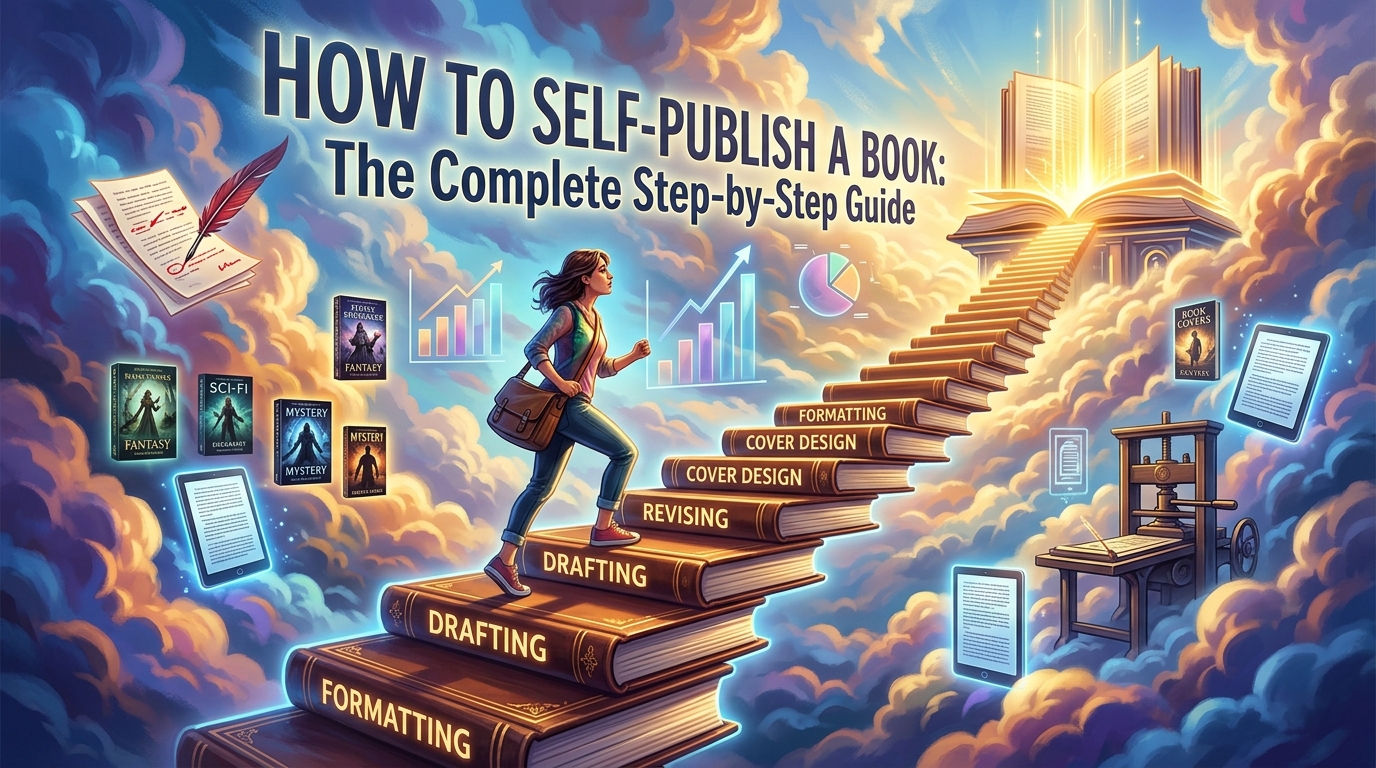
There was a time when publishing a book meant waiting months for literary agents, mailing manuscripts to publishing houses, and hoping someone in the industry would say yes. Today, the publishing world looks completely different. Writers now have direct access to readers through self-publishing platforms, digital marketplaces, and print-on-demand services that make it possible to publish a book from almost anywhere in the world.
What once felt impossible for independent writers has become one of the fastest-growing parts of the publishing industry. Thousands of authors now build careers without traditional publishers, and many are earning substantial income through platforms like Amazon Kindle Direct Publishing and IngramSpark. The rise of self-publishing has given writers creative control, ownership of royalties, and the ability to publish on their own schedule.
Still, self-publishing is more than simply uploading a manuscript online. A professionally published book requires planning, editing, formatting, design, marketing, and distribution. Readers may not know whether a book is traditionally published or independently released, but they can instantly recognize quality. That is why successful self-published authors approach the process like professional publishers rather than hobbyists.
This guide walks through the complete self-publishing process step by step, from finishing your manuscript to launching your book into the market.
Understanding What Self-Publishing Really Means
Self-publishing gives authors complete ownership over their work. Instead of handing rights and creative decisions to a publishing company, writers become responsible for every stage of the publishing journey. That includes editing, cover design, pricing, formatting, marketing, and distribution.
For many writers, this level of control is the biggest advantage. You decide the cover style, release date, pricing structure, and promotional strategy. You also keep a significantly larger share of royalties compared to traditional publishing contracts. According to multiple recent publishing guides, Amazon KDP remains the most popular entry point because it allows authors to publish ebooks and paperbacks with no upfront platform cost.
At the same time, self-publishing requires authors to think like entrepreneurs. A book is not only a creative project anymore. It becomes a product competing in a crowded marketplace filled with thousands of new releases every week.
That reality can sound intimidating at first, but it also creates opportunity. Independent authors who understand reader expectations and publishing standards often build loyal audiences much faster than writers waiting years for traditional deals.
Step 1: Finish the Manuscript Properly
Many writers rush toward publication too early. Finishing a first draft is an achievement, but it is rarely the final version of a publishable book.
The strongest self-published books usually go through several rounds of revision before readers ever see them. This stage involves structural editing, pacing improvements, dialogue refinement, grammar corrections, and clarity adjustments. Fiction writers often revise character arcs and emotional consistency, while nonfiction authors focus heavily on organization and readability.
One of the biggest mistakes first-time authors make is assuming readers will overlook imperfections because the book is independently published. Modern readers compare every book against professional publishing standards. If a story feels rushed or poorly edited, reviews can quickly damage momentum.
Successful indie authors usually spend weeks or months refining the manuscript before moving forward. Many also rely on beta readers who can provide honest feedback from a reader’s perspective. Recent discussions within self-publishing communities consistently highlight editing as one of the most important stages in the process.
Step 2: Invest in Professional Editing
Editing is often the difference between an amateur-looking release and a professional book.
There are different levels of editing, and understanding each one matters. Developmental editing focuses on structure, pacing, and content organization. Line editing improves sentence flow and readability. Copyediting corrects grammar and consistency issues, while proofreading catches final typos before publication.
Not every writer can afford every editing stage, especially early in their publishing journey. However, skipping editing entirely usually becomes more expensive later because poor reviews are difficult to recover from.
Readers are surprisingly forgiving about small imperfections, but they quickly lose patience with books filled with spelling errors, awkward formatting, or confusing structure.
Some writers reduce costs by combining professional editing with critique partners and beta readers. Others start with proofreading if budgets are tight. Whatever approach you choose, editing should never feel optional.
Step 3: Research Your Genre and Audience
One reason some self-published books succeed while others disappear is market awareness.
Before publishing, it is important to study books within your genre. This does not mean copying other authors. It means understanding reader expectations.
Thrillers usually feature fast pacing and suspenseful covers. Romance novels often emphasize emotional tension and recognizable visual styles. Fantasy books tend to focus heavily on immersive worldbuilding and dramatic cover art.
Readers subconsciously expect certain patterns within genres. Ignoring those expectations can make marketing much harder.
Market research also helps authors understand pricing, book length, keywords, and category placement. Many modern self-publishing guides recommend researching bestselling books within your niche before finalizing your launch strategy.
The goal is not to chase trends blindly. Instead, it is to position your book where the right readers can actually find it.
Step 4: Design a Professional Book Cover
Readers absolutely judge books by their covers.
A strong cover immediately communicates genre, tone, and professionalism. In digital marketplaces like Amazon, readers often see a tiny thumbnail image before deciding whether to click. If the cover looks cluttered, outdated, or difficult to read, many potential readers will move on instantly.
Professional cover design has become one of the most important investments in self-publishing. Recent KDP publishing resources emphasize that the cover functions as the book’s primary marketing tool.
Many successful indie authors hire freelance designers who specialize in specific genres. Others use premade covers, which can be more affordable while still maintaining professional quality.
Typography matters just as much as artwork. The title should remain readable even at thumbnail size, and the overall design should feel aligned with current genre trends.
A fantasy novel with a corporate-style nonfiction cover will confuse readers before they even read the description.
Step 5: Format the Interior Correctly
Formatting is the hidden layer of professionalism readers notice subconsciously.
A poorly formatted book creates a frustrating reading experience. Margins may look uneven, chapters may break awkwardly, fonts may appear inconsistent, or ebook layouts may display incorrectly across devices.
Print books and ebooks require different formatting approaches. Ebook formatting focuses on responsive layouts that adjust across Kindle devices, tablets, and smartphones. Print formatting involves trim sizes, bleed settings, page numbering, spacing, and print-ready PDFs.
Recent KDP formatting guides emphasize choosing formatting settings early because changing trim sizes later can disrupt the entire interior layout.
Some authors handle formatting themselves using tools like Atticus, Vellum, Reedsy Studio, or Microsoft Word. Others hire professional formatters to avoid technical issues.
Formatting may seem minor compared to storytelling, but readers immediately notice when a book feels difficult to navigate.
Step 6: Choose Between Ebook, Paperback, and Hardcover
Modern self-publishing allows authors to publish in multiple formats simultaneously.
Ebooks remain the most accessible entry point because production costs are low and distribution is fast. Many indie authors begin with Kindle editions before expanding into print.
Paperbacks continue to perform strongly because many readers still prefer physical books. Print-on-demand technology now allows books to be printed only when customers place orders, removing the need for large inventory investments.
Hardcovers are becoming increasingly popular among independent authors, especially in genres with passionate fan communities like fantasy and collector-focused nonfiction.
The best format depends on your audience, goals, and budget. Some writers launch digitally first to test reader interest before investing heavily in print production.
Step 7: Get an ISBN and Understand Publishing Rights
An ISBN, or International Standard Book Number, acts as the identification number for your book.
Platforms like Amazon KDP offer free ISBNs for print editions, which is often enough for first-time authors. However, purchasing your own ISBN gives greater control over publishing identity and wider distribution options.
Authors planning long-term publishing careers often prefer owning their ISBNs because it positions them as the publisher rather than listing Amazon as the publishing entity.
Copyright protection is also important. In many countries, copyright exists automatically once the work is created, but official registration may provide stronger legal protection if disputes arise.
Understanding ownership rights matters because self-publishing gives authors long-term control over intellectual property.
Step 8: Choose the Right Publishing Platform
Amazon Kindle Direct Publishing dominates the self-publishing industry because of its enormous reach and ease of use.
KDP allows authors to publish ebooks, paperbacks, and hardcovers directly into Amazon’s global marketplace. Uploading files, setting prices, and launching books can happen within hours. Most books become available within a few days after approval.
However, Amazon is not the only option.
IngramSpark offers broader print distribution into bookstores and libraries. Draft2Digital distributes ebooks across multiple retailers. Kobo, Apple Books, and Barnes & Noble Press also remain important platforms for authors wanting wider reach.
Some authors publish exclusively through Amazon’s KDP Select program in exchange for promotional advantages and Kindle Unlimited exposure. Others choose wide distribution strategies to avoid dependence on a single platform.
The decision often depends on genre, audience behavior, and long-term business goals.
Step 9: Upload the Book and Optimize Metadata
Publishing a book online involves more than uploading files.
Metadata includes your title, subtitle, keywords, categories, and description. These elements determine how discoverable your book becomes within search systems.
A strong book description should feel emotionally engaging while clearly explaining what readers can expect. Categories should align closely with genre expectations, and keywords should reflect phrases readers actually search for.
Many self-publishing experts compare metadata optimization to search engine optimization for books.
This stage also includes choosing pricing, royalty options, territories, and distribution settings.
Even excellent books can struggle if their metadata fails to connect them with the right audience.
Typical Self-Publishing Costs
| Publishing Stage | Estimated Cost Range |
| Professional Editing | $300 – $3,000+ |
| Cover Design | $50 – $500+ |
| Formatting | $50 – $300 |
| ISBN Purchase | $0 – $125 |
| Marketing & Ads | Flexible |
| Author Website | $50 – $300 yearly |
| Proof Copies | $20 – $100 |
The total cost of self-publishing varies dramatically depending on how much work authors handle themselves. Some writers launch books with minimal budgets, while others invest heavily in professional production and advertising.
Step 10: Launch the Book Strategically
Many authors assume publishing day is the finish line. In reality, it is the beginning of the marketing phase.
A successful launch often starts weeks before release day. Authors build anticipation through email newsletters, social media updates, ARC readers, and early reviews.
Reviews play a huge role in reader trust. A book with strong early reviews tends to gain visibility more quickly than one launching silently.
Some indie authors use Amazon ads, BookBub promotions, TikTok marketing, YouTube channels, podcasts, or author newsletters to reach readers.
Recent self-publishing discussions frequently emphasize that long-term consistency matters more than one explosive launch.
Publishing one book rarely creates overnight success. However, authors who continue writing and improving often build momentum over time.
Common Self-Publishing Mistakes to Avoid
One of the most damaging mistakes authors make is publishing too quickly. Rushed editing, weak covers, and poor formatting can permanently hurt reader trust.
Another common issue is neglecting marketing entirely. Many writers spend years creating a book but only days thinking about how readers will discover it.
Pricing mistakes also affect visibility. Extremely high prices discourage readers, while extremely low prices can unintentionally signal poor quality.
Some authors also ignore genre expectations, making their books harder to market effectively.
The strongest self-publishing careers usually come from authors who balance creativity with professional presentation.
Building a Long-Term Author Career
Self-publishing works best when viewed as a long-term strategy rather than a one-time experiment.
Most successful indie authors improve gradually with every release. They learn reader behavior, sharpen marketing skills, build mailing lists, and strengthen branding over time.
The first book may not become a bestseller immediately, but it becomes part of a larger foundation.
Independent publishing also allows writers to move faster than traditional publishing timelines. Authors can release multiple books per year, experiment with genres, update covers, revise descriptions, and adapt marketing strategies quickly.
That flexibility is one of self-publishing’s greatest advantages.
Final Thoughts
Self-publishing has transformed the modern publishing world. Writers no longer need permission from major publishing houses to share their stories with readers across the globe.
At the same time, successful self-publishing requires professionalism, patience, and strategy. Writing the manuscript is only one part of the journey. Editing, design, formatting, distribution, and marketing all shape how readers experience the final product.
The good news is that modern tools and publishing platforms have made the process more accessible than ever before. Whether you are publishing fiction, nonfiction, poetry, memoirs, or children’s books, the path is now open to independent creators willing to learn the process and commit to quality.
A self-published book today can look every bit as polished and compelling as something released by a major publishing company. The difference often comes down to preparation, consistency, and the willingness to treat publishing like both an art and a profession.
