
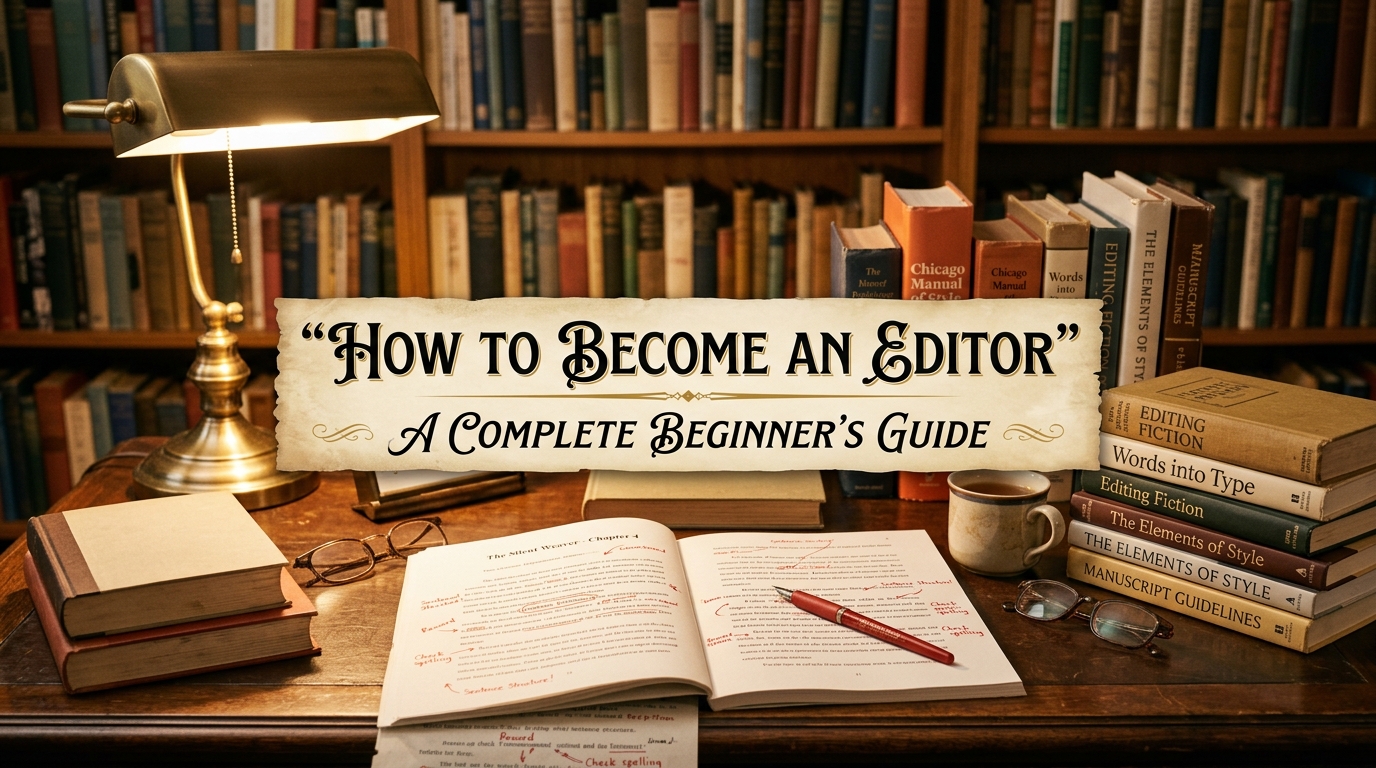
Becoming an editor is one of those career paths that looks deceptively simple from the outside but reveals deep layers of craft, discipline, and intuition the moment you step into it. At its core, editing is not just about correcting grammar or fixing spelling errors. It is about shaping meaning, refining voice, strengthening clarity, and ensuring that every sentence serves a purpose. Whether you dream of working with books, magazines, digital content, or marketing copy, the journey to becoming an editor is both creative and analytical, requiring patience and a strong command of language.
In today’s digital world, editing has expanded beyond traditional publishing. Editors are now essential in blogs, social media content, SEO writing, UX writing, academic publishing, and even AI-assisted content refinement. This means there has never been a better time to enter the field, but it also means competition is higher and expectations are sharper. Understanding how to build your foundation correctly is what separates a hobbyist from a professional editor.
Understanding What an Editor Actually Does
An editor is often misunderstood as someone who simply corrects mistakes, but professional editing is much more nuanced. Editors act as both readers and architects of written communication. They evaluate structure, tone, clarity, consistency, and flow while preserving the writer’s intent.
At the developmental level, editors work with large ideas. They may restructure entire sections of a manuscript, suggest cuts, or recommend expansions to improve storytelling or argument strength. At the line level, they refine sentences for rhythm and readability. At the final stage, they polish grammar, punctuation, and formatting so the content is publication-ready.
Modern editors also collaborate closely with writers, marketers, and publishers. In digital environments, they often ensure content is optimized for readability and search engines, while still sounding human and engaging. Tools like Microsoft Word and Google Docs are commonly used in collaboration, while platforms like Grammarly assist with real-time language refinement.
Essential Skills You Need to Become an Editor
To become a successful editor, you need more than just a strong command of grammar. You need a trained editorial eye that can detect inconsistency, awkward phrasing, and structural imbalance even when the writing is technically correct.
One of the most important skills is language sensitivity. This is your ability to hear how sentences feel when read aloud and recognize when something sounds off. Another essential skill is critical thinking, which allows you to evaluate whether a piece of writing achieves its purpose. You also need attention to detail, not in a mechanical sense, but in a way that allows you to notice subtle shifts in tone or logic.
Equally important is communication. Editors often need to explain feedback in a constructive way that encourages improvement rather than discouragement. This requires emotional intelligence and professionalism.
Digital literacy has also become essential. Editors today rely on tools like Hemingway Editor and ProWritingAid to streamline their workflow and analyze readability, pacing, and style consistency.
Education and Learning Pathways for Aspiring Editors
There is no single mandatory path to becoming an editor, but most professionals develop their skills through a combination of formal education and self-directed learning. Degrees in English literature, journalism, communications, or linguistics can provide a strong foundation, especially in understanding language structure and critical analysis.
However, many successful editors are self-taught. They build expertise by reading extensively, practicing editing on sample texts, and working on freelance projects. Online learning platforms, writing communities, and mentorship programs also play a major role in skill development.
The most important factor is not the credential itself, but your ability to demonstrate editorial judgment. Employers and clients often care more about your portfolio than your academic background.
In the early stages, practicing on open documents in Google Docs or Microsoft Word helps build familiarity with editing tools and revision workflows.
Types of Editing You Should Know
Editing is not a single skill but a layered process, and understanding its different types is essential for anyone entering the field.
- Developmental editing focuses on the big picture. It is about structure, narrative flow, argument strength, and overall coherence. This is often used in book publishing and long-form content creation.
- Line editing sits in the middle layer. It improves sentence structure, tone, and clarity without changing the core meaning of the text. This is where writing begins to feel polished and professional.
- Copy editing focuses on correctness. Grammar, punctuation, spelling, and consistency are refined at this stage.
- Proofreading is the final stage before publication. It ensures there are no remaining errors or formatting issues.
Each type requires a different mindset, and many editors specialize in one or two areas rather than all four.
Tools That Modern Editors Rely On
Modern editing is deeply connected to digital tools. While human judgment remains central, software has become a powerful assistant in improving efficiency and accuracy.
Grammarly helps identify grammar issues, tone inconsistencies, and clarity problems in real time. ProWritingAid offers deeper stylistic insights, including readability scores and repetition tracking. For structural refinement and readability enhancement, Hemingway Editor is widely used.
Collaboration tools such as Google Docs allow editors to work directly with writers in real time, while Microsoft Word remains a publishing industry standard due to its advanced tracking and formatting features.
These tools do not replace editorial judgment but enhance it by highlighting issues that might otherwise be missed.
Building Your Editing Portfolio from Scratch
A strong editing portfolio is one of the most important assets you can develop as a beginner. It demonstrates your ability to improve writing, not just understand theory.
Many new editors start by practicing on blog posts, essays, or short stories. You can take publicly available writing and create revised versions that show your editing decisions. Over time, you can begin offering volunteer editing services for small websites, student projects, or independent writers.
Freelance platforms such as Upwork and Fiverr are also valuable for gaining early experience. Even small projects help you build credibility and learn how to handle real client expectations.
Your portfolio should clearly demonstrate before-and-after examples of your edits, along with brief explanations of what you improved and why. This helps potential clients understand your thinking process, which is often more important than the final result itself.
Career Opportunities in Editing Today
Editing is no longer limited to traditional publishing houses. Today, editors work across multiple industries including digital media, marketing agencies, educational platforms, corporate communications, and self-publishing services.
In publishing, editors work with authors to shape manuscripts into publishable books. In digital marketing, they refine blog content, landing pages, and email campaigns. In academia, editors help refine research papers and ensure adherence to formatting standards.
Remote work has also expanded opportunities significantly. Platforms like LinkedIn allow editors to connect with global clients and employers, making it easier to build an international career without relocating.
The demand for editors continues to grow as more businesses prioritize high-quality written communication in competitive digital spaces.
Salary Expectations and Freelance Potential
Editor salaries vary widely depending on experience, specialization, and location. Entry-level editors may begin with modest earnings, but experienced professionals often earn significantly more, especially in specialized fields like technical editing or book publishing.
Freelance editors often have more flexibility in income, as they can take multiple projects simultaneously. However, consistency depends on reputation, client relationships, and niche expertise.
Editors who develop strong specialization in areas like academic editing, SEO content editing, or manuscript development tend to command higher rates over time.
Common Mistakes Beginners Should Avoid
Many new editors make the mistake of focusing too heavily on grammar correction while ignoring structure and meaning. Editing is not just about fixing errors but improving communication as a whole.
Another common mistake is over-editing. Changing a writer’s voice too aggressively can damage authenticity and reduce impact. A good editor preserves the writer’s intent while refining clarity.
Relying entirely on software is another pitfall. While tools are helpful, they cannot replace human interpretation, context awareness, or creative judgment.
Finally, many beginners underestimate the importance of communication. Editing is collaborative, and feedback must be clear, respectful, and constructive.
Types of Editing Overview Table
| Type of Editing | Main Focus Area | Typical Purpose | Common Tools Used |
| Developmental Editing | Structure and content flow | Improve overall narrative or argument | Microsoft Word, Google Docs |
| Line Editing | Sentence clarity and tone | Enhance readability and style | Grammarly, ProWritingAid |
| Copy Editing | Grammar and consistency | Correct language errors and formatting | Grammarly, Hemingway Editor |
| Proofreading | Final error check | Prepare content for publication | Microsoft Word, Hemingway Editor |
Final Thoughts: Your Path to Becoming an Editor
Becoming an editor is not an overnight transformation but a gradual sharpening of perception. It requires reading deeply, practicing consistently, and learning how to balance precision with empathy. Every piece of writing you edit becomes a training ground for your instincts.
As digital content continues to grow, the role of editors is becoming even more important. From books to blogs to business communication, editors are the unseen force that ensures clarity, coherence, and impact. If you are willing to develop patience, discipline, and curiosity about language, editing can become not just a career but a long-term craft that evolves with you over time.
