
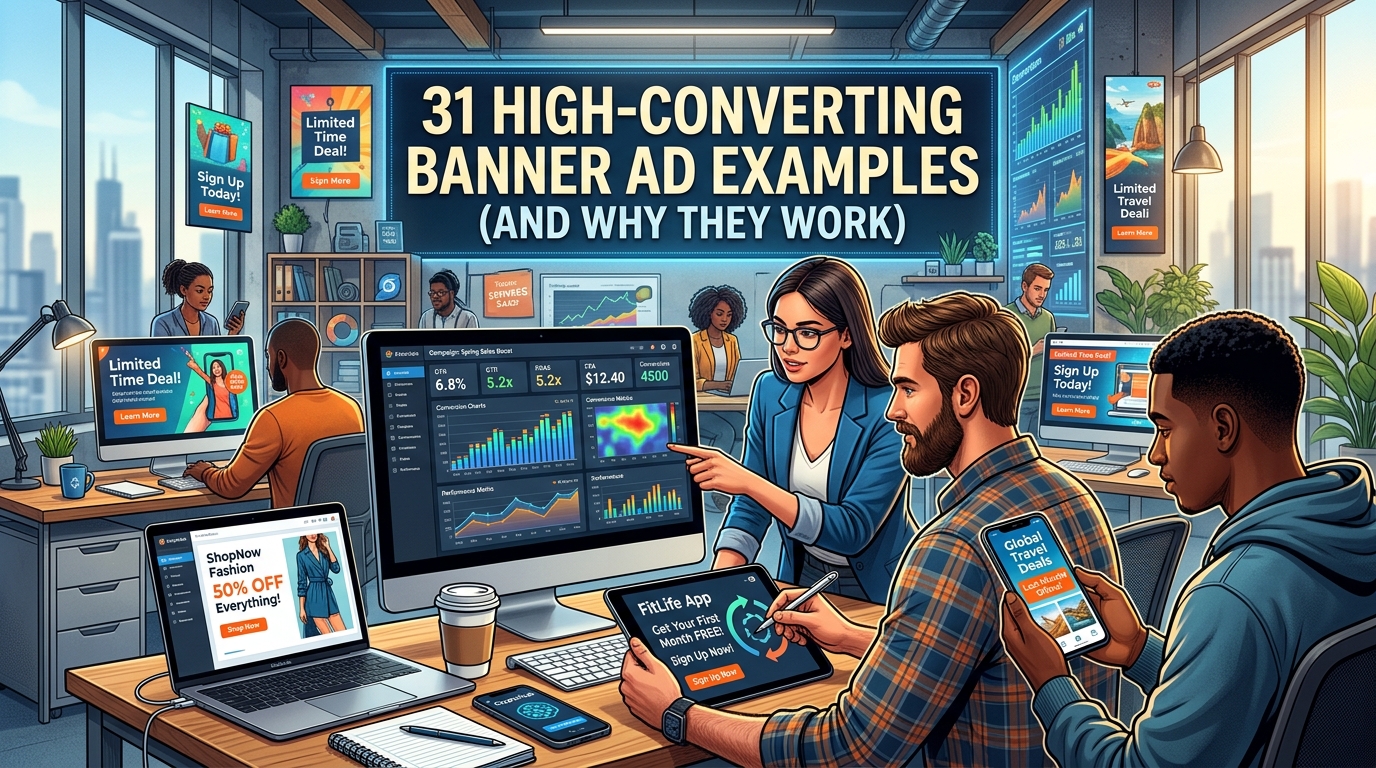
Banner advertising has survived every digital marketing trend imaginable. From the early days of flashing GIFs on cluttered web pages to today’s sleek responsive campaigns powered by AI-driven targeting, banner ads continue to influence online buying decisions across industries. While many marketers assume banner ads have lost their effectiveness, the reality is far more interesting. High-performing banner campaigns still generate millions in revenue because they combine psychology, design, messaging, timing, and audience intent into a single visual experience.
The biggest difference between banner ads that succeed and banner ads that disappear into the background is strategy. A successful banner ad does not merely display a logo and a discount. It guides attention, creates curiosity, triggers emotion, and encourages action within seconds. In a world where users scroll endlessly through content, the ability to stop attention has become one of the most valuable skills in digital advertising.
Modern businesses now rely on banner ads for everything from product launches and brand awareness to retargeting campaigns and app downloads. Whether displayed through the Google Display Network, social media placements, mobile apps, eCommerce websites, or streaming platforms, banner ads continue to evolve with changing user behavior.
This guide explores 31 high-converting banner ad examples and explains exactly why they work. Instead of focusing only on aesthetics, this article examines the deeper principles behind conversion-focused design and messaging.
Why Banner Ads Still Matter in Digital Marketing
Despite the rise of influencer marketing, short-form video, and AI-generated content, banner advertising remains one of the most scalable forms of digital promotion. Businesses continue investing in display advertising because it offers broad reach, measurable performance, and strong retargeting potential.
Banner ads influence users at different stages of the customer journey. Some create awareness among first-time audiences, while others remind potential buyers about products they already viewed. In many industries, banner ads work best when combined with email campaigns, search engine optimization, and social media marketing.
Another reason banner ads remain valuable is their versatility. They can promote software products, fashion brands, financial services, mobile apps, online courses, streaming platforms, and local businesses equally effectively. Their adaptability makes them useful for both startups and global enterprises.
The best-performing banner ads are built around clarity. They focus on one message, one audience, and one action. Instead of overwhelming users with excessive text or visuals, they simplify decision-making.
The Psychology Behind High-Converting Banner Ads
Human attention online is extremely limited. Research consistently shows that users decide within seconds whether to engage with an ad or ignore it. This means successful banner advertising depends heavily on visual hierarchy and emotional triggers.
Color psychology plays a major role in conversion rates. Bright colors often attract immediate attention, while softer tones create feelings of trust and comfort. Red can create urgency, blue can communicate reliability, and green is commonly associated with growth or positivity.
Typography also affects performance. Clear, bold headlines tend to outperform complicated or decorative fonts because readability directly impacts comprehension speed.
Another important psychological principle is curiosity. Banner ads that hint at a benefit without revealing everything immediately often encourage more clicks. Scarcity and urgency also influence decision-making. Limited-time offers, countdown messaging, and exclusive promotions motivate users to act quickly.
Trust is equally important. Ads that include recognizable branding, customer ratings, testimonials, or secure payment messaging generally perform better because they reduce uncertainty.
What Makes a Banner Ad Convert Successfully?
High-converting banner ads usually share several common characteristics. They communicate value instantly, maintain visual simplicity, and guide the viewer toward a clear action.
The strongest ads typically include a powerful headline, engaging visual elements, persuasive call-to-action text, and strong contrast between background and interactive elements. They also align with the landing page experience. When users click an ad and find a completely unrelated page, conversions often collapse.
Mobile responsiveness has become another critical factor. Since a large percentage of display traffic now comes from smartphones, banner ads must remain visually effective across all screen sizes.
Personalization also increases conversion rates. Ads tailored to user interests, browsing history, or geographic location tend to generate higher engagement because they feel more relevant.
Key Elements of High-Converting Banner Ads
| Banner Ad Element | Why It Matters | Impact on Conversion |
| Strong Headline | Captures immediate attention | Increases click-through rates |
| Clear CTA | Guides user action | Improves conversions |
| Visual Simplicity | Prevents distraction | Enhances message retention |
| Contrasting Colors | Improves visibility | Boosts engagement |
| Emotional Trigger | Creates connection | Encourages action |
| Mobile Optimization | Supports all devices | Expands reach |
| Brand Consistency | Builds trust | Improves credibility |
| Personalized Messaging | Feels more relevant | Raises interaction rates |
| Urgency or Scarcity | Encourages fast decisions | Improves sales potential |
| High-Quality Imagery | Creates professionalism | Enhances user perception |
31 High-Converting Banner Ad Examples and Why They Work
1. Minimalist Product Launch Banners
Minimalist product launch banners consistently outperform cluttered advertisements because they focus entirely on one core message, one product, or one benefit. Instead of overwhelming users with excessive graphics, multiple CTAs, and crowded text blocks, these banners rely on simplicity to create clarity. Premium technology brands, luxury companies, and SaaS businesses frequently use minimalist advertising because it immediately communicates sophistication and professionalism.
The effectiveness of minimalist banners comes from reduced cognitive overload. Online users are constantly bombarded with information, which means ads that feel visually calm are easier to process. Clean white space, sharp typography, and a single high-quality image allow viewers to understand the message within seconds. This instant clarity improves click-through rates because users do not need to work hard to understand what is being promoted.
Another reason these ads convert effectively is emotional perception. Minimalist design is often associated with premium quality, innovation, and confidence. Consumers subconsciously believe that brands willing to keep their ads simple must trust the strength of their products. This is why companies launching smartphones, software tools, or luxury services frequently rely on clean banner aesthetics.
2. Limited-Time Discount Ads
Limited-time discount banners remain one of the strongest conversion tools in digital marketing because they combine urgency with financial motivation. These ads usually feature bold discount percentages, bright attention-grabbing colors, and short action-driven messaging such as “Today Only” or “Sale Ends Tonight.”
The psychology behind these banners is rooted in fear of missing out. Consumers naturally react faster when they believe an opportunity may disappear soon. Scarcity creates emotional tension, encouraging users to act immediately rather than delaying the decision. This is particularly effective in eCommerce campaigns during Black Friday, Cyber Monday, and holiday sales.
These ads also work because they simplify value perception. Instead of forcing users to calculate benefits, the banner clearly presents savings upfront. A large “50% OFF” headline instantly communicates the reward, making the decision process faster and easier for customers.
3. Retargeting Cart Abandonment Ads
Retargeting cart abandonment banners are among the highest-converting forms of online advertising because they target audiences who already showed purchase intent. These ads remind users about products they viewed or added to their carts but never purchased.
The reason these banners work so effectively is familiarity. Since the user already interacted with the product, the advertisement feels more like a reminder than a cold sales pitch. This familiarity lowers resistance and keeps the product fresh in the customer’s mind.
Successful retargeting banners often increase conversions further by including incentives like free shipping, limited discounts, or urgency-driven messaging such as “Your Cart Is Waiting.” These additions help remove final objections and encourage users to complete the purchase process.
4. Interactive Animated Banner Ads
Interactive animated banners attract significantly more attention than static advertisements because motion naturally captures the human eye. These ads use subtle transitions, hover effects, or moving graphics to guide viewers through the message step by step.
The success of animated ads comes from their ability to increase engagement without requiring extra effort from the audience. Small movements help direct focus toward important areas such as the product image or call-to-action button. This creates a more dynamic viewing experience and keeps users engaged longer.
However, moderation is essential. Overly aggressive animations can become distracting and frustrating. High-converting animated banners use smooth, controlled movement that enhances the user experience instead of overwhelming it.
5. Social Proof Banner Campaigns
Social proof banners perform exceptionally well because they instantly reduce consumer skepticism. These advertisements commonly feature customer reviews, testimonials, star ratings, or user statistics to build trust.
Consumers naturally rely on the opinions of others before making decisions. When a banner mentions “Trusted by 2 Million Customers” or displays strong review ratings, users feel more confident about the product or service being promoted.
These ads are particularly effective for SaaS products, subscription platforms, and online stores where credibility strongly influences purchasing behavior. Even simple trust indicators can dramatically improve conversion rates by reassuring hesitant buyers.
6. Personalized Dynamic Ads
Dynamic banner ads automatically adjust content based on user behavior, search history, or previous browsing activity. An online fashion store, for example, may display products a customer previously viewed but did not purchase.
These ads convert effectively because personalization increases relevance. People naturally pay more attention to advertisements that match their interests or needs. Instead of displaying generic products, dynamic banners create a customized experience for each viewer.
Personalization also improves the emotional connection between the brand and the customer. Users feel understood when the advertisement reflects their preferences, increasing the likelihood of engagement and conversion.
7. Video-Inspired Motion Banners
Modern audiences consume enormous amounts of short-form video content every day, which is why video-inspired motion banners perform so well. These ads mimic cinematic storytelling through transitions, layered visuals, and immersive movement.
Their success comes from changing user behavior. Platforms like TikTok, Instagram Reels, and YouTube Shorts have trained audiences to respond emotionally to motion-based storytelling. Video-inspired banners take advantage of this behavioral shift by making display advertising feel more engaging and entertaining.
These ads are especially effective for younger demographics because they resemble the content users already enjoy consuming on social media platforms.
8. Seasonal Holiday Banners
Seasonal holiday banners consistently generate higher engagement because they align with emotional shopping periods throughout the year. Campaigns related to Black Friday, Christmas, Ramadan, Valentine’s Day, or summer sales often perform exceptionally well because consumers are already prepared to spend money during these periods.
These ads work because they create emotional and cultural relevance. Seasonal visuals, festive colors, and holiday messaging help audiences connect emotionally with the advertisement. Consumers feel more excitement and urgency during holiday shopping periods, which increases responsiveness.
The strongest seasonal banners combine limited-time offers with visually recognizable holiday themes, making them feel timely and relevant.
9. Bold Typography Banner Designs
Bold typography banners rely heavily on large text instead of complex visuals. These advertisements use oversized headlines, strong fonts, and minimal supporting graphics to communicate their message instantly.
The reason they work is speed of communication. Large typography grabs attention quickly and ensures users understand the core message immediately, even while scrolling rapidly.
This style is particularly effective for brands with powerful slogans or recognizable messaging. Strong typography also improves readability on mobile devices, making these ads more versatile across screen sizes.
10. Emotional Storytelling Banners
Emotional storytelling banners focus on feelings rather than direct product promotion. Instead of aggressively selling a product, these ads create emotional curiosity through visuals and relatable experiences.
Travel companies often use this strategy by showing freedom, adventure, and relaxation instead of simply advertising prices. Lifestyle brands also rely heavily on emotional storytelling because consumers often purchase products that align with their aspirations and identity.
These banners convert effectively because emotions influence buying decisions more strongly than logic. Users remember emotional experiences longer, which increases brand recall and engagement.
11. Free Trial SaaS Banners
Free trial banners are extremely common in software marketing because they remove risk from the customer journey. These ads usually promote limited-time access, free demos, or no-credit-card-required signups.
The effectiveness of these banners comes from lowering commitment barriers. Consumers are far more likely to test a product when they know they can explore it without financial risk.
High-converting SaaS banners also focus heavily on outcomes rather than technical features. Instead of explaining software complexity, they emphasize productivity, efficiency, or business growth benefits.
12. Mobile App Download Banners
Mobile app banners are designed to drive quick installations by demonstrating convenience and immediate value. These ads often display app screenshots, ratings, user reviews, and simple benefit-focused messaging.
These banners work because they visually demonstrate how the app fits into daily life. Users can instantly imagine themselves using the product, which increases the likelihood of installation.
Successful app banners also prioritize mobile-first design. Large CTA buttons, clean layouts, and minimal text improve readability and usability across smaller screens.
13. Luxury Brand Display Ads
Luxury banner ads avoid aggressive discount-driven messaging and instead focus on exclusivity, aspiration, and elegance. These advertisements often use premium photography, muted colors, and refined typography to create a sophisticated visual experience.
Luxury advertising works because it appeals to identity and status rather than price. Consumers purchasing high-end products are often motivated by emotional satisfaction and exclusivity.
Minimal messaging also contributes to perceived value. Simplicity creates an impression of rarity and confidence, reinforcing the premium nature of the product.
14. Flash Sale Countdown Ads
Countdown banners create urgency by visually displaying limited remaining time for an offer or promotion. These ads encourage immediate action by making the passage of time highly visible.
Their effectiveness comes from psychological pressure. When users see a timer counting down, they become more aware that delaying action could result in losing the opportunity.
These ads perform particularly well during shopping events where urgency is already high, such as flash sales and seasonal promotions.
15. Data-Driven Financial Ads
Financial advertising banners often rely on numbers, percentages, and trust indicators to persuade audiences. These ads commonly promote savings accounts, investment opportunities, budgeting apps, or financial services.
Their success depends on clarity and authority. Since financial decisions involve risk, consumers are more likely to engage with ads that appear professional, transparent, and secure.
Clean layouts, realistic projections, and trust-building visuals help these banners communicate credibility effectively.
16. Educational Webinar Banners
Educational webinar banners are highly effective because they promote learning, expertise, and professional growth rather than direct selling. These banners usually feature the webinar topic, speaker credentials, date, and a strong registration CTA designed to attract users seeking valuable knowledge.
The reason these ads convert well is trust and value perception. Audiences are more willing to click when they believe they will gain useful information, practical strategies, or industry insights. This is especially true in B2B industries where webinars are often viewed as opportunities for career advancement or business improvement.
Successful webinar banners also create authority by highlighting expert speakers, company reputation, or real-world outcomes attendees can expect after participating.
17. Influencer Collaboration Banners
Influencer collaboration banners integrate recognizable creators, personalities, or industry figures into advertising campaigns. These ads commonly feature influencers using or endorsing products naturally within branded visuals.
Their effectiveness comes from audience trust. Followers often view influencers as relatable and authentic, making recommendations feel more genuine than traditional advertising. When users recognize a familiar creator in a banner ad, they are more likely to stop scrolling and pay attention.
These campaigns work especially well in fashion, beauty, fitness, gaming, and lifestyle industries where personal influence strongly shapes purchasing behavior.
18. Before-and-After Transformation Ads
Before-and-after banners are extremely persuasive because they visually demonstrate product effectiveness instantly. These ads are frequently used in beauty, fitness, home renovation, and skincare campaigns.
The strength of these banners lies in visual proof. Instead of simply claiming that a product works, the ad provides evidence through transformation imagery. This creates stronger credibility and emotional impact compared to text-only claims.
Consumers respond positively because they can immediately imagine achieving similar results themselves. The transformation becomes aspirational, increasing engagement and conversion potential.
19. Eco-Friendly Brand Messaging Ads
Eco-conscious banner ads have become increasingly popular as consumers grow more environmentally aware. These banners often promote sustainable packaging, ethical sourcing, carbon neutrality, or environmentally responsible production practices.
These ads work because modern consumers increasingly support brands aligned with their personal values. Sustainability messaging creates emotional connection and improves brand perception among environmentally conscious audiences.
Successful eco-friendly banners usually combine natural colors, clean visuals, and authenticity-driven messaging to avoid appearing performative or insincere.
20. Humor-Based Banner Campaigns
Humor-based banner ads stand out because they entertain users instead of aggressively selling products. Clever headlines, playful visuals, or unexpected concepts help these campaigns attract attention in crowded advertising environments.
Humor improves memorability significantly. People are more likely to remember and share advertisements that make them laugh or smile. This emotional response also creates positive associations with the brand itself.
However, successful humor banners must remain relevant to the audience. Forced or confusing humor can weaken the message, while relatable humor increases engagement naturally.
21. Geotargeted Local Business Ads
Geotargeted banner ads focus on reaching users in specific geographic locations. Restaurants, gyms, clinics, salons, and local retailers commonly use these banners to attract nearby audiences.
These ads convert effectively because they create immediate relevance. Users are naturally more interested in businesses that are accessible within their local area. Messaging such as “Near You” or “Visit Our Karachi Store Today” increases personal connection.
Location-based targeting also improves advertising efficiency because businesses can focus their budgets on audiences most likely to visit physically.
22. Personalized Email Capture Ads
Email capture banners are designed to generate leads by offering value in exchange for contact information. These ads often promote downloadable resources, discounts, free trials, or exclusive access opportunities.
Their effectiveness depends heavily on perceived value. Users are more willing to provide their email addresses when the reward feels worthwhile and immediately useful.
Strong lead-generation banners usually emphasize exclusivity and convenience. Phrases like “Get Instant Access” or “Download Your Free Guide” encourage faster engagement.
23. Gamified Banner Advertising
Gamified banners transform advertising into an interactive experience through quizzes, scratch cards, spin-to-win wheels, or mini-games. Instead of passively viewing an ad, users actively participate in the experience.
These ads work because interactivity increases engagement dramatically. Gamification creates curiosity, excitement, and anticipation, which encourages users to spend more time interacting with the advertisement.
Gamified banners are particularly effective for eCommerce promotions and lead generation campaigns because they combine entertainment with rewards such as discounts or prizes.
24. Dark Mode Optimized Banner Ads
Dark mode optimized banners are specifically designed for modern browsing environments where users prefer darker screen settings. These ads often use deep backgrounds, glowing highlights, and high-contrast typography.
The reason they perform well is visual comfort. Dark-themed designs reduce eye strain and often appear more modern, premium, and immersive compared to traditional bright layouts.
Technology brands, gaming companies, and streaming platforms frequently use dark mode banner styles because they align naturally with user preferences and digital aesthetics.
25. Comparison-Based Product Ads
Comparison banner ads directly highlight differences between competing products or services. These campaigns often emphasize advantages such as lower pricing, better features, faster performance, or greater convenience.
These banners work because they simplify decision-making. Consumers evaluating multiple options appreciate advertisements that clearly explain why one solution is superior.
However, successful comparison ads must remain factual and credible. Exaggerated or misleading comparisons can damage trust, while transparent comparisons strengthen brand authority.
26. Emotionally Reassuring Healthcare Ads
Healthcare-related banner ads perform best when they focus on reassurance, trust, and accessibility. These campaigns typically use calming visuals, soft colors, and compassionate messaging to reduce anxiety.
The effectiveness of these ads comes from emotional sensitivity. Healthcare decisions often involve fear or uncertainty, so banners that create comfort and confidence generate stronger engagement.
Medical clinics, therapy platforms, insurance providers, and wellness brands commonly use reassuring banner styles to build trust with audiences seeking support or care.
27. Subscription Service Banners
Subscription-based businesses frequently use banners to promote convenience, entertainment, or long-term value. Streaming services, meal kits, software subscriptions, and membership platforms all rely heavily on display advertising.
These ads work because they emphasize continuous benefits rather than one-time purchases. Messaging often focuses on personalization, unlimited access, or exclusive experiences.
Successful subscription banners also reduce friction by highlighting free trials, affordable monthly pricing, or cancellation flexibility.
28. AI-Powered Recommendation Ads
Artificial intelligence has transformed display advertising through predictive personalization and recommendation systems. AI-powered banners automatically show products users are statistically more likely to purchase.
These ads convert effectively because they increase relevance dramatically. Instead of generic advertising, AI systems analyze behavior patterns to deliver highly targeted recommendations.
This creates a smoother customer experience because users see products that genuinely match their interests, increasing engagement and purchase intent.
29. Minimal Text Visual Ads
Minimal-text banners rely heavily on visuals instead of lengthy written content. These ads often feature one striking image, a short CTA, and very limited wording.
The reason they work is speed of processing. Human brains interpret images significantly faster than text, allowing users to understand the message instantly while scrolling.
These banners are especially effective for fashion, food, travel, and luxury products where emotional visual appeal matters more than detailed explanations.
30. Lifestyle-Focused Fashion Banners
Lifestyle-focused fashion banners succeed because they sell aspiration rather than clothing alone. Instead of only showing products, these ads portray a desirable lifestyle associated with the brand.
Consumers respond emotionally because they imagine themselves living the lifestyle presented in the advertisement. Whether the imagery represents confidence, luxury, freedom, or social success, the emotional association increases brand attraction.
Fashion brands use this strategy extensively because clothing purchases are often connected to self-image and identity rather than pure functionality.
31. Problem-Solution Banner Ads
Problem-solution banners begin by identifying a customer pain point before presenting the product as the ideal answer. These ads are highly persuasive because they create immediate relevance and emotional connection.
For example, productivity software may highlight workplace stress before introducing automation tools as the solution. Skincare brands may focus on acne concerns before showcasing treatment products.
These ads work because they mirror the customer’s internal thought process. When users recognize their own frustrations within the advertisement, they become more emotionally invested in finding the solution being offered.
The Role of Design Consistency in Banner Advertising
One of the most overlooked aspects of banner ad performance is consistency between advertisements and landing pages. Users expect a seamless experience after clicking an ad. When colors, messaging, or offers change dramatically, trust decreases.
High-performing brands maintain visual consistency across every stage of the customer journey. Fonts, brand colors, photography styles, and messaging tone remain aligned from ad impression to checkout.
Consistency also strengthens brand recognition over time. Repeated exposure to familiar visual identity improves memory retention and long-term engagement.
Why Mobile Optimization Is No Longer Optional
Mobile traffic now dominates much of the internet, making responsive banner design essential.
Ads that look attractive on desktop screens can fail entirely on smartphones if text becomes unreadable or visuals lose clarity. High-converting mobile banners prioritize vertical-friendly layouts, large CTA buttons, and compressed messaging.
Touch-friendly interaction design also matters. Buttons should remain easy to tap, while animations must load quickly without slowing the user experience.
The Growing Importance of AI in Banner Advertising
Artificial intelligence is reshaping display advertising at an extraordinary pace. AI tools now optimize ad placement, automate testing, personalize messaging, and predict audience behavior.
Modern advertising platforms continuously analyze user interaction patterns to improve campaign performance automatically. This allows marketers to deliver increasingly relevant banner experiences.
AI-generated design suggestions are also helping brands produce multiple ad variations rapidly. Instead of relying on a single creative concept, advertisers can test dozens of combinations to identify the highest-performing design.
Common Banner Ad Mistakes That Hurt Conversions
Many banner campaigns fail not because display advertising is ineffective, but because of avoidable mistakes.
One common issue is excessive clutter. Too many visuals, colors, or messages confuse viewers and weaken attention.
Weak call-to-action wording is another problem. Generic phrases such as “Learn More” often underperform compared to action-driven language connected directly to user intent.
Poor targeting also reduces campaign effectiveness. Even the best-designed ad will struggle if shown to the wrong audience.
Slow-loading animations, irrelevant landing pages, and low-quality visuals further damage conversion rates.
How Businesses Measure Banner Ad Success
Modern advertisers rely on detailed performance metrics to evaluate banner campaigns.
Click-through rate remains one of the most common measurements, but conversion rate ultimately matters more because clicks alone do not guarantee revenue.
Businesses also monitor engagement duration, bounce rate, cost per acquisition, return on ad spend, and customer lifetime value.
A successful banner campaign balances visibility with profitability. In some cases, lower click-through rates can still produce excellent revenue if audience targeting is highly accurate.
Future Trends in Banner Advertising
The future of banner advertising is moving toward greater personalization, interactivity, and automation.
Augmented reality integrations, immersive display formats, and AI-powered creative optimization are expected to become increasingly common. Privacy-focused advertising changes will also reshape targeting strategies as third-party cookies continue disappearing.
Brands that prioritize authenticity and user experience will likely outperform competitors relying on outdated aggressive advertising tactics.
Another major trend involves contextual targeting. Instead of depending solely on user data, advertisers are increasingly matching banner ads with relevant content environments.
Final Thoughts
Banner advertising continues to evolve alongside digital consumer behavior. While the internet has become more competitive and attention spans have shortened, high-converting banner ads still generate remarkable results when built strategically.
The most effective banner campaigns combine compelling design, emotional psychology, audience targeting, and persuasive messaging into a seamless visual experience. Whether promoting software, fashion, finance, healthcare, or entertainment, successful banner ads understand one fundamental truth: users respond to relevance and clarity.
The 31 examples explored in this guide demonstrate that there is no single formula for banner advertising success. Some campaigns rely on minimalism, while others depend on urgency, humor, storytelling, or personalization. What connects them all is intentionality.
Businesses that invest in thoughtful banner design, continuous testing, mobile optimization, and audience understanding will continue achieving strong results in the ever-changing digital advertising landscape.
As online competition grows, the brands capable of creating visually engaging and psychologically persuasive banner experiences will stand out, attract attention, and convert audiences more effectively than ever before.
