
Choosing the right eBook idea is not just the first step in writing, it is the foundation that determines whether your work resonates with readers or disappears into the noise. In today’s digital publishing landscape, where thousands of titles are released daily, success rarely comes from writing alone. It comes from writing the right thing for the right audience at the right time.
An effective eBook idea sits at the intersection of your expertise, reader demand, and market gaps. It answers a problem, fulfills curiosity, or offers transformation. Whether you are an aspiring author, entrepreneur, or content creator, the idea you choose defines your book’s reach, impact, and profitability.
What Makes an eBook Idea “Proven”?
Before diving into specific ideas, it’s important to understand what makes an idea reliable. A proven eBook idea is one that has demonstrated consistent reader interest over time. It often solves a specific problem, targets a defined audience, and delivers clear value.
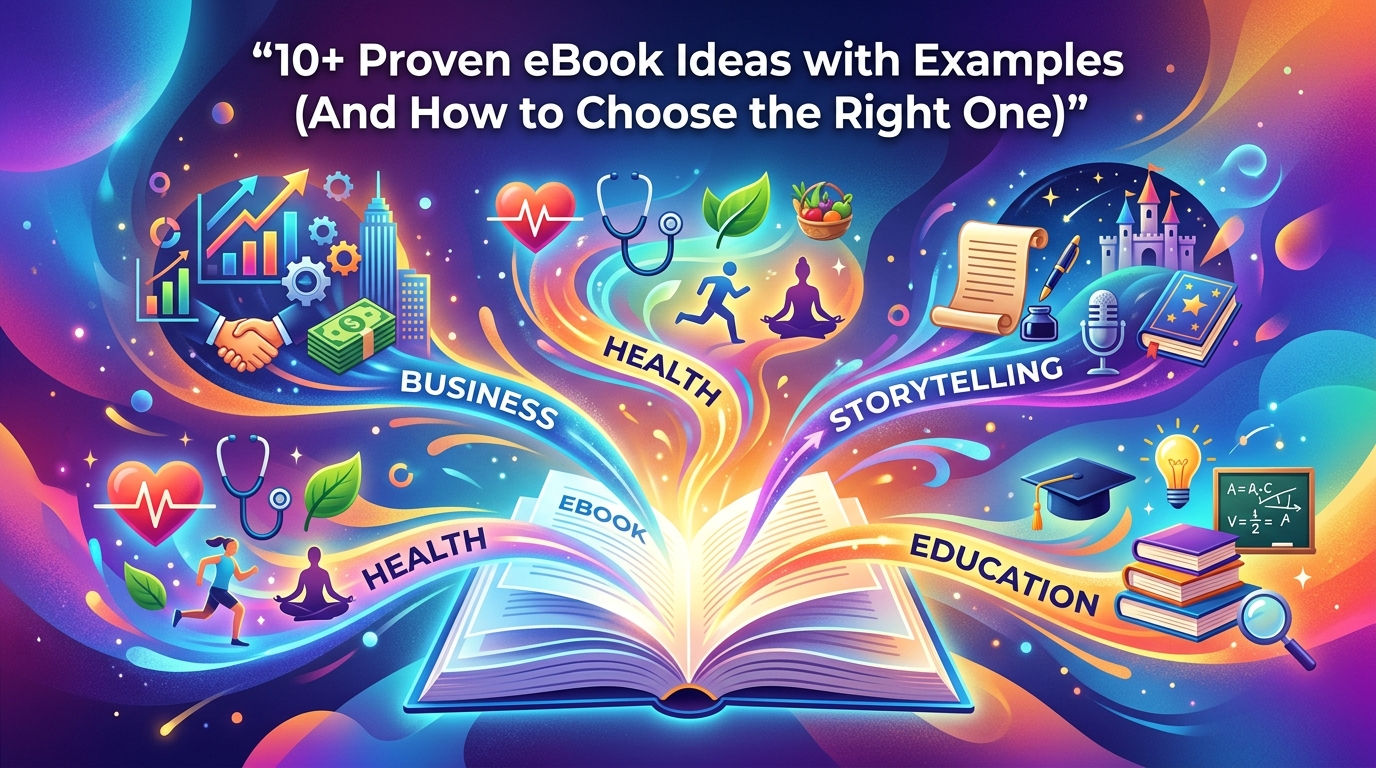
Such ideas typically fall into categories where demand remains steady, such as personal development, business growth, health, or storytelling. They are not random or purely creative impulses; they are grounded in real-world needs and reader behavior.
The key is not to reinvent the wheel but to present a familiar concept with a fresh perspective, unique voice, or updated insights.
10+ Proven eBook Ideas You Can Start Writing Today
1. Self-Help and Personal Development eBooks
One of the most enduring and profitable categories is self-help. Readers are constantly searching for ways to improve their lives, whether emotionally, mentally, or professionally.
An eBook in this category might focus on productivity, confidence, mindset, or habit-building. For example, a book exploring how to build daily routines for success can appeal to students, professionals, and entrepreneurs alike.
What makes this idea powerful is its universality. Everyone wants growth, and a well-written guide that provides actionable steps can gain strong traction. The key is specificity. Instead of writing broadly about “success,” focus on a clear outcome, such as overcoming procrastination or mastering time management.
2. How-To Guides That Solve Specific Problems
How-to eBooks remain one of the most practical and in-demand formats. These books provide step-by-step instructions to achieve a specific goal, making them highly valuable to readers.
An example could be a guide on starting a freelance business, launching an online store, or learning a new skill like graphic design. These books perform well because they offer clarity and direction.
The effectiveness of this idea lies in its practicality. Readers are not just looking for inspiration—they want solutions. A well-structured how-to guide with clear explanations and real examples can become a go-to resource.
3. Niche Expertise eBooks
If you have specialized knowledge in a particular field, turning it into an eBook can position you as an authority. Niche expertise books cater to a targeted audience and often face less competition compared to broader topics.
For instance, instead of writing about general marketing, you could focus on email marketing for small businesses or social media strategies for local brands. The narrower your focus, the more relevant your content becomes.
This approach works because readers value depth over breadth when seeking expert guidance. A niche eBook can build credibility and even open doors to consulting or coaching opportunities.
4. Business and Entrepreneurship eBooks
The rise of digital entrepreneurship has fueled demand for business-related content. Readers are eager to learn how to start, grow, and scale their ventures.
An eBook in this category might explore startup strategies, passive income ideas, or branding techniques. For example, a guide on building a personal brand online can attract freelancers and content creators.
What makes this idea compelling is its financial appeal. People are willing to invest time and money into learning skills that can increase their income or career opportunities.
5. Health and Wellness eBooks
Health remains a priority for readers worldwide, making wellness-related eBooks consistently popular. Topics can range from fitness routines and nutrition plans to mental health and mindfulness practices.
An example could be an eBook focused on stress management techniques for busy professionals or a beginner’s guide to healthy eating. These books resonate because they address everyday challenges.
The success of this idea depends on credibility and clarity. Readers seek trustworthy information that they can easily implement in their daily lives.
6. Storytelling and Fiction eBooks
While non-fiction dominates in terms of practical value, fiction continues to captivate readers through storytelling. Genres like romance, mystery, fantasy, and science fiction have dedicated audiences.
A compelling story with strong characters and emotional depth can build a loyal readership. For example, a short mystery series or a romance novel set in a unique backdrop can perform well in the eBook market.
Fiction works because it offers escape and entertainment. The challenge lies in originality and narrative strength.
7. Educational and Skill-Building eBooks
Educational eBooks cater to readers who want to learn something new, whether for personal growth or professional advancement. These books often overlap with how-to guides but focus more on structured learning.
An example could be a beginner’s guide to coding, language learning, or digital marketing. These books are particularly valuable for students and professionals looking to upgrade their skills.
The demand for continuous learning ensures that this category remains relevant across industries.
8. Case Study and Experience-Based eBooks
Readers are naturally drawn to real-life stories and experiences. Case study eBooks provide insights based on actual events, making them both informative and engaging.
For instance, an entrepreneur sharing their journey of building a business from scratch can inspire and educate readers simultaneously. These books often include lessons learned, challenges faced, and strategies used.
This idea works because authenticity builds trust. Readers connect with real experiences more than theoretical concepts.
9. Trend-Based and Timely Topic eBooks
Trend-based eBooks focus on current topics that are gaining attention. These could include emerging technologies, social media trends, or industry shifts.
For example, writing about the impact of artificial intelligence on content creation or the future of remote work can attract readers interested in staying ahead.
The advantage of this idea is its relevance. However, it requires timely execution, as trends can evolve quickly.
10. Templates, Workbooks, and Interactive eBooks
Interactive eBooks that include templates, worksheets, or exercises provide practical value beyond reading. These books encourage reader participation and deliver hands-on results.
An example could be a goal-setting workbook or a business planning template guide. These eBooks are highly appealing because they help readers take immediate action.
This format works well for audiences who prefer learning by doing rather than just reading.
11. Personal Story or Memoir-Style eBooks
Personal storytelling can be incredibly powerful when done authentically. Memoir-style eBooks allow authors to share their journeys, struggles, and achievements.
For example, a story about overcoming challenges or building a career from scratch can resonate deeply with readers. These books often inspire and motivate through real-life experiences.
The success of this idea depends on honesty, relatability, and emotional connection.
How to Choose the Right eBook Idea
Selecting the right idea involves more than just inspiration. It requires thoughtful consideration of your goals, audience, and expertise.
Start by identifying your strengths and areas of knowledge. Writing about something you understand deeply makes the process smoother and the content more credible. At the same time, consider what your audience needs. Research trends, reader questions, and common problems within your niche.
It is also important to evaluate market demand. A great idea should have an existing audience but also room for differentiation. Look for gaps where you can offer a unique perspective or improved solution.
Finally, think about long-term value. An evergreen topic can continue generating interest over time, while a trend-based idea may deliver quick but short-lived results. The best choice depends on your goals as an author.
Comparison Table: Choosing the Right eBook Idea
| eBook Idea Type | Best For | Longevity | Difficulty Level | Profit Potential |
| Self-Help | Broad audience | High | Medium | High |
| How-To Guides | Problem-solving readers | High | Medium | High |
| Niche Expertise | Professionals | High | Medium | High |
| Business | Entrepreneurs | High | Medium | Very High |
| Health & Wellness | General audience | High | Medium | High |
| Fiction | Creative writers | Medium | High | Medium |
| Educational | Students & learners | High | Medium | High |
| Case Studies | Professionals | Medium | Medium | Medium |
| Trend-Based | Early adopters | Low | Medium | Medium |
| Workbooks | Action-oriented readers | High | Medium | High |
| Memoir | Story-driven readers | Medium | Medium | Medium |
Conclusion: Turning Ideas into Impact
A successful eBook begins with a strong idea, but it doesn’t end there. Execution, consistency, and understanding your audience play equally important roles. The ideas discussed in this guide are proven because they address real needs and deliver tangible value.
The key is to choose an idea that aligns with both your expertise and your audience’s expectations. When those two elements come together, your eBook becomes more than just content—it becomes a meaningful resource that informs, inspires, and connects.
In a world where attention is limited, the right idea gives your voice a chance to be heard. Choose wisely, write intentionally, and focus on delivering value. That is the true formula for creating an eBook that stands out.
FAQs
Q1. What is the best eBook idea for beginners?
For beginners, how-to guides and self-help topics are often the easiest to start with because they focus on solving clear problems and don’t require complex storytelling.
q2. How do I know if my eBook idea will sell?
You can validate your idea by researching reader demand, checking popular topics in your niche, and identifying common problems people are actively trying to solve.
Q3. Should I choose a trending topic or an evergreen idea?
Evergreen topics provide long-term value and consistent sales, while trending topics can bring quick attention. The best choice depends on whether you want lasting impact or short-term results.
Q4. Can I write an eBook without being an expert?
Yes, but you should still have a strong understanding of the topic or be willing to research thoroughly. Sharing personal experiences or curated knowledge can also be effective.
Q5. How long should my eBook be?
There’s no fixed length, but most successful eBooks range between 5,000 to 20,000 words, depending on the depth of the topic and the value you provide.
