
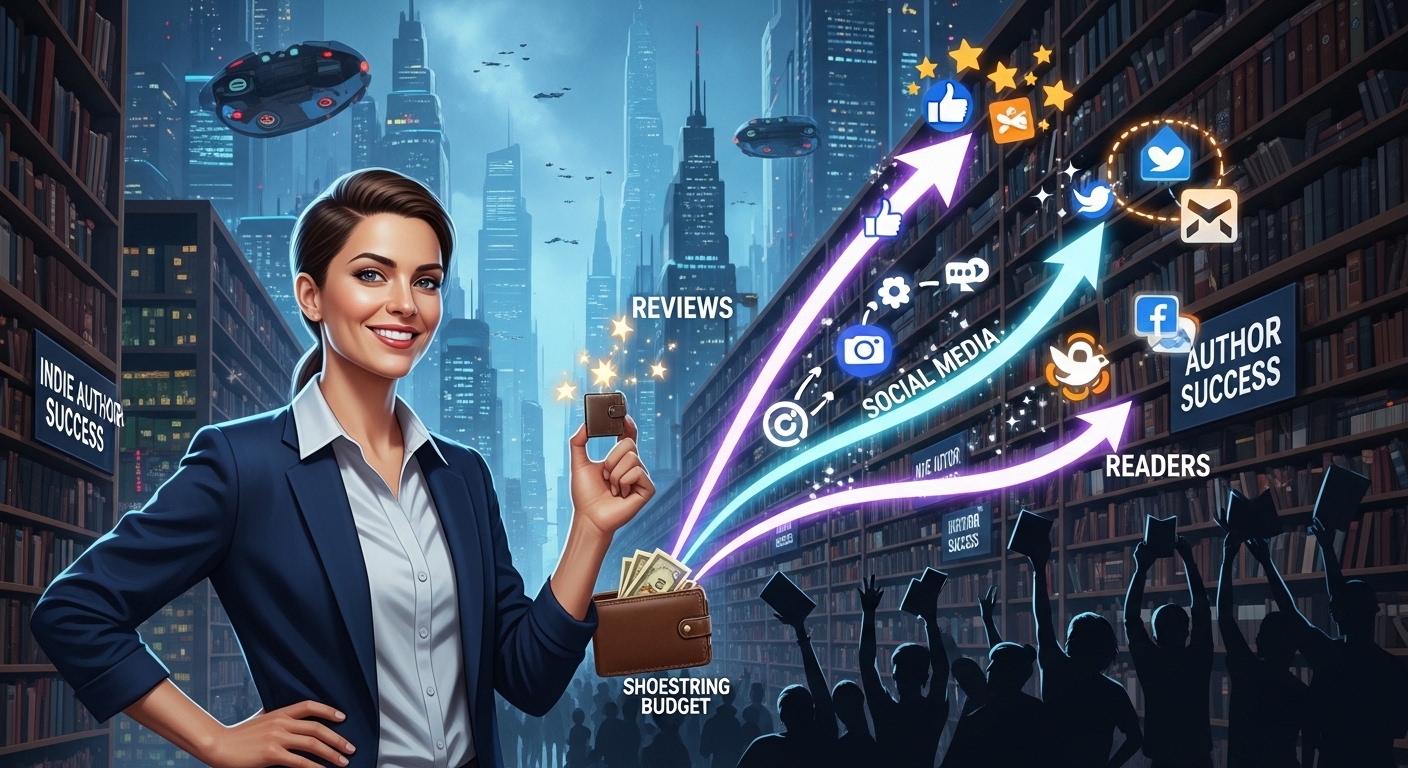
For many first-time authors, finishing a book feels like crossing the hardest finish line. Months or even years go into planning, drafting, revising, editing, and finally publishing. Yet once the book is available, a new challenge begins: getting people to notice it. This is where many new writers feel discouraged. They imagine that only authors with large budgets, professional publicists, or publishing house support can succeed. That belief causes many promising books to disappear before they ever reach their audience.
The truth is far more encouraging. Many successful authors began with almost no marketing budget at all. They relied on persistence, smart planning, reader relationships, and consistent visibility rather than expensive advertising. In today’s digital publishing world, readers can discover books through newsletters, communities, short-form content, online groups, podcasts, and word of mouth. These channels often reward creativity more than money.
A shoestring budget does not mean no chance of success. It simply means every move must matter. First-time authors who learn how to market with intention can build loyal audiences, generate reviews, and create sales momentum without spending heavily. Winning in this context does not always mean topping bestseller charts. It can mean reaching real readers, growing steadily, and building a foundation for a long writing career.
Understand That Marketing Starts Before Promotion
Many authors think marketing begins after the book is published. In reality, marketing starts much earlier. The book cover, title, genre positioning, description, and overall presentation are all part of marketing. If these elements are weak, even paid promotion may fail.
Readers make quick decisions. They look at the cover first, then the title, then the description. If the book appears confusing, unprofessional, or unlike others in its genre, many potential buyers move on instantly. This means one of the smartest uses of a limited budget is making sure the book package looks competitive.
A thriller should look like a thriller. A romance should feel like a romance. A memoir should signal authenticity and emotional depth. Readers want confidence that the book matches their expectations. When your presentation is strong, every future marketing effort becomes more effective because more people click, sample, and buy.
Instead of spending money on random promotion, first-time authors should first ask whether their book looks ready for the market. Often, improving the packaging delivers better returns than buying ads.
Define the Right Audience Clearly
A common mistake among beginners is trying to market to everyone. They say the book is for all readers or anyone who enjoys good stories. While that sounds positive, it makes promotion difficult because no clear audience is being targeted.
Successful low-budget marketing depends on knowing exactly who the book is for. Consider age group, reading habits, interests, genre preferences, and emotional motivations. A fantasy novel for teenage readers requires different messaging than a business book for entrepreneurs. A parenting guide reaches different spaces than a crime thriller.
When authors understand their ideal reader, they know where to show up. They know which online communities to join, which content to create, and what language to use in promotions. Instead of shouting into the void, they begin speaking directly to people most likely to care.
This precision saves money and time. A small budget used wisely often outperforms a larger budget used blindly.
Build a Professional Online Home Base
Even with no money, authors need one reliable place online where readers can find them. This does not need to be an expensive website. A simple landing page or clean author profile can work well.
Your online home base should include your author name, short biography, book details, buying links, and a way for readers to join your email list. It should feel organized, current, and easy to navigate. Readers who discover you on social media or through recommendations often want to learn more before purchasing.
Without a central online presence, interest can fade quickly. With one, curiosity can turn into connection.
| Low-Cost Marketing Asset | Why It Helps | Budget Option |
| Simple Website | Builds credibility | Free website builder |
| Email Signup Form | Creates long-term audience | Free newsletter tools |
| Social Media Profile | Supports discovery | Free |
| Book Landing Page | Converts visitors into buyers | Low-cost |
| Author Bio | Builds trust | Free |
Think of this home base as your digital bookstore shelf. It should welcome readers and make taking the next step easy.
Use Social Media the Right Way
Many first-time authors misuse social media by posting endless sales messages. Constantly saying “buy my book” often pushes people away. Readers follow authors for personality, insight, entertainment, inspiration, or connection.
A better strategy is to create content around your world as a writer. Share behind-the-scenes moments, lessons from writing, research discoveries, excerpts, thoughts about books in your genre, or relatable struggles from the creative process. These posts feel human rather than promotional.
For fiction writers, character quotes, mood boards, story inspiration, or setting details can attract interest. For nonfiction authors, useful tips from the book can demonstrate value before someone buys.
Social media success usually comes from consistency, not virality. One post rarely changes everything. Fifty thoughtful posts over time can build recognition and trust.
The goal is not simply followers. The goal is engaged people who remember your name when they are ready to buy a book.
Start an Email List Early
Many new authors ignore email because social platforms feel more exciting. However, email remains one of the most valuable tools in marketing because it gives direct access to interested readers.
Social media algorithms decide who sees your posts. Email lets you reach subscribers directly. Even a small list of dedicated readers can become a powerful launch asset for future books.
Offer something meaningful to encourage signups. This could be a bonus chapter, exclusive short story, writing updates, or useful resource connected to your niche. Once people join, send occasional valuable emails rather than constant promotions.
Share progress updates, personal notes, early cover reveals, launch announcements, and recommendations. Readers who feel included are more likely to support your work.
A list of one hundred engaged subscribers can outperform thousands of passive followers. It may feel small at first, but it grows into one of the strongest assets an author can own.
Collect Reviews Ethically and Consistently
Reviews matter because they reduce uncertainty. When readers see others enjoyed a book, they feel safer taking a chance on an unfamiliar author.
First-time authors should focus on getting honest early reviews. Ask advance readers, newsletter subscribers, book bloggers, or readers who naturally connected with the book. Include a polite review request at the end of the book itself.
Never chase fake reviews or dishonest praise. Readers can often sense manipulation, and many platforms penalize suspicious activity.
Even a modest number of genuine reviews can improve trust dramatically. Ten sincere reviews explaining why readers enjoyed the story can outperform dozens of empty star ratings.
Reviews also provide language future buyers understand. Readers often explain what they loved in ways authors themselves would never think to say.
Use Communities Instead of Expensive Ads
If you cannot buy attention, earn it through community.
Online communities exist for nearly every genre and interest. Fantasy readers gather in specific spaces. Romance readers gather elsewhere. Writers of business books, parenting books, wellness books, and memoirs all have communities too.
Participate honestly. Do not enter groups only to drop links. Contribute value. Join discussions, recommend books you love, answer questions, and become recognizable over time.
When people know you as a genuine participant, they become more open to your work. Trust developed naturally often converts better than paid clicks.
Authors can also appear on podcasts, newsletters, blogs, or live sessions hosted by others. These opportunities often cost nothing except preparation and outreach.
Borrowing existing audiences through authentic collaboration is one of the strongest low-budget strategies available.
Collaborate With Other Authors
Many beginners see other writers as competition. In reality, authors with similar audiences can help each other grow.
Two romance authors can exchange newsletter mentions. Two nonfiction writers in related niches can host a discussion together. Several indie authors can create themed bundles or shared giveaways.
Readers who enjoy one author are often eager to discover another. Collaboration allows everyone to expand reach without spending much money.
Choose partnerships carefully. Work with authors whose tone, professionalism, and audience fit your own brand. Small but genuine collaborations often produce better results than chasing famous names who never respond.
The writing world becomes easier when viewed as a network instead of a battlefield.
Create Evergreen Content That Keeps Working
Paid promotions stop the moment spending ends. Evergreen content can continue attracting readers for months or years.
This includes blog posts, helpful articles, YouTube videos, podcasts, interviews, and searchable resources connected to your topic or genre. If your book is about personal finance, create useful budgeting content. If your novel is historical fiction, create fascinating pieces about the era it explores.
Such content can appear in search results, get shared by readers, and introduce new audiences to your book over time.
This strategy requires patience, but it compounds. One useful article today may still bring readers next year. That is powerful for authors with limited funds.
Keep Writing the Next Book
One of the best marketing moves for a first-time author is writing another strong book.
Readers who enjoy one title often want more. If nothing else exists, momentum fades. If book two appears, interest deepens. If book three appears, a career begins.
Multiple books also increase discoverability. Each new release can bring attention back to older titles. Series fiction especially benefits from this effect.
Many authors waste energy trying to squeeze endless results from one launch. Often the better move is steady promotion combined with steady creation.
Your catalog can become your strongest marketing engine.
Redefine What Winning Means
Winning as a first-time author does not have to mean celebrity status or bestseller lists. It can mean your first fifty real readers. It can mean receiving heartfelt messages from strangers who loved your story. It can mean breaking even, growing an audience, or publishing a second book with confidence.
These victories matter because they are foundations. Sustainable careers are usually built gradually.
When authors compare themselves only to giant successes, they miss the meaningful progress happening in front of them. Growth is often quiet before it becomes visible.
Final Thoughts
First-time authors absolutely can market their books on a shoestring budget and still win. They win by focusing on presentation, audience clarity, relationships, consistency, and patience rather than expensive shortcuts.
Money can accelerate exposure, but it cannot replace trust. It cannot create reader loyalty on its own. It cannot substitute for a strong book and a clear message.
If you keep showing up, keep learning, and keep serving readers, your limited budget becomes far less important than your long-term discipline. Many authors quit too early because they mistake slow growth for failure.
The real advantage often belongs to the writer who continues when others stop.
