
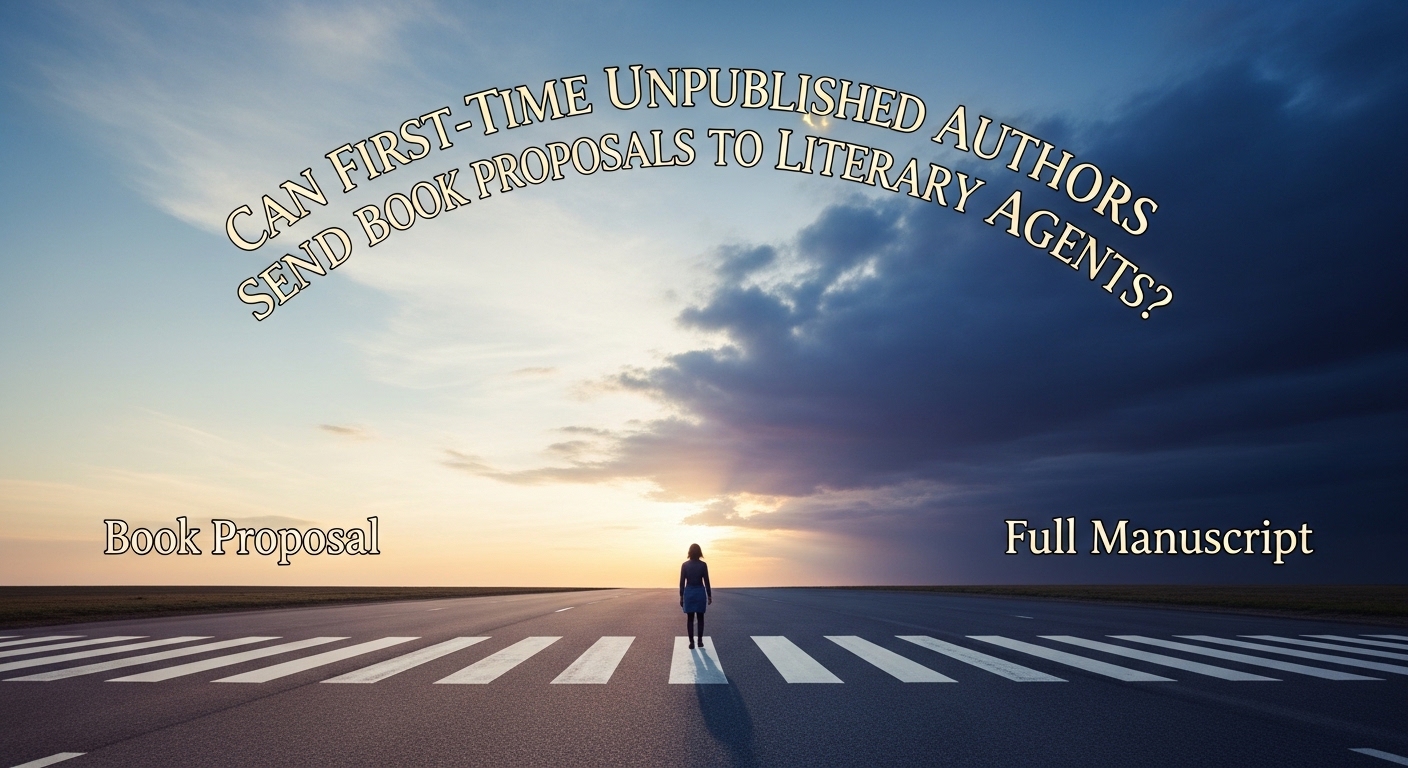
For many first-time writers, the publishing world feels like a closed room with invisible doors. You finish an idea, or maybe even a full manuscript, and then comes the question that stops almost everyone in their tracks: Can I send a book proposal to a literary agent if I’ve never been published before? The short answer is yes, but the real answer is far more layered, shaped by genre, expectations, and how the publishing industry actually works behind the scenes.
Understanding this difference is crucial because sending the wrong material, or sending the right material in the wrong way, can quietly close opportunities before they even begin. This blog explores how book proposals function, when they are appropriate, and how first-time unpublished authors can approach literary agents strategically rather than blindly.
The Publishing Gatekeepers: What Literary Agents Actually Want
Before answering whether you can send a proposal, it’s important to understand what literary agents are looking for in the first place. Agents are not just middlemen; they are business strategists who evaluate whether your book can sell in the market. A book proposal, in this sense, acts less like a creative document and more like a business pitch.
Industry professionals often describe a book proposal as a “business plan for a book,” outlining not just the idea, but its audience, competition, and marketing potential. This is why agents don’t simply evaluate writing quality; they assess viability.
For first-time authors, this might sound intimidating, but it also opens the door. Agents are actively looking for fresh voices, and being unpublished is not a disadvantage in itself. In fact, many agents regularly sign debut authors if the idea and execution feel promising.
Book Proposal vs Manuscript: The Critical Distinction
The biggest misconception among new writers is assuming that proposals and manuscripts are interchangeable. They are not. The type of material you send depends heavily on what you’re writing.
For nonfiction, proposals are not only accepted, tbut hey are expected. Writers often pitch their idea before completing the full manuscript. A proposal typically includes an overview, target audience, chapter summaries, marketing strategy, and sample chapters, sometimes extending up to dozens of pages.
Fiction, however, follows a different rule entirely. First-time fiction authors are almost always expected to submit a complete, polished manuscript rather than just a proposal. Agents want proof that you can deliver a full narrative, not just an idea
This distinction alone answers a large part of the original question: yes, first-time unpublished authors can send book proposals, but usually only for nonfiction.
Why Nonfiction Allows Proposals (Even for Beginners)
Nonfiction publishing operates on a forward-looking model. Publishers are investing in an idea, expertise, and audience potential rather than a finished narrative. Because of this, a proposal becomes the primary evaluation tool.
In many cases, nonfiction authors don’t write the full book until after a deal is secured. Instead, they present a proposal along with sample chapters, allowing publishers to guide the project early in its development .For first-time authors, this can actually be an advantage. You don’t need to spend years completing a manuscript before knowing whether your idea has market value. Instead, you can test it through a proposal, provided it is strong, structured, and compelling.
Why Fiction Doesn’t Work the Same Way
Fiction is built differently. A novel isn’t just about the idea, it’s about execution, voice, pacing, and structure across hundreds of pages. A proposal cannot demonstrate those elements fully.
That’s why agents expect debut novelists to submit completed manuscripts. It reduces risk. If an agent is going to invest time pitching your book to publishers, they need to know the entire story works, not just the premise.
This doesn’t mean fiction proposals don’t exist, they do, but typically for established authors who already have a track record. For first-time writers, a proposal alone is rarely enough.
The Role of the Query Letter in the Process
Whether you’re submitting a proposal or a manuscript, you don’t send it blindly. The process almost always begins with a query letter.
A query letter is a one-page pitch designed to capture an agent’s interest. Only if the agent responds positively do you send the full proposal or manuscript.
This step is critical and often overlooked. Sending unsolicited full proposals without a query can appear unprofessional and may lead to automatic rejection. The publishing industry operates on a request-based system, and respecting that structure matters.
What First-Time Authors Often Get Wrong
The biggest mistake new writers make is assuming the barrier is their lack of experience. In reality, the barrier is often a mismatch between what they send and what agents expect.
Many first-time fiction writers send proposals instead of completed manuscripts. Many nonfiction writers send manuscripts instead of proposals. Others skip the query letter entirely or send unfinished material.
Agents consistently emphasize readiness. Your submission, whether proposal or manuscript, must be polished, professional, and complete. Even unpublished authors are expected to meet industry standards from the very first contact.
The Real Opportunity for Unpublished Writers
Despite the confusion, the reality is surprisingly encouraging. Literary agents are not looking exclusively for established authors. They are looking for marketable ideas and strong execution.
Unpublished authors bring something valuable: originality. Many bestselling books began as debut projects, and agents are always searching for new voices that stand out.
The key is not whether you’ve been published before, but whether your submission demonstrates clarity, purpose, and potential. A strong proposal or manuscript can outweigh a lack of credentials.
When You Should Send a Book Proposal as a First-Time Author
There are specific scenarios where sending a proposal is not only acceptable but expected. These include nonfiction genres such as self-help, business, memoir, health, and current affairs.
In these cases, your expertise or perspective matters as much as your writing. Agents will evaluate your authority, platform, and ability to reach readers.
However, even in nonfiction, you still need sample chapters. A proposal without writing samples is incomplete and unlikely to succeed.
The Submission Path: A Simple Breakdown
To make the process clearer, here is a comparison of how submissions typically work for first-time authors:
| Category | What to Submit | When to Submit | Agent Expectation |
| Fiction (Novels) | Full manuscript | After completion and editing | Complete, polished story |
| Nonfiction | Book proposal + sample chapters | Before full manuscript | Strong concept and market potential |
| Memoir | Often proposal + sample chapters (sometimes full manuscript) | Depends on narrative strength | Both story and platform matter |
| Academic/Niche | Proposal or direct submission to publishers | Varies | Specialized audience focus |
This table highlights a simple truth: the format of your submission is not about your experience level, it’s about your genre.
Do You Need a Platform as a First-Time Author?
One of the most intimidating aspects of proposals, especially in nonfiction, is the idea of needing a platform. While having an audience helps, it is not always mandatory.
Agents look for potential reach, not just current numbers. This could include professional expertise, a unique perspective, or a timely topic. In some cases, the strength of the idea itself can outweigh a limited platform.
That said, building even a modest presence, through articles, blogs, or social media, can significantly strengthen your proposal.
The Importance of Timing and Preparation
Another overlooked factor is timing. Many new authors rush into submissions without fully preparing their material.
Agents often receive hundreds of submissions per week. If your proposal or manuscript is not ready, it will likely be rejected, and you may not get a second chance with the same agent.
Taking time to refine your work, research agents, and tailor your submission can make a substantial difference. Publishing is not just about writing, it’s about positioning.
Final Thoughts: Yes, But Only If You Do It Right
So, can first-time unpublished authors send book proposals to literary agents? Yes, but only under the right circumstances.
If you’re writing nonfiction, a well-crafted proposal is not only acceptable, it’s the standard route into traditional publishing. If you’re writing fiction, however, a proposal alone is not enough. You’ll need a complete manuscript to be taken seriously.
The deeper truth is this: the publishing industry doesn’t exclude new writers, it filters unprepared submissions. First-time authors succeed not because they are experienced, but because they understand the process and meet its expectations.
In the end, sending a book proposal isn’t about permission. It’s about readiness, relevance, and knowing exactly what you’re offering.
