
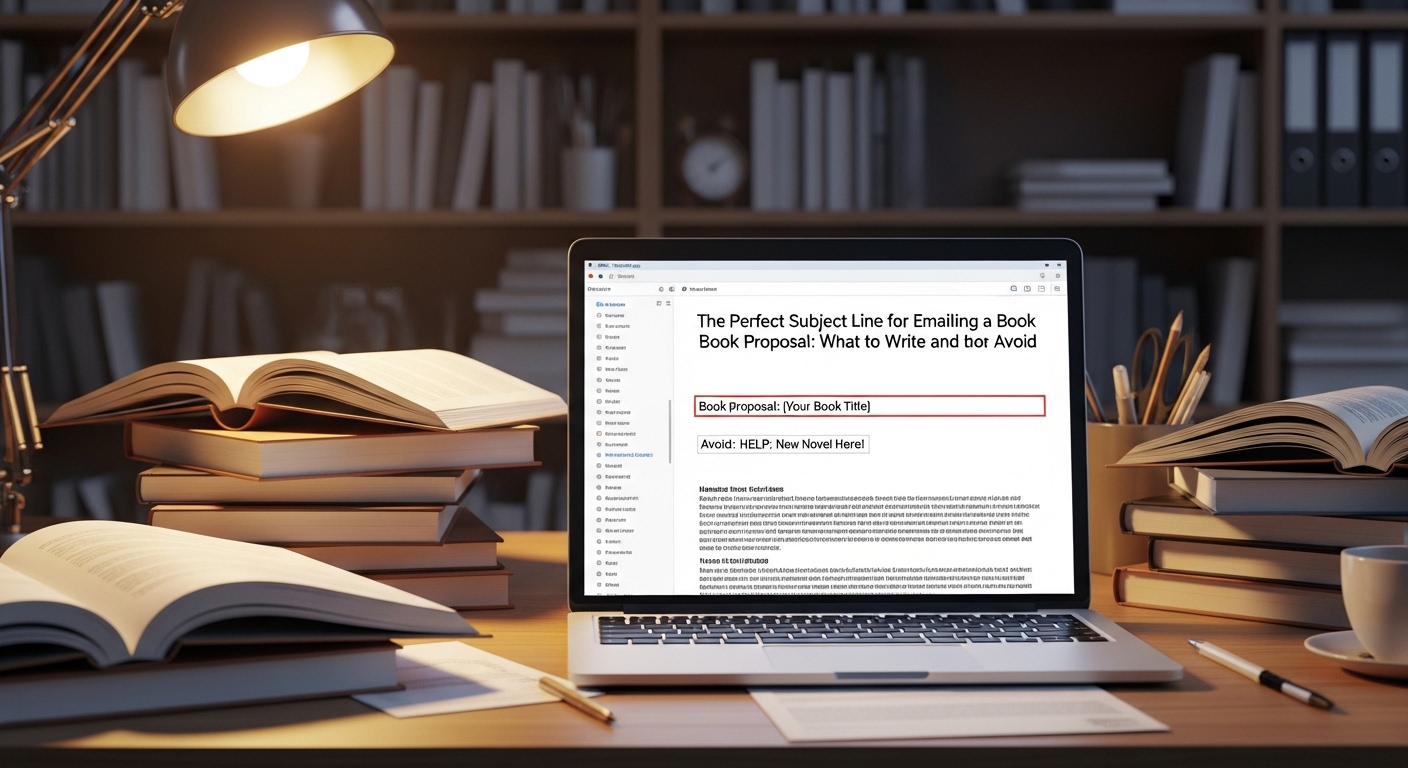
When writers prepare a book proposal, most of their attention naturally goes to the major parts of the submission. They work on the overview, sample chapters, synopsis, target audience section, competitor titles, marketing plan, and author biography. Those sections deserve serious effort because they help publishers understand the project. Yet many writers rush through one of the most visible parts of the entire process: the email subject line.
That small line can determine whether your message is opened quickly, flagged for later review, or buried in a crowded inbox. Before an editor or literary agent reads your proposal, they read your subject line. That means the first impression of your professionalism often happens before anyone sees your writing.
Publishing professionals receive large volumes of email. They are balancing contracts, author communication, internal meetings, sales discussions, marketing campaigns, deadlines, and submissions. Inboxes become crowded fast. A vague or messy subject line creates friction. A clean and informative one makes life easier.
Writers sometimes assume the quality of the manuscript alone is enough. In the long run, quality matters most. But in the short term, presentation affects whether your work gets prompt attention. A strong subject line helps your proposal enter the conversation in the best possible way.
How Agents and Editors Usually Read Emails
Most people do not slowly open each email one by one. They scan. They look for names they know, urgent business matters, expected follow-ups, and messages that clearly explain themselves. Publishing professionals are no different.
Imagine an inbox containing these subject lines:
Hello
Question
Please Read My Book!!!
Book Proposal: The Last Orchard – Historical Fiction
The fourth example instantly provides context. The recipient knows what the message is, what the project is called, and what category it belongs to. The first three create uncertainty or appear unprofessional.
This matters because attention is limited. The easier you make it for someone to understand your email, the easier it becomes for them to act on it. A good subject line reduces effort. That is a powerful advantage in a busy industry.
What the Perfect Subject Line Actually Needs to Do
Many writers believe the perfect subject line must be brilliant, irresistible, or clever. In reality, it should be clear, relevant, and professional.
Clear means the recipient instantly understands the purpose of the message. Relevant means the subject line sounds connected to the kind of material the person actually reviews. Professional means it feels businesslike, polished, and respectful.
That is why simple subject lines often outperform flashy ones. A publishing inbox is not a social media feed. It is a work environment. People are looking for organized communication, not dramatic headlines.
The best subject line quietly says, “I understand how this process works.”
What to Write in the Subject Line
The strongest subject lines usually include one or more of the following: the purpose of the email, the title of the manuscript, the genre, or the topic.
Words such as “Book Proposal,” “Query,” or “Requested Material” help immediately. They tell the reader what kind of email this is. If your book has a strong title, include it. If genre matters, especially in fiction, include that too.
Examples of effective subject lines:
- Book Proposal: The Silent Harbor
Query: The Silent Harbor – Thriller
Requested Material: The Silent Harbor
Nonfiction Proposal: Productivity for Remote Teams
Book Proposal from Emma John – Memoir
Each one is straightforward and useful. There is no confusion. There is no exaggerated claim. There is enough information to understand the email at a glance.
Why Simplicity Works Better Than Cleverness
Writers are creative people, so it is natural to want a creative subject line. But email submissions are not the place to perform cleverness. If the recipient has to decode your message, the subject line is failing.
For example, subject lines like “A Story You’ll Never Forget” or “Guess What Happens Next?” may sound intriguing in theory, but they create unnecessary mystery. Publishing professionals do not want mystery in the inbox. They want efficiency.
Simple language builds trust. It tells the recipient that the writer is focused on the work rather than gimmicks. It also makes your email easier to search later.
If an editor wants to revisit your proposal after a meeting, “Book Proposal: The Silent Harbor” is easy to locate. “This Could Change Everything” is not.
What to Avoid Completely
One of the most common mistakes is vagueness. Subject lines like “Hello,” “Submission,” “Question,” or “My Book” provide almost no value. They force the recipient to open the message to understand the purpose. In a crowded inbox, many vague emails are delayed or overlooked.
Another mistake is hype. Writers sometimes use subject lines such as “Future Bestseller,” “Next Global Phenomenon,” or “Bigger Than Harry Potter.” These claims usually reduce credibility rather than increase curiosity. Publishing professionals know success cannot be guaranteed.
Desperation is another problem. Subject lines like “Please Give Me a Chance” or “I Need This Published” put emotional pressure on the recipient. Decisions in publishing are business decisions. Confidence and professionalism are more persuasive than pleading.
Formatting mistakes also matter. Avoid ALL CAPS, multiple exclamation marks, or spam-like urgency words such as “URGENT!!!” Those signals can damage trust immediately.
Strong vs Weak Subject Lines
| Weak Subject Line | Why It Fails | Stronger Alternative |
| Hello | No context | Book Proposal: River Glass |
| Please Read This!!! | Feels desperate | Query: River Glass – Fiction |
| Important Opportunity | Too vague | Nonfiction Proposal: Leadership at Work |
| Future Bestseller | Unrealistic claim | Book Proposal: Ash Crown – Fantasy |
| My Book | Generic | Requested Material: Ash Crown |
The stronger versions are not louder. They are clearer.
Subject Lines for Fiction Writers
Fiction writers should usually emphasize title and genre. Fiction submissions are often judged by concept, voice, market fit, and audience category. Including genre helps the recipient immediately understand the space your novel occupies.
Examples:
- Query: House of Rain – Literary Fiction
Book Proposal: Night Signal – Mystery
Requested Material: The Hollow Gate – Fantasy
Query: After the Fire – Romance
These examples help agents sort expectations quickly. Someone who represents thrillers may respond differently than someone focused on literary fiction. Genre helps route your proposal mentally from the first glance.
If your title is unusual or abstract, genre becomes even more valuable because it grounds the message.
Subject Lines for Nonfiction Writers
Nonfiction often sells through usefulness, authority, and audience demand. Because of that, topic clarity can matter more than title alone.
Examples:
- Book Proposal: Money Habits for Young Professionals
Nonfiction Query: Productivity for Remote Teams
Requested Proposal: Parenting in the Screen Age
Book Proposal: Mindful Leadership for Managers
These subject lines tell the reader what problem the book addresses and who may benefit. That is often the heart of a nonfiction pitch.
If your title is final and strong, use it. If not, a clear concept can outperform a vague title.
For example, “Book Proposal: The Shift” says little. “Book Proposal: The Shift – Career Reinvention After 40” says much more.
When Personalization Helps
Sometimes adding context can improve your chances. If an agent requested material, met you at an event, or received a referral, mention it briefly.
Examples:
- Requested Material – London Book Fair Follow-Up
Referral from Sarah Lee – Memoir Proposal
Per Your Request: The Quiet House
Conference Follow-Up – Nonfiction Proposal
This works because it signals an existing connection. It tells the recipient the message may already be expected.
However, personalization must always be truthful. Never imply endorsement, familiarity, or referral that does not exist. Publishing is relationship-driven, and trust matters.
How Long Should the Subject Line Be
Shorter is usually better, but not so short that meaning disappears. Aim for concise clarity. Many people check email on phones, where subject lines can be cut off.
Place the most important information first. “Book Proposal” or “Query” should appear near the beginning. Then add a title or topic.
For example:
Book Proposal: Blue Horizon
works better than:
Regarding My Recently Completed Manuscript Submission for Consideration, Titled Blue Horizon
The first line is easier to scan and easier to understand.
Common Psychological Mistakes Writers Make
Many writers worry they must “stand out” at any cost. That fear often leads to over-marketing the subject line. They assume a dramatic promise will create interest. In reality, professionals are often more impressed by calm competence.
Another mistake is underselling through apology. Subject lines such as “Sorry to bother you” or “Probably not good enough but…” weaken your position before the email is even opened.
A book proposal is not an apology. It is a professional presentation of work. Respectful confidence is the right tone.
A Reliable Formula That Usually Works
If you are unsure what to write, use this dependable structure:
Book Proposal or Query + Title + Genre or Topic
Examples:
- Query: Falling North – Memoir
Book Proposal: Quiet Growth – Business
Requested Proposal: Night Harbor – Thriller
Nonfiction Query: Career Reinvention After 40
This formula works because it answers the key questions immediately. What is this? What is it called? What type of project is it?
Final Checklist Before Sending
Before you send your email, read the subject line by itself. Ask whether it makes sense without opening the message. Ask whether it sounds professional. Ask whether it can be understood in two seconds.
Check spelling carefully. Misspelling your own title or writing “proposel” instead of “proposal” creates avoidable damage.
Also, review submission guidelines. Some agencies specifically request certain subject line formats. If they ask for one, follow it exactly. Doing so shows professionalism and attention to detail.
Final Thoughts
The perfect subject line for emailing a book proposal is rarely dramatic and never desperate. It does not need gimmicks or inflated promises. It needs clarity, relevance, and professionalism.
Writers often spend weeks refining a proposal but only seconds writing the subject line. That can be a costly imbalance. The subject line is the gateway to your work. It shapes first impressions, improves searchability, and signals that you understand the business side of publishing.
Treat it as part of the proposal, not an afterthought. A strong manuscript deserves a strong entrance, and sometimes that entrance begins with just a few carefully chosen words.
