
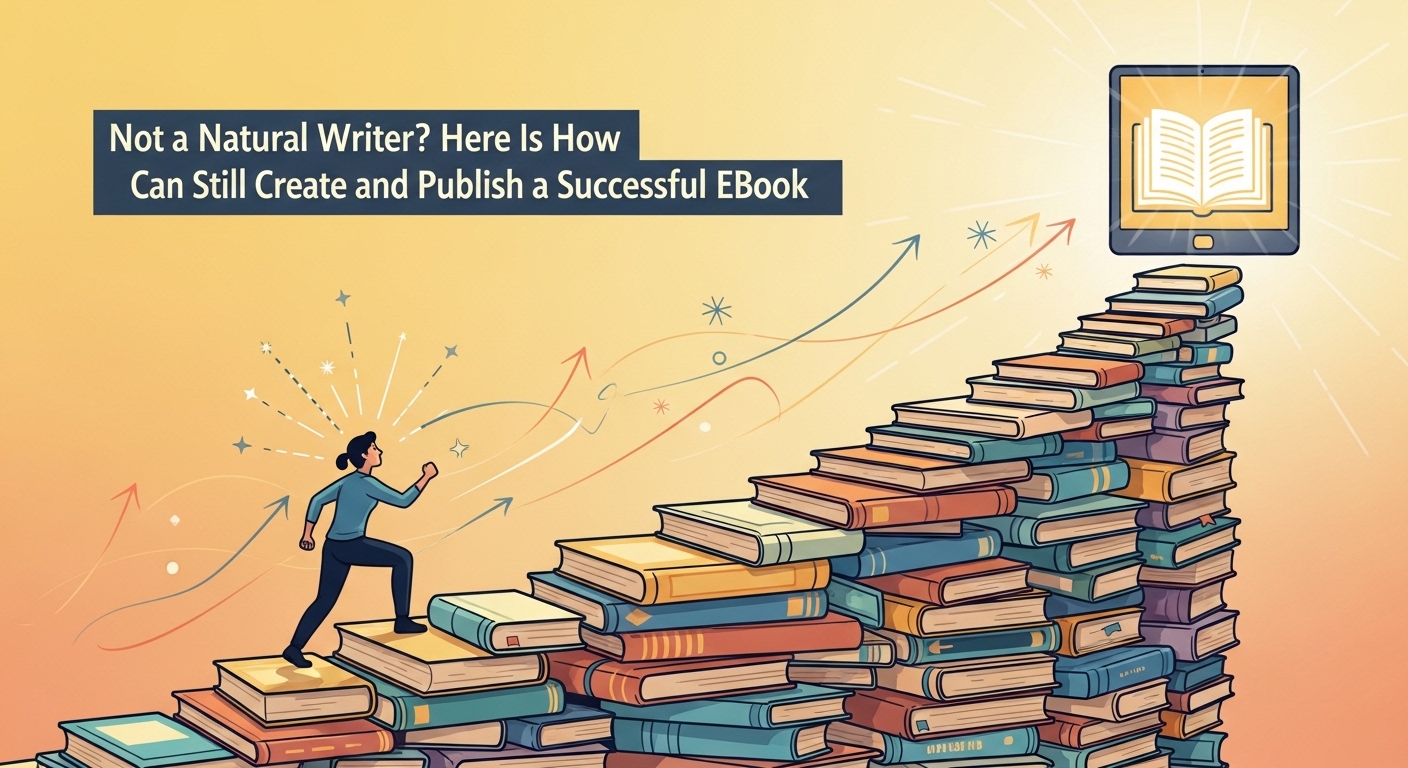
Writing an eBook can seem like a daunting task, especially if you do not consider yourself a natural writer. Many aspiring authors are intimidated by the blank page, convinced that unless they possess innate storytelling abilities or a flair for prose, their ideas will never translate into a successful publication. However, the truth is that writing is a skill that can be learned, practiced, and refined over time. Even individuals who struggle with grammar, structure, or creativity can create an engaging eBook if they approach the process strategically and leverage the tools and resources available today.
Assessing Your Skills Before You Start Writin
The first step for anyone who feels they are not a natural writer is to understand their strengths and limitations. Writing an eBook is not just about literary skill; it is about communicating an idea effectively. Many successful eBooks have thrived not because of flawless prose, but because of clear, actionable information that resonates with readers. Identifying your areas of expertise or passion is crucial. For instance, you might not be able to craft a compelling narrative like a novelist, but you may possess valuable knowledge in areas such as personal development, entrepreneurship, cooking, or technology. Choosing a topic you know intimately will help you focus on substance rather than style, which is often the most critical factor in the success of an eBook.
Planning Before Writing
Once you have identified your topic, planning becomes your most powerful tool. Outlining your eBook allows you to organize your thoughts and create a roadmap for the writing process. Even if you lack natural writing instincts, a clear outline can prevent writer’s block and keep your content cohesive. Many professional authors and ghostwriters use outlines extensively to structure chapters, subtopics, and key points. Planning also involves understanding your target audience. Knowing who your readers are, what problems they face, and what solutions they seek allows you to tailor your writing in a way that is accessible and practical. Market research, reading similar eBooks, and even surveying potential readers can provide invaluable insights before you begin writing.
Leveraging Writing Tools and Technology
For those who struggle with writing, modern technology can serve as a powerful ally. Writing software like Scrivener, Google Docs, or Microsoft Word provides structural and organizational tools to manage large documents, track revisions, and maintain consistency. Grammar and style aids such as Grammarly, ProWritingAid, or Hemingway Editor help correct syntax issues and improve readability, making your writing more professional and polished. Additionally, AI writing assistants can help generate ideas, suggest phrasing, or even expand rough drafts, which can be particularly useful for non-natural writers who struggle with formulating sentences. These tools do not replace your voice, but they act as a scaffolding, enabling you to communicate your ideas clearly while reducing frustration and time spent on revisions.
Embracing the Power of Outsourcing
Another effective strategy for non-natural writers is to embrace outsourcing. Hiring professional editors, ghostwriters, or proofreaders can significantly elevate the quality of your eBook without requiring you to transform into a literary genius overnight. Ghostwriters can take your ideas, research, and notes and turn them into cohesive, market-ready content while maintaining your voice and vision. Editors ensure that your eBook is free of errors, follows a logical structure, and reads smoothly, which can make a major difference in reader perception and sales. Outsourcing certain aspects of writing does not diminish your role as an author; instead, it allows you to focus on your strengths, such as concept development, marketing, and engagement with your audience.
Developing a Writing Routine
Even if writing does not come naturally, consistency is key. Developing a writing routine builds momentum and helps overcome mental resistance. Setting aside dedicated time each day, even if it is only thirty minutes, ensures that you make continuous progress toward completing your eBook. Writing in small, manageable chunks reduces overwhelm and allows you to refine your work gradually. Many non-natural writers find that freewriting sessions, where they allow ideas to flow without worrying about grammar or structure, can be especially productive. These sessions often yield raw content that can later be shaped into polished chapters with the help of editing tools or professional editors.
Research and Fact-Checking
For many non-natural writers, relying on research and factual content can be a strength. A well-researched eBook demonstrates authority and credibility, which can attract readers even if your writing style is simple. Gathering statistics, case studies, examples, and references not only enriches your content but also provides a framework that guides the writing process. Non-natural writers can lean on these facts to build coherent arguments or narratives without relying solely on creative storytelling skills. Research also supports marketing strategies, as data-driven insights are often valued in niches like business, technology, health, and education.
Polishing Through Multiple Drafts
Writing a successful eBook rarely happens in a single draft. Non-natural writers should embrace the revision process as a necessary and productive step. The first draft is primarily about getting ideas on paper; subsequent drafts focus on refining clarity, flow, tone, and structure. Even minor adjustments in sentence construction, paragraph transitions, or chapter organization can dramatically improve readability. Seeking feedback from beta readers or writing groups can also be invaluable. These readers provide an external perspective, pointing out areas of confusion, redundancy, or disengagement that the author may overlook. Iterative refinement ensures that the final eBook meets professional standards and resonates with your intended audience.
Designing an Appealing eBook
The visual presentation of your eBook is just as important as its content, especially for authors who are not confident in their writing. A clean, professional layout enhances readability and makes your work more attractive to potential readers. Cover design, typography, and formatting should reflect the theme and tone of your book. Platforms like Canva, Vellum, or Adobe InDesign make it possible for non-designers to produce professional-looking eBooks with minimal effort. Investing in a professional cover design is often a worthwhile expenditure, as the cover is the first element that captures reader interest and can influence purchase decisions.
Publishing and Distribution Options
Non-natural writers have access to an array of self-publishing platforms that simplify the distribution process. Amazon Kindle Direct Publishing (KDP), Apple Books, Google Play Books, and Kobo Writing Life provide intuitive interfaces that guide authors from manuscript upload to live sales. Understanding the nuances of each platform, such as royalty structures, file formatting, and marketing options, is essential for maximizing success. Non-natural writers can also take advantage of print-on-demand services, allowing their eBooks to reach traditional book buyers without upfront printing costs. Choosing the right publishing platform ensures that your work reaches the intended audience efficiently while providing opportunities for monetization.
Marketing Your eBook
Even the best-written eBook will struggle without effective marketing. For non-natural writers, focusing on promotion strategies that leverage your strengths can be more productive than trying to become a marketing expert overnight. Social media engagement, email newsletters, guest blogging, and collaborations with influencers or niche websites can increase visibility. Creating content related to your eBook’s topic helps build authority and drives organic traffic. Paid advertising, such as Amazon Ads or Facebook Ads, can also amplify reach. Marketing should be approached strategically, focusing on platforms and methods that align with your audience’s behavior and preferences. Successful eBook authors understand that marketing is an ongoing process and that consistent efforts often yield cumulative results over time.
Learning from Feedback and Analytics
Publishing an eBook is not the end of the journey; it is the beginning of an iterative process where learning from reader feedback and analytics can drive future success. Platforms like Amazon KDP provide sales reports, customer reviews, and engagement metrics that reveal which aspects of your eBook resonate most with readers. Constructive criticism, whether from readers or professional editors, offers insights into how you can improve your writing and better meet your audience’s needs. Non-natural writers can use this data to refine subsequent editions, develop follow-up books, or create complementary content such as workbooks, guides, or courses. By approaching writing as a continuous learning process, anyone can build credibility and grow their audience over time.
Confidence and Persistence
Finally, non-natural writers must embrace the mindset of persistence and confidence. The journey from concept to published eBook is filled with challenges, from overcoming self-doubt to learning new tools and platforms. Yet countless authors who initially doubted their abilities have gone on to create successful eBooks by committing to consistent effort, seeking support when needed, and focusing on the value they provide to readers. Writing is a skill, not a gift reserved for a select few. Anyone willing to learn, adapt, and persist can turn ideas into eBooks that inform, entertain, and inspire readers around the world.
Creating a successful eBook as a non-natural writer is not only possible; it is increasingly achievable thanks to technological tools, professional support networks, and self-publishing platforms. By understanding your strengths, planning meticulously, leveraging available resources, and embracing continuous learning, you can produce an eBook that connects with readers and achieves measurable success. The key lies not in innate talent but in determination, strategy, and the willingness to refine your craft, chapter by chapter.
