
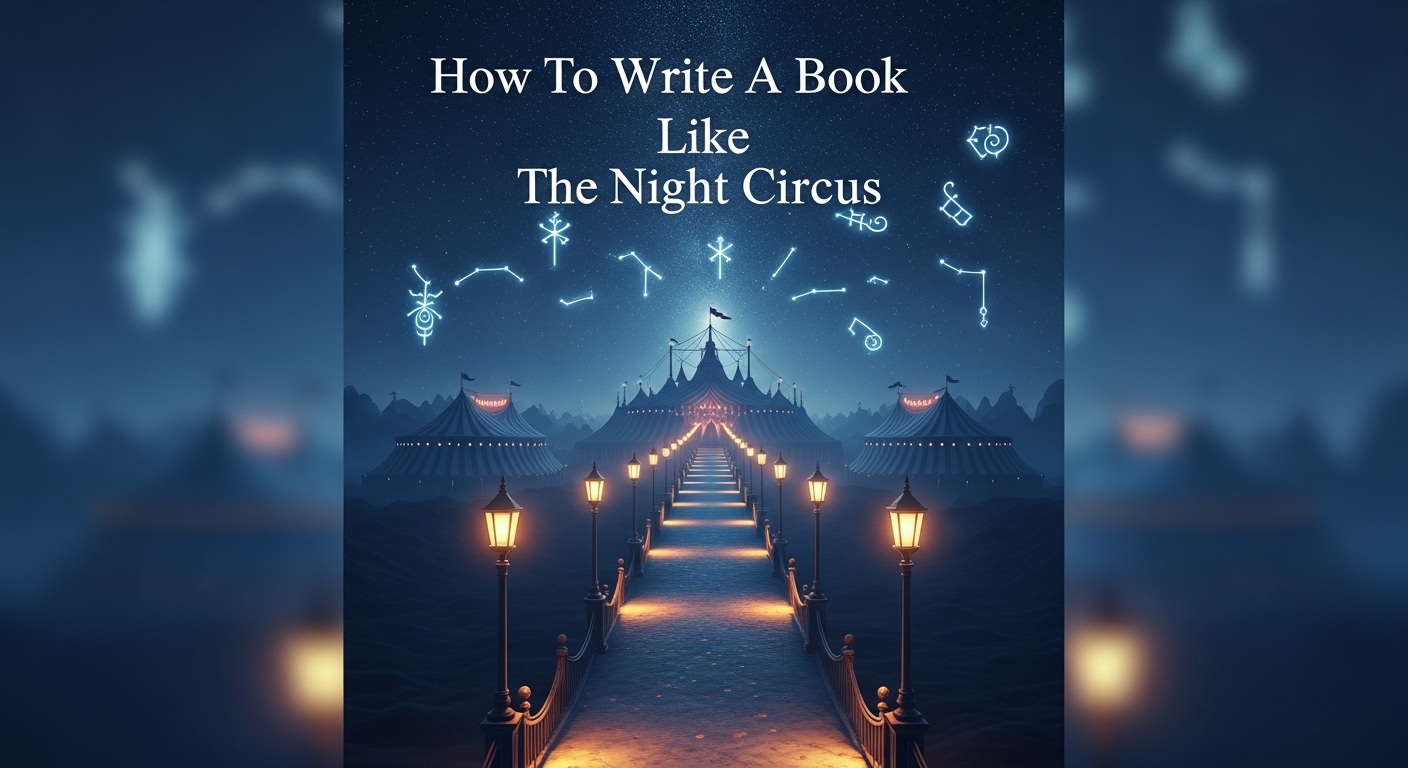
Writing a novel inspired by The Night Circus means learning how to create enchantment through atmosphere rather than speed, emotion rather than spectacle, and immersion rather than explanation. Erin Morgenstern’s novel became widely admired not because of dramatic twists or fast-paced action, but because it transforms storytelling into an experience readers feel as much as they read.
The book invites audiences into a mysterious world where time bends, magic feels intimate, and romance unfolds quietly beneath layers of symbolism. To write a book in a similar spirit, a writer must understand how narrative design, lyrical language, character depth, and aesthetic worldbuilding merge into a single artistic vision.
Why The Night Circus Stands Out
Most fantasy novels rely on external conflict: wars, quests, or clear antagonists. The Night Circus operates differently. The tension exists beneath the surface, hidden inside relationships, rules, and emotional consequences.
The story unfolds like a performance rather than a race toward resolution. Readers wander through scenes the same way visitors wander through the circus itself—discovering meaning gradually. This narrative approach creates curiosity instead of urgency.
To write in a similar style, a writer must rethink storytelling priorities. Plot becomes a framework, but atmosphere becomes the true engine of engagement. Readers stay because they want to remain inside the world, not simply because they want to know what happens next.
Creating Atmosphere as the Foundation of Storytelling
Atmosphere is not decoration; it is structure. Every scene should contribute to a consistent emotional tone. In The Night Circus, descriptions of light, color, texture, and sound constantly reinforce mystery and wonder.
A writer aiming for this effect must think cinematically. Imagine how a reader experiences space. The temperature of the air, the quiet movement of fabric, distant music, or the glow of lanterns all contribute to immersion.
During early drafts, writers often overwrite descriptions. This is natural. The refinement happens during editing, where vague imagery is replaced with precise sensory language. Effective atmospheric writing depends on specificity rather than quantity.
When atmosphere remains consistent across chapters, the world feels alive and intentional rather than randomly magical.
Designing a Setting That Feels Alive
One of the defining achievements of The Night Circus is that the setting behaves like a character. The circus evolves, reacts, and holds secrets that shape the narrative.
A powerful setting possesses history, internal logic, and emotional symbolism. It should influence character choices and reflect thematic ideas. When readers feel that a place remembers events or carries emotional weight, immersion deepens naturally.
Writers should consider how their fictional environment changes over time. Does it grow darker as conflict intensifies? Does beauty hide danger? Does magic reveal personality traits?
These questions also become important later during publishing and cover design. A story with strong visual identity allows designers to create imagery that instantly communicates tone and genre to readers.
Writing Lyrical Yet Controlled Prose
The prose style associated with The Night Circus feels poetic without becoming difficult to read. The language flows smoothly, encouraging readers to slow down and absorb moments.
Lyrical writing depends on rhythm. Sentences vary in length, allowing emotional beats to breathe. Imagery replaces direct explanation, enabling readers to interpret feelings rather than being told what to think.
However, lyrical prose requires discipline. Overly elaborate descriptions can weaken impact. Strong editing removes repetition and ensures every metaphor adds meaning.
Reading passages aloud during editing helps writers detect imbalance. If sentences feel heavy or artificial, simplification often strengthens emotional clarity.
The goal is elegance, not excess.
Embracing Nonlinear Storytelling
Another signature element of The Night Circus is its fragmented timeline. Events appear out of chronological order, gradually forming a complete emotional picture.
Nonlinear storytelling works because each chapter provides discovery. Instead of confusion, readers experience anticipation as connections slowly emerge.
Maintaining coherence requires careful structural editing. Writers often track timelines separately to ensure continuity. Emotional progression matters more than chronological order; scenes should appear when they create maximum resonance rather than when they technically occur.
This approach transforms reading into participation. The audience assembles meaning piece by piece, becoming active explorers of the narrative.
Characters Built Through Mystery Rather Than Explanation
Characters in atmospheric fantasy rarely reveal themselves completely at once. Their identities unfold gradually through gestures, choices, and symbolic moments.
Backstory exists, but it is revealed sparingly. Silence and restraint create intrigue. Relationships develop through shared experiences rather than lengthy dialogue explaining emotions.
Romantic elements especially benefit from subtlety. Quiet interactions often carry greater emotional intensity than dramatic confessions. A glance, a repeated meeting, or an unfinished conversation can hold powerful narrative weight.
During editing, writers often remove explanatory dialogue so readers can infer emotional meaning themselves. This trust between writer and reader strengthens immersion.
Magic as Emotional Expression
Magic in The Night Circus functions less like a system and more like a language. Each illusion reflects personality, intention, or emotional conflict.
Writers seeking a similar tone should avoid excessive technical explanations. Mystery enhances wonder. Readers do not need every rule explained; they need consistency and emotional relevance.
Magic becomes meaningful when it reveals character psychology. A performer’s illusions may express longing, control, fear, or creativity. When magical acts mirror internal struggles, spectacle transforms into storytelling.
From a narrative design perspective, symbolic magic also supports thematic cohesion, allowing recurring imagery to reinforce emotional arcs.
Controlling Pacing Without Losing Engagement
Atmospheric novels often move slowly, yet successful ones never feel empty. Momentum comes from emotional progression rather than action sequences.
Each scene should deepen curiosity, expand understanding, or intensify relationships. Even quiet chapters must change something—tone, perspective, or meaning.
Editing plays a crucial role here. Writers refine pacing by removing scenes that repeat emotional beats while preserving moments that enrich atmosphere. Controlled pacing allows readers to linger without feeling stalled.
The rhythm should resemble wandering through an unfamiliar but captivating place.
Symbolism and Recurring Motifs
Symbolism provides hidden structure beneath lyrical storytelling. Repeated colors, objects, or imagery gradually accumulate meaning.
In The Night Circus, visual contrasts and recurring elements reinforce themes of illusion, destiny, and sacrifice. Readers may not consciously track these patterns, yet they feel their emotional impact.
Writers can develop motifs organically during drafting, then strengthen them during editing by ensuring intentional repetition. Symbolism also guides visual design decisions during publishing, helping create cohesive branding between story and presentation.
Editing an Atmospheric Novel
Editing this type of novel requires sensitivity. The goal is not to accelerate the story but to clarify emotional intention.
Writers must evaluate whether each scene contributes to tone and meaning. Redundant imagery weakens atmosphere, while precise language strengthens it. Structural editing ensures nonlinear timelines remain understandable, while line editing enhances musicality of prose.
Because subtle stories rely heavily on language, multiple editing passes are often necessary. Refinement gradually reveals the story’s true shape.
Publishing and Design Considerations
Books built around atmosphere depend strongly on presentation. Readers often encounter such novels visually before reading a single page.
Publishing decisions should reflect the story’s aesthetic identity. Cover design, typography, and formatting must align with tone. Minimalistic visuals, symbolic imagery, and elegant layouts frequently complement dreamlike narratives.
A thoughtful design approach ensures that marketing materials communicate mood instantly. When visual branding matches storytelling style, readers know what emotional experience to expect.
Practical Writing Approach for Creating a Night-Circus-Style Novel
This is the single section where key techniques are summarized together:
- Begin with mood and imagery rather than a rigid plot outline.
- Develop a setting that evolves emotionally alongside characters.
- Focus on sensory descriptions that create immersion.
- Allow mysteries to unfold gradually instead of explaining everything.
- Use nonlinear structure carefully to enhance discovery.
- Treat magic as symbolism connected to character emotion.
- Revise extensively during editing to maintain tonal consistency.
- Consider publishing and design choices early to preserve aesthetic vision.
The Importance of Patience in Atmospheric Storytelling
Writing a novel like The Night Circus requires patience from both writer and reader. These stories are not rushed into existence; they emerge slowly through exploration and refinement.
Writers must allow themselves time to discover tone, adjust structure, and polish language repeatedly. The process often feels closer to sculpting than drafting. Each revision removes excess until only essential beauty remains.
Atmospheric storytelling rewards careful craftsmanship. When setting, prose, character, and symbolism align, the result is not simply a story but an experience readers carry long after finishing the final page.
Final Thoughts
To write a book like The Night Circus is to embrace storytelling as art rather than formula. Success comes from emotional immersion, lyrical language, and intentional narrative design working together seamlessly.
By focusing on atmosphere, crafting mysterious characters, refining prose through thoughtful editing, and aligning publishing and design choices with the story’s identity, writers can create novels that feel timeless and transportive.
Such stories do not demand attention through noise or speed. Instead, they invite readers quietly—and once inside, they never want to leave.
