
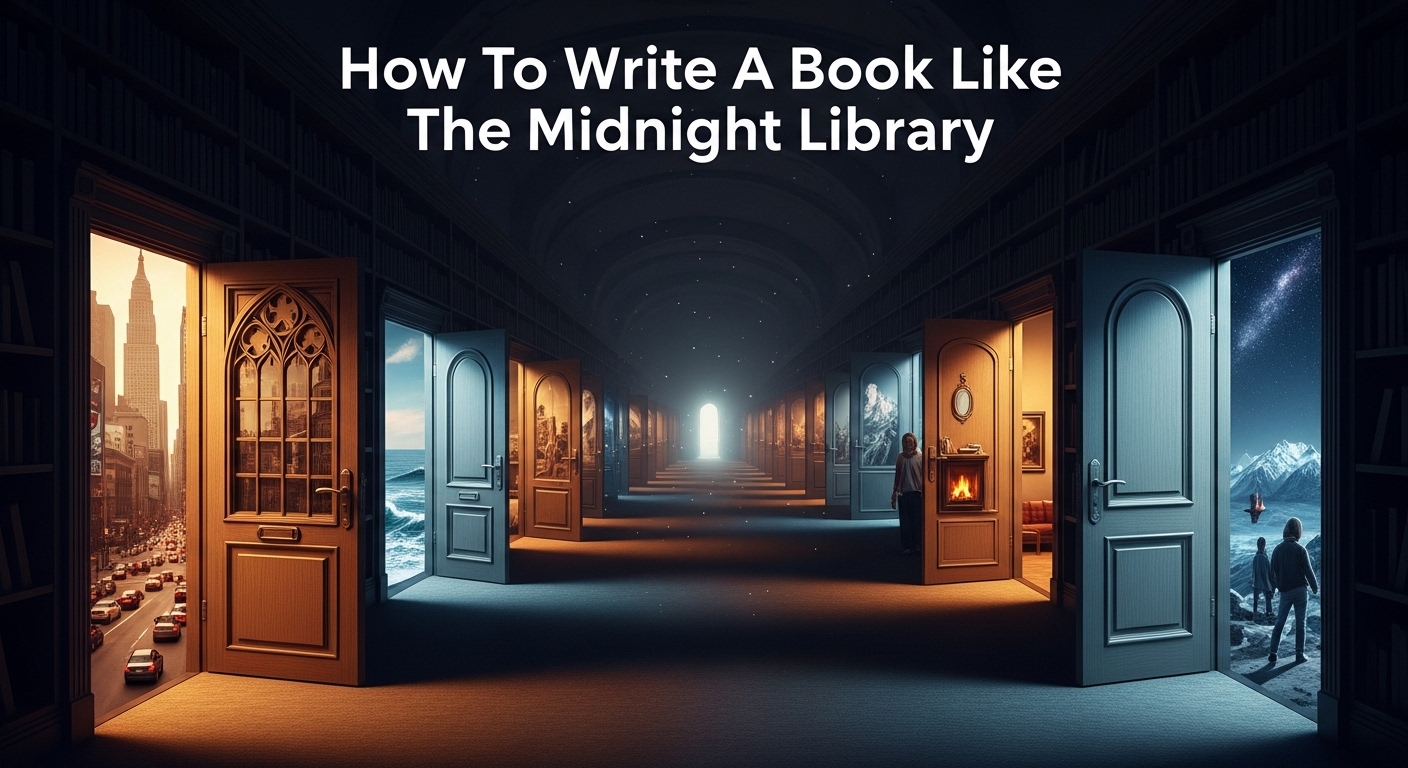
The Midnight Library by Matt Haig is a modern example of how philosophical fiction can reach a wide audience without becoming complex or inaccessible. The novel blends emotional storytelling with existential inquiry, allowing readers to reflect on regret, purpose, and the nature of choice.
Writing a book in a similar style requires more than copying its premise. It involves understanding how structure, character psychology, narrative pacing, and thematic clarity work together. Additionally, the processes of editing, publishing, and design play a significant role in shaping the final impact of such a story.
This guide explores the essential elements needed to create a novel inspired by the depth and accessibility of The Midnight Library.
What’s Behind the Concept
At its core, the novel operates on a speculative idea grounded in emotional reality. The concept of a library containing alternate versions of a life is not just imaginative—it serves as a narrative device to explore regret and possibility.
To create a similar framework, your concept must meet three conditions. First, it should be easy to understand. Second, it should allow multiple narrative scenarios. Third, it must connect directly to human emotion.
Writers often make the mistake of focusing too heavily on originality without considering clarity. A strong concept does not need to be complicated; it needs to be meaningful. The speculative element should act as a tool that reveals character rather than overshadowing it.
Building Emotional Depth Through Characterization
The emotional weight of the story comes primarily from the protagonist. Instead of relying on external conflict, the narrative focuses on internal struggle. This includes feelings of failure, missed opportunities, and dissatisfaction with life choices.
To write effectively in this style, your protagonist should be constructed with psychological realism. Their decisions must feel authentic, even when placed in extraordinary circumstances.
Character development should not happen abruptly. Instead, it should unfold gradually as the character reflects on different versions of their life. This reflective process is what creates emotional resonance.
It is also important to avoid extremes. Overly dramatic characters can feel artificial, while overly passive ones may disengage readers. Balance is essential.
Narrative Structure and Progression
One of the defining features of The Midnight Library is its episodic yet cohesive structure. Each alternate life functions as a self-contained narrative while contributing to the overall arc.
This structure allows for variation without losing direction. However, it requires careful planning. Without proper organization, the story can become repetitive or fragmented.
The following table outlines a simplified structural model inspired by this approach:
| Narrative Element | Function in Story | Writing Focus |
| Opening Crisis | Establishes emotional stakes | Clarity and immediacy |
| Transitional Space | Introduces central concept | Simplicity and intrigue |
| Alternate Experiences | Explores different life paths | Variety with thematic consistency |
| Emotional Realization | Builds understanding of self | Depth and reflection |
| Resolution | Concludes internal journey | Subtlety and meaning |
This structure ensures that each part of the narrative contributes to a unified theme while maintaining reader engagement.
Writing Style and Language
The language used in philosophical fiction should be accessible without being simplistic. Matt Haig achieves this by using clear, concise prose combined with reflective passages.
To replicate this style, focus on sentence clarity and rhythm. Avoid overly complex descriptions or unnecessary jargon. At the same time, do not strip the writing of emotional nuance.
A useful technique is to alternate between narrative action and introspection. This creates a natural flow and prevents the story from becoming monotonous.
Consistency in tone is also important. Sudden shifts in style can disrupt immersion, especially in a story that relies heavily on emotional continuity.
Integrating Themes Without Overstatement
Themes such as regret, hope, and identity should emerge naturally from the narrative rather than being explicitly stated. Readers should feel the message rather than being told what it is.
This requires restraint. Over-explaining can reduce the impact of important moments. Instead, allow scenes and character choices to communicate meaning.
Symbolism can also be effective when used subtly. In The Midnight Library, the library itself represents possibility and reflection. Similar symbolic elements can enhance your story if they are integrated carefully.
The Role of Editing in Refining the Story
Editing is one of the most critical stages in writing a novel of this nature. Because the story relies heavily on emotional and philosophical clarity, any inconsistencies can weaken its impact.
The editing process should focus on refining structure, improving pacing, and ensuring thematic coherence. It is also important to eliminate repetition, especially in a narrative that revisits similar scenarios.
Developmental editing helps shape the overall story, while line editing improves language and flow. Both are essential for achieving a polished final product.
Writers should be prepared to revise multiple drafts. The simplicity seen in finished works often comes from extensive refinement.
Preparing for Publishing
Publishing a novel like this requires an understanding of market positioning. Philosophical fiction often appeals to a broad audience, but it must be presented clearly to stand out.
Traditional publishing and self-publishing are both viable options. Each has its advantages. Traditional publishing offers professional support and wider distribution, while self-publishing provides creative control.
Regardless of the path chosen, the manuscript must be professionally edited before submission or release. Poor editing can undermine even the strongest concepts.
Additionally, understanding your target audience is crucial. Readers of this genre typically look for emotionally engaging stories with meaningful insights.
Importance of Book Design and Presentation
The design of your book plays a significant role in attracting readers. A novel like The Midnight Library benefits from a minimalist yet symbolic cover that reflects its themes.
Effective design includes:
- A visually appealing cover
- Clear typography
- Consistent formatting
The cover should hint at the concept without revealing too much. For example, imagery related to books, night, or infinite spaces can evoke curiosity.
Interior design is equally important. Proper spacing, readable fonts, and clean formatting enhance the reading experience. These details contribute to the overall professionalism of your work.
Balancing Creativity with Reader Expectations
While it is important to bring originality to your writing, understanding reader expectations helps ensure your story resonates. Readers of philosophical fiction often seek emotional connection and thought-provoking ideas.
This does not mean limiting creativity. Instead, it involves aligning your narrative with what readers find meaningful. A successful book in this genre offers both introspection and storytelling.
Avoid focusing solely on concept at the expense of character or vice versa. Balance is what creates a compelling and memorable narrative.
Conclusion
Writing a book like The Midnight Library involves more than adopting its premise. It requires a deep understanding of human emotion, a clear narrative structure, and a thoughtful approach to storytelling.
From concept development to editing, publishing, and design, every stage contributes to the final outcome. The goal is to create a story that not only entertains but also encourages reflection.
By focusing on clarity, emotional depth, and thematic consistency, you can craft a novel that resonates with readers in the same way. The process may be demanding, but the result is a story that holds lasting meaning.
FAQs
Q1. What genre is The Midnight Library?
It falls under philosophical fiction with elements of contemporary and speculative storytelling.
Q2. Do I need a complex concept to write a similar book?
No, a simple but meaningful concept works best as long as it connects emotionally with readers.
Q3. How important is editing in this type of novel?
Editing is crucial to maintain clarity, emotional depth, and consistency throughout the story.
Q4. Can I self-publish a philosophical fiction book?
Yes, self-publishing is a strong option if the book is professionally edited and well-designed.
Q5. What role does book design play in success?
Design helps attract readers and reflects the theme, making your book visually appealing and marketable.
