
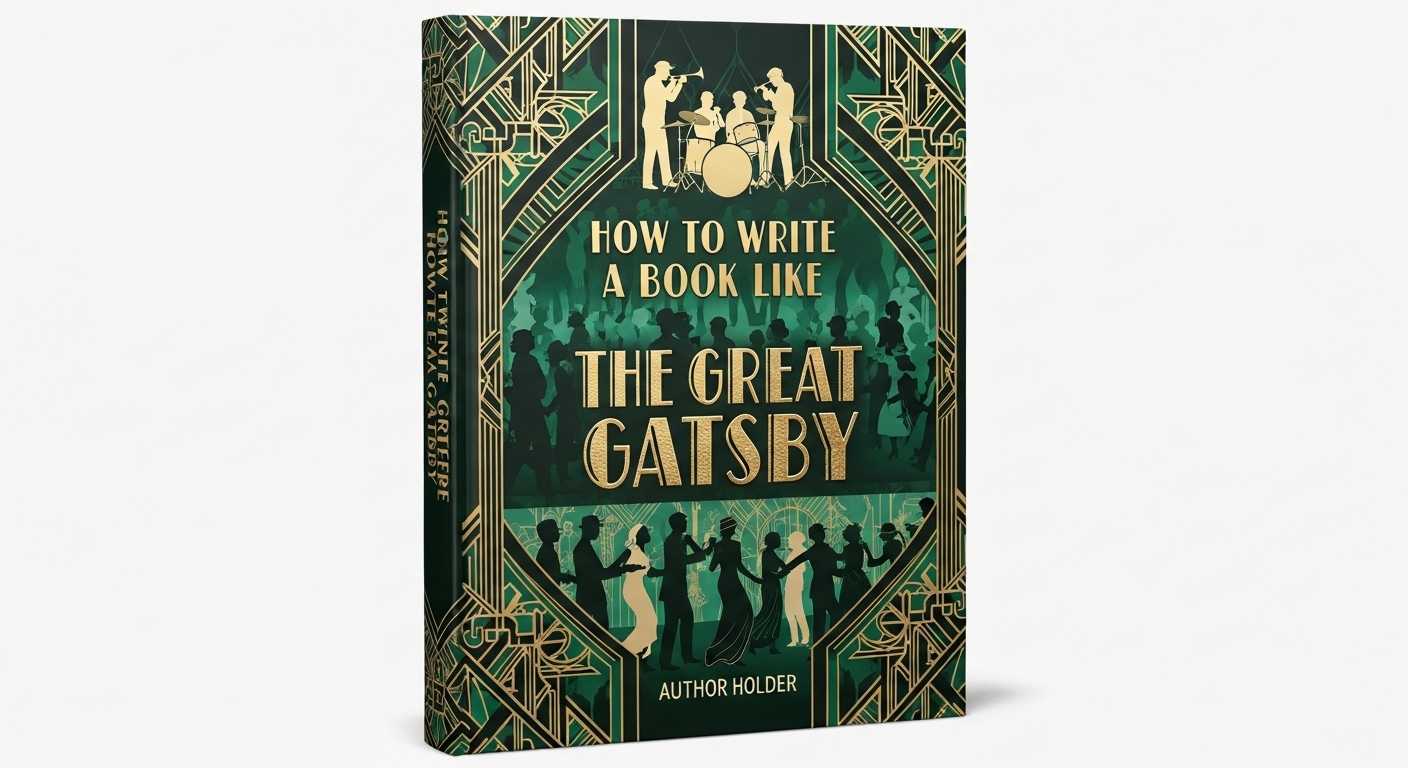
F. Scott Fitzgerald’s The Great Gatsby remains one of the most celebrated novels of the 20th century, often hailed for its lyrical prose, rich symbolism, and profound exploration of the American Dream. Writing a book that evokes the elegance, complexity, and emotional resonance of Fitzgerald’s masterpiece is no easy feat. It requires a deep understanding of character development, narrative structure, thematic depth, and literary style. In this blog, we explore a step-by-step approach to writing a novel inspired by The Great Gatsby, while incorporating essential aspects of editing, publishing, and design to produce a polished and professional work.
The Driving Forces Behind the Tale
At the heart of The Great Gatsby are universal themes that continue to resonate with readers today. The pursuit of wealth and status, the illusion of love and happiness, the decay of morality, and the tension between reality and illusion all create a layered narrative that combines both social critique and intimate character study. Before attempting to emulate Fitzgerald, it’s essential to identify the themes that will drive your story. Think about the emotional truths you want to explore—ambition, desire, jealousy, loss, or societal pressure. These thematic pillars provide the framework upon which all other elements of your novel are built.
Understanding the social and historical context can also enhance the authenticity of your work. Fitzgerald’s novel was set in the 1920s, a time of post-war optimism, economic prosperity, and cultural upheaval. To capture a similar vibrancy, immerse yourself in the era or environment you are depicting. Whether you choose the Jazz Age, modern high society, or another social milieu, research plays a critical role. Reading historical accounts, analyzing period-specific dialogue, and studying social customs allows you to construct a world that feels lived-in and believable.
Crafting Compelling Characters
One of Fitzgerald’s greatest strengths was his ability to create characters that are simultaneously archetypal and deeply personal. Jay Gatsby embodies the dreamer and the tragic hero; Daisy Buchanan represents allure and moral ambiguity; Nick Carraway serves as the reflective observer and moral compass. To write a novel in a similar vein, focus on creating multidimensional characters who possess both strengths and flaws. Characters should evolve over the course of the story, with their desires and choices driving the plot forward.
Character development should also integrate subtle social commentary. In The Great Gatsby, Fitzgerald critiques materialism and the hollow pursuit of status through his characters’ interactions and choices. Your characters’ ambitions, fears, and moral dilemmas should similarly reflect larger societal dynamics, giving your story depth and resonance beyond personal narratives.
Psychological complexity adds another layer to character authenticity. Delve into your characters’ motivations, backstories, and internal conflicts. Using literary devices such as unreliable narrators, shifting perspectives, or introspective monologues can mirror the nuanced storytelling techniques Fitzgerald employed, allowing readers to engage with your characters on a profound emotional level.
Mastering Narrative Style
Fitzgerald’s prose is renowned for its lyrical, almost musical quality, blending poetic descriptions with sharp social observation. Writing like him requires careful attention to language, rhythm, and imagery. Sentences in The Great Gatsby often carry multiple layers of meaning, simultaneously conveying narrative action, character insight, and thematic resonance. Emulating this style demands that every word serves a purpose, contributing to atmosphere, symbolism, or emotional impact.
Symbolism and motifs are key to capturing the essence of Fitzgerald’s style. The green light at the end of Daisy’s dock, the eyes of Dr. T. J. Eckleburg, and the valley of ashes are not merely decorative elements—they carry profound thematic weight. When writing your novel, think about recurring images or symbols that can enrich your story and provide subtle commentary on your characters’ inner lives or societal conditions. The careful placement of these symbols adds depth without overtly dictating interpretation, allowing readers to uncover layers of meaning through attentive reading.
Point of view also plays a crucial role. Fitzgerald uses Nick Carraway’s first-person perspective to balance intimacy with reflective commentary. Consider how your narrative voice can shape readers’ understanding of events and characters. Whether you choose a first-person narrator, limited third-person, or alternating perspectives, ensure that the voice is consistent, compelling, and capable of capturing both internal and external worlds.
Building a Structured Yet Evocative Plot
Unlike plot-driven novels, The Great Gatsby unfolds with a careful layering of episodes, dialogues, and revelations. The story balances a clear narrative arc with moments of reflection, description, and suspense. Writing a similar book requires attention to pacing, tension, and thematic coherence. Key plot points should be strategically placed to reveal character motivations and thematic depth gradually.
Subplots are also important. Romantic entanglements, social rivalries, or personal ambitions can provide texture and nuance to your narrative. Each subplot should serve the larger narrative, reinforcing themes and character arcs. In doing so, the story feels cohesive, yet rich and immersive.
Integrating foreshadowing and irony adds literary sophistication. Fitzgerald frequently employs subtle hints and narrative irony to shape readers’ expectations and deepen engagement. Strategic foreshadowing prepares readers for climactic moments, while ironic contrasts between appearance and reality highlight societal critiques and character dilemmas.
Integrating Dialogue with Subtext
Fitzgerald’s dialogue is a study in nuance. Characters often speak indirectly, allowing subtext, innuendo, and social tension to carry much of the narrative weight. Dialogue should reveal character, advance plot, and convey unspoken emotional currents. Pay attention to rhythm, word choice, and how conversations reflect social hierarchies or personal insecurities. Every line of dialogue can offer insight into relationships, ambitions, or moral values.
Subtext, in particular, is essential for recreating the Fitzgeraldian atmosphere. Characters may speak casually about trivial matters while masking deep fears or desires. This technique encourages readers to read between the lines, fostering engagement and interpretive depth.
Crafting Setting and Atmosphere
The physical and social settings of The Great Gatsby—from opulent mansions to the desolate valley of ashes—serve as extensions of character and theme. The settings are symbolic, atmospheric, and reflective of broader societal conditions. When creating your own novel, prioritize world-building that is not merely descriptive but evocative. Use setting to convey mood, foreshadow events, and reinforce thematic concerns.
Consider both macro and micro environments. The social milieu, cultural norms, and historical context set the stage, while smaller, intimate spaces—rooms, gardens, streets—can be imbued with symbolic resonance. Attention to detail in describing clothing, architecture, social rituals, and sensory elements can bring the world to life, creating a sense of authenticity that mirrors Fitzgerald’s meticulous craftsmanship.
The Role of Editing, Publishing, and Design
Writing a novel like The Great Gatsby does not end with the first draft. Meticulous editing is essential for refining prose, clarifying narrative arcs, and ensuring thematic cohesion. Editing should address both macro elements (plot, pacing, character development) and micro elements (sentence structure, word choice, rhythm). Professional editors can help identify inconsistencies, enhance narrative flow, and elevate stylistic quality. Investing in comprehensive editing ensures that your novel achieves the sophistication necessary to resonate with discerning readers.
Publishing decisions also influence the reach and reception of your work. Consider traditional publishing routes for wider exposure or hybrid/self-publishing options for greater creative control. A well-planned publishing strategy, including manuscript preparation, query letters, and marketing, ensures that your book reaches its target audience effectively.
Book design is another crucial element often overlooked. The visual presentation—cover design, typography, page layout—affects first impressions and reader engagement. A cover that captures the essence of your story while appealing to potential readers can significantly enhance marketability. Similarly, interior design, including font choice, spacing, and chapter layout, contributes to readability and aesthetic appeal, complementing the literary quality of your novel.
Table: Key Elements to Emulate from The Great Gatsby
| Element | Description | Application Tips |
| Themes | Love, wealth, social class, the American Dream, illusion vs. reality | Identify core themes and weave them subtly into plot and character arcs |
| Characters | Multi-dimensional, flawed, and symbolic | Develop backstory, motivations, and social commentary through characters |
| Narrative Style | Lyrical prose, symbolism, reflective voice | Focus on sentence rhythm, imagery, and consistent narrative voice |
| Dialogue | Subtle, layered with subtext | Convey character relationships and social tension without explicit exposition |
| Setting and Atmosphere | Evocative, symbolic, and historically contextualized | Use sensory detail and cultural markers to enhance thematic depth |
| Editing and Design | Refined prose, professional book design | Engage editors and design professionals to polish and present the work |
| Publishing Strategy | Traditional or hybrid publishing | Plan marketing, audience targeting, and distribution for effective reach |
Research and Continuous Learning
Writing in the style of The Great Gatsby requires a commitment to research and literary study. Read widely within and beyond Fitzgerald’s oeuvre to understand narrative techniques, thematic construction, and historical context. Analyze novels from his contemporaries, as well as modern authors who experiment with style and symbolism. Literary analysis, historical research, and immersion in cultural and social studies provide a foundation that informs both the writing process and thematic richness.
Workshops, writing groups, and professional consultations can also be invaluable. Feedback from knowledgeable readers and literary mentors highlights areas for improvement and helps refine both style and substance. Continuous learning and revision are hallmarks of authors who aspire to create enduring literature.
Conclusion
Writing a book like The Great Gatsby is a complex, multi-layered endeavor that blends thematic insight, character depth, stylistic mastery, and meticulous attention to detail. From understanding historical context and crafting multidimensional characters to mastering lyrical prose, evocative settings, and layered dialogue, every element contributes to a story that resonates with readers. Integrating professional editing, thoughtful publishing strategies, and compelling design ensures that your work is not only artistically accomplished but also market-ready. By studying Fitzgerald’s techniques, embracing rigorous research, and committing to narrative excellence, you can create a novel that captures the timeless allure, emotional resonance, and literary sophistication that make The Great Gatsby a lasting masterpiece.
