
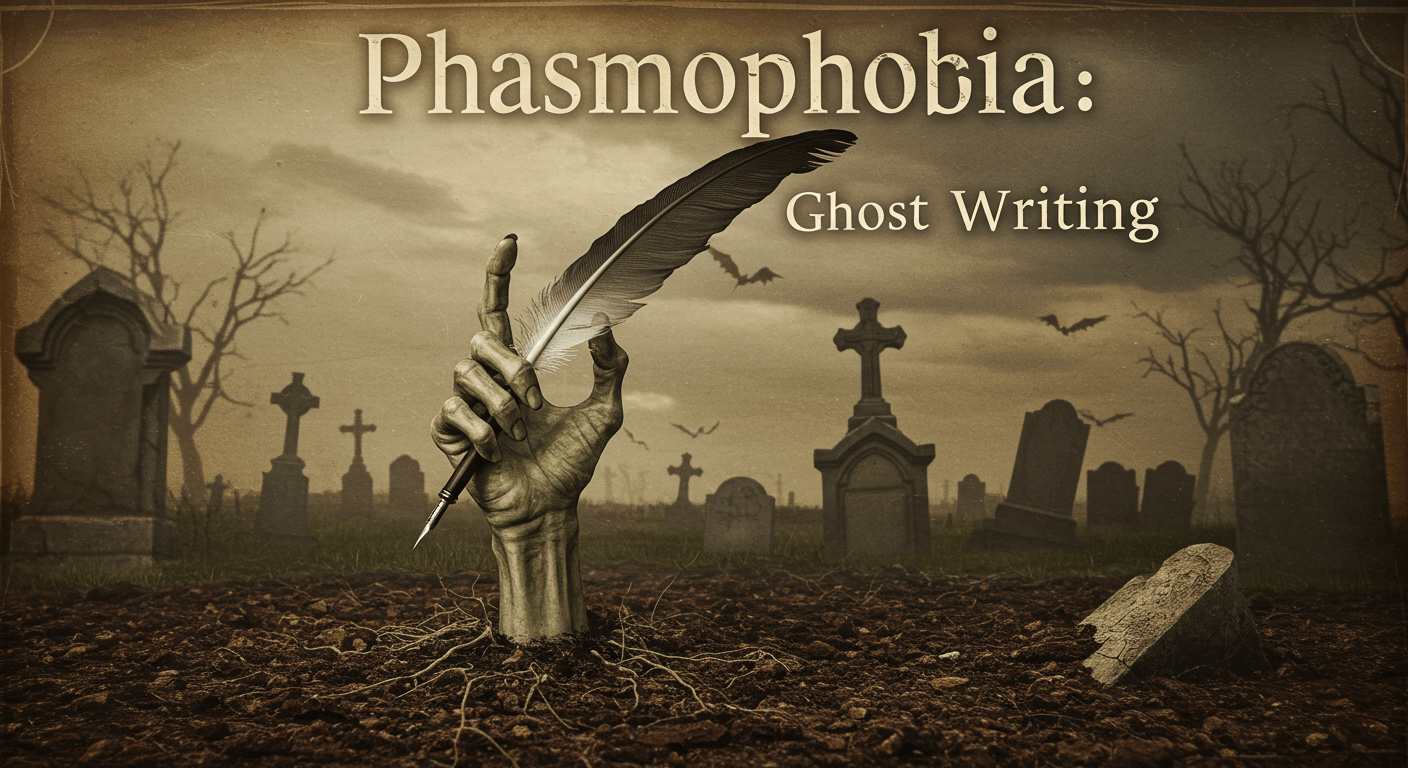
Ghostwriting horror novels is a thrilling journey, especially when the theme revolves around phasmophobia—the fear of ghosts. This fear taps into the primal human psyche and offers a rich foundation for gripping storytelling. But when you’re ghostwriting such a book, you’re not just telling a scary story; you’re stepping into someone else’s vision, crafting their horror with your words.
In this guide, we’ll explore the process of ghostwriting a book on phasmophobia, from initial planning to final publication, and provide you with a framework to place and promote such a book successfully in the market.
1. Introduction to Phasmophobia
Phasmophobia, the intense fear of ghosts, is not just a common theme in horror—it’s one of its backbones. Rooted in culture, religion, folklore, and psychology, it affects how people perceive the supernatural.
When ghostwriting a book on this theme, it’s vital to understand not only what phasmophobia is, but also how people experience it. The more authentic your writing, the more powerfully it will resonate.
2. The Role of a Ghostwriter in Horror Fiction
Ghostwriting is the art of writing for someone else who will take the credit. In horror fiction—especially with a specific fear like phasmophobia—your job is to:
- Capture the client’s voice and tone.
- Align with their story vision.
- Deliver high-quality, chilling prose.
- Stay invisible (your name won’t be on the book).
This makes trust and communication essential between ghostwriter and client.
3. Research: Understanding Phasmophobia Deeply
Before you write a word, you need to research thoroughly. This includes:
- Psychological roots of phasmophobia.
- Cultural representations of ghosts (Western vs. Eastern).
- Real-life phobia symptoms and how people cope.
- Paranormal investigation stories.
- Horror literature and films that explore this theme (e.g., The Sixth Sense, The Haunting of Hill House).
Use this research to create fear that feels real, not fabricated.
4. Building the Concept: Story Structure and Plot
Structure matters. Most successful horror novels follow one of these structures:
- Haunted House: A place is the source of the phobia.
- Psychological Decline: A character gradually loses their grip on reality.
- Supernatural Mystery: The protagonist investigates ghostly occurrences.
Map out your ghostwriting project with a solid three-act structure:
- Act 1: Introduction of characters, setting, and ghostly hints.
- Act 2: Escalation of hauntings and emotional unraveling.
- Act 3: Climax, confrontation with the supernatural, and resolution.
Make sure to include plot points that specifically trigger phasmophobia.
5. Crafting Fear: Writing Techniques for Horror
Horror writing requires you to master the art of fear, especially in ghostwriting. Key techniques include:
- Pacing: Slow build-ups with sudden shocks.
- Sensory Details: Sound, shadow, and movement.
- Uncertainty: What’s real? What’s imagined?
- Isolation: Emotional or physical.
- Symbolism: Mirrors, cold spots, flickering lights.
Use short sentences during high-tension moments and longer ones for buildup.
6. Ghostwriting Collaboration: Working with the Client
Ghostwriting isn’t a solo journey. You’ll need to collaborate with your client closely:
- Conduct interviews to understand their vision.
- Share chapter outlines before writing.
- Deliver drafts in stages for feedback.
- Be open to revision—even total rewrites.
Respect their ideas, even if you have suggestions. Your job is to make their horror come to life.
7. Character Development: Creating Relatable Fear
Characters should embody phasmophobia—not just fear ghosts, but be consumed by the possibility of them. For example:
- A child with a traumatic experience in an old house.
- A skeptic who starts seeing unexplained things.
- A medium who lost a loved one and is haunted by guilt.
Make their fear personal and believable. That’s how horror works best.
8. Setting the Scene: Building Atmosphere
Your setting isn’t just a backdrop—it’s a character in itself. The haunted mansion, the foggy graveyard, the abandoned hospital—all invoke fear differently.
To build atmosphere:
- Use descriptive language for lighting, temperature, and sounds.
- Place the reader in the scene—let them hear creaking wood and feel goosebumps.
- Keep details vague at times to enhance suspense.
9. Writing Realism: Combining Fact with Fiction
Blend reality with fiction to make phasmophobia seem credible:
- Include folklore elements tied to real cultures.
- Mention known ghost-hunting tools (EMF readers, spirit boxes).
- Use believable phobia responses: sweating, paralysis, insomnia.
Realism makes the fiction scarier. Readers need to believe “this could happen.”
10. Ghostwriting Ethics and Confidentiality
As a ghostwriter:
- Never claim credit for the book.
- Sign NDAs if requested.
- Stay respectful to the client’s ideas.
- Keep communication professional and clear.
Your name may not be on the cover, but your quality will speak volumes through their success.
11. Editing and Revising with Horror in Mind
Editing horror is different from editing romance or fantasy:
- Check if scenes build or kill suspense.
- Remove clichés (e.g., “it was a dark and stormy night”).
- Tighten pacing—especially before reveals.
- Strengthen dialogue to reflect fear or tension.
- Fix inconsistencies in the supernatural logic.
You can also use beta readers to test if the horror is working.
12. Publishing Options: Traditional vs. Self-Publishing
Once the manuscript is done, your client may ask for help placing the book.
Traditional Publishing:
- Higher credibility.
- Longer process.
- Often requires an agent.
Self-Publishing:
- Faster turnaround.
- More control.
- Easier to niche-target (perfect for phasmophobia readers).
If you’re ghostwriting for hire, your job likely ends at manuscript delivery unless otherwise agreed.
13. Marketing a Phasmophobia-Themed Book
Even if you’re behind the scenes, knowing how a phobia-driven horror book is marketed helps you write it better.
Tactics include:
- Creating eerie trailers or book teasers.
- Releasing sample chapters around Halloween.
- Using phasmophobia-related hashtags on social media.
- Targeting horror book blogs, YouTube horror reviewers, and podcasts.
Titles and covers matter: they must instantly signal supernatural fear.
14. Getting Paid as a Ghostwriter
Ghostwriting fees vary depending on:
- Word count.
- Genre difficulty (horror is higher effort).
- Writer’s experience.
Typical ranges:
- $5,000 to $30,000 for a novel-length ghostwritten horror book.
Make sure your contract includes:
- Scope of work.
- Deadlines and milestones.
- Payment schedule.
- Revisions included.
- Credits clause (usually none).
Platforms like Reedsy, Upwork, and Ghostwriting agencies are good places to find phasmophobia-themed gigs.
15. Final Tips and Best Practices
Here are some final recommendations to make your ghostwritten phasmophobia book truly chilling:
- Watch classic and modern ghost horror films for inspiration (The Conjuring, Insidious, The Others).
- Read horror masters like Stephen King, Shirley Jackson, and Joe Hill.
- Keep a fear log—note your own reactions to scary media to reproduce them in writing.
- Test scenes on readers to see if they evoke fear or tension.
- Avoid over-explaining—fear often lives in what’s not seen or understood.
Above all, respect the genre. Horror writing, especially around specific fears like phasmophobia, requires subtlety, psychological insight, and storytelling precision.
Conclusion
Ghostwriting a book about phasmophobia is a unique challenge—blending someone else’s vision with deep emotional insight into fear itself. Done well, it can result in a powerful, spine-tingling book that grips readers long after they turn the last page.
As a ghostwriter, your mission is not just to tell a ghost story—it’s to haunt the reader’s imagination with your client’s vision, executed flawlessly through your words.
If you’re prepared, research thoroughly, and write with intensity, you can deliver a phasmophobia-themed horror book that terrifies, entertains, and lives forever in the dark corners of your reader’s mind.
