
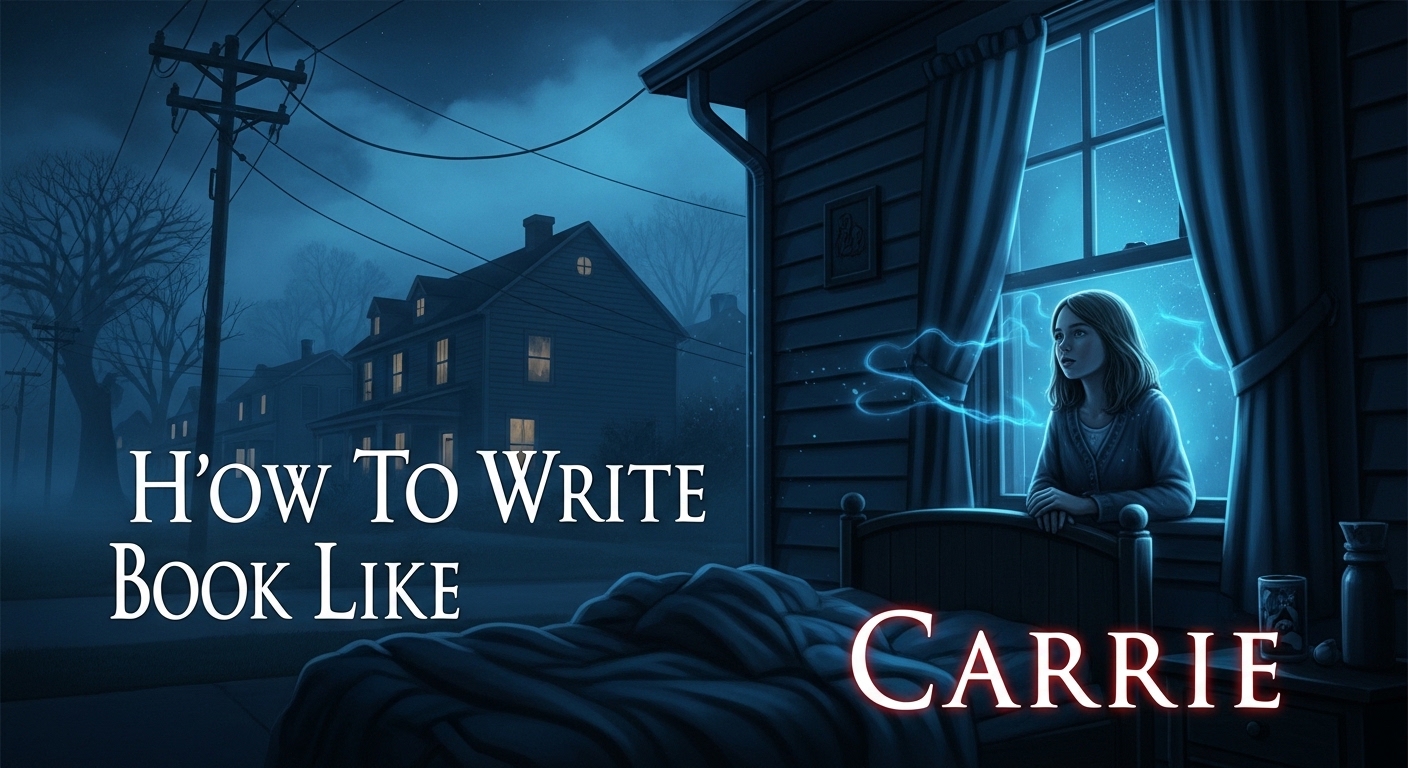
Horror fiction has a special power to explore the darkest corners of human emotions while reflecting real social struggles. One of the most famous examples of this is Carrie by Stephen King. Published in 1974, the novel quickly became a landmark in modern horror literature because it combines psychological tension, supernatural elements, and a deeply emotional coming-of-age story.
If you want to write a book like Carrie, you must understand that the novel’s success comes from more than just horror. It blends social commentary, character-driven storytelling, and suspenseful narrative techniques. Writers who study this style can learn how to create an emotionally gripping story where the reader sympathizes with the protagonist even while the story moves toward tragedy.
This guide explores the essential elements that make a novel like Carrie so powerful and explains how you can apply similar techniques in your own writing. From character development to narrative structure, and from atmosphere to publishing considerations, every stage of the process matters when creating a compelling horror novel.
The Unique Narrative Approach of Carrie
Before attempting to write a book inspired by Carrie, it is important to analyze how the story is structured. The novel uses a unique storytelling method that mixes traditional narrative with documents such as newspaper reports, witness statements, and excerpts from fictional books.
This layered storytelling style creates the feeling that the tragic events have already happened and are being analyzed afterward. It adds realism to a supernatural story and builds suspense because the reader slowly discovers how everything unfolded.
Another important aspect is the emotional core of the narrative. While the novel includes telekinetic powers and violent events, the real focus is the psychological journey of the main character. The story examines bullying, isolation, religious fanaticism, and the struggle for identity during adolescence.
Writers who want to replicate this style should focus on emotional authenticity first. The supernatural element should amplify the character’s internal conflict rather than replace it.
Building a Compelling Protagonist
At the heart of Carrie is a deeply sympathetic character. Carrie White is not a typical horror protagonist; she is a shy, socially isolated teenage girl who becomes the victim of constant bullying. Her supernatural powers are only one part of her identity.
When writing a similar story, the protagonist should feel real and vulnerable. Readers must understand the character’s fears, hopes, and emotional struggles before the horror elements emerge.
A powerful protagonist often includes several important characteristics:
- A sense of isolation or alienation
- Personal trauma or conflict
- Hidden potential or abilities
- A desire for acceptance or belonging
These traits create empathy between the reader and the character. As the story progresses and the conflict intensifies, the reader becomes emotionally invested in the character’s fate.
Developing such a character often requires multiple rounds of editing to refine their personality, motivations, and backstory. Strong character development is rarely perfect in the first draft, and careful revision is essential.
Creating a Strong Emotional Conflict
One of the reasons Carrie remains influential decades after its release is the emotional conflict at the center of the story. The protagonist faces cruelty from classmates and strict control from a religiously extreme parent. These forces trap her in a life where she cannot express herself freely.
When writing a similar novel, emotional conflict should drive the story forward. The horror element becomes more powerful when it grows out of real human struggles.
Consider the following questions while developing your narrative:
What emotional pain is the protagonist experiencing?
What social pressures or relationships make their life difficult?
How does this conflict evolve throughout the story?
These questions help create a story where the supernatural element feels like a natural extension of the character’s emotional state.
Building Atmosphere and Suspense
Atmosphere is a defining feature of horror fiction. In Carrie, tension builds gradually through uncomfortable situations, awkward social encounters, and a constant sense of dread.
The story does not rely solely on shocking moments. Instead, it slowly constructs an emotional and psychological environment that prepares the reader for the final climax.
To create this type of atmosphere, writers should pay attention to details such as setting, tone, and pacing. Small details—like a tense classroom environment or a quiet but threatening household—can create powerful suspense.
The goal is to make readers feel that something terrible is approaching, even before it actually happens.
Structuring a Story Similar to Carrie
The structure of Carrie is unique because it blends traditional storytelling with documentary-style segments. This technique makes the narrative feel more realistic and adds layers of perspective.
Writers can experiment with similar structures by including different types of narrative material such as interviews, journal entries, news reports, or academic analysis within the story. These elements provide context and deepen the mystery surrounding the main events.
The table below illustrates the major structural components that can help shape a novel inspired by Carrie.
| Story Element | Purpose in the Narrative | Writing Tip |
| Character Introduction | Establish the protagonist’s emotional world | Focus on vulnerability and social dynamics |
| Rising Conflict | Show increasing tension and bullying | Gradually reveal the character’s abilities |
| Multiple Perspectives | Add realism through outside viewpoints | Use reports, interviews, or documents |
| Climactic Event | Deliver the dramatic turning point | Build emotional pressure beforehand |
| Aftermath | Reflect on the consequences | Show how society reacts to the tragedy |
This type of structure creates a layered narrative where the reader not only experiences the events but also sees how others interpret them afterward.
Developing the Supernatural Element
The supernatural aspect of Carrie is telekinesis, but it is introduced gradually rather than immediately. At first, the powers appear small and uncontrolled. Over time, they grow stronger as the character’s emotional turmoil intensifies.
This gradual development is an important lesson for writers. Introducing supernatural powers slowly makes them feel more believable and allows readers to adapt to the concept.
The key is to connect the supernatural element to the protagonist’s emotions. The power should feel like an extension of their inner world. Anger, fear, and humiliation may trigger abilities that the character struggles to control.
This approach makes the supernatural element meaningful rather than simply decorative.
Writing the Climactic Moment
The climax of Carrie is one of the most famous scenes in horror literature. It represents the moment when all emotional pressure finally explodes.
A strong climax requires careful preparation. The events leading up to it must feel inevitable, as though the story has been moving toward that moment from the very beginning.
Writers should focus on pacing during this stage. The tension should rise quickly, the stakes should become clear, and the emotional intensity should reach its peak.
Often, this section requires detailed editing to ensure the pacing is perfect and the emotional impact is strong.
Techniques for Writing Horror Like Carrie
Although most of the article focuses on explanation rather than lists, several practical techniques can help writers craft a horror novel in this style.
Key Techniques to Use
- Focus on emotional realism before introducing supernatural elements.
• Create a protagonist who is vulnerable but capable of growth.
• Build tension slowly through social conflict and psychological pressure.
• Use multiple narrative perspectives to deepen the story.
• Design a powerful climax that resolves the central conflict.
These techniques work together to create a story that feels both frightening and emotionally powerful.
Revising and Strengthening Your Manuscript
Once the first draft is complete, the real work begins. Successful novels rarely emerge fully formed from the initial writing process. Instead, they are shaped through careful editing and revision.
During revision, writers should focus on improving pacing, strengthening character motivations, and ensuring the emotional arc remains consistent throughout the story.
Professional editors often help identify structural weaknesses or unclear themes. This stage can dramatically improve the quality of a manuscript and prepare it for the next step in the journey.
Preparing the Book for Publishing
After the manuscript has been revised and polished, the next stage involves publishing preparation. This includes formatting the manuscript, designing the cover, and creating promotional materials.
Book design plays a crucial role in attracting readers. A well-designed cover immediately communicates the tone and genre of the story. For horror novels, darker visual elements, strong typography, and symbolic imagery are often effective.
Writers should also consider whether they want to pursue traditional publishing or independent publishing. Each option has advantages. Traditional publishers provide marketing support and industry connections, while self-publishing allows authors to maintain full creative control.
Regardless of the path chosen, professional presentation significantly increases the chances of success.
Learning from Stephen King’s Approach
One reason Carrie became such a cultural phenomenon is that Stephen King wrote about ordinary people in extraordinary situations. His characters feel authentic because they reflect real social issues.
Aspiring writers can learn from this approach by focusing on universal human experiences such as loneliness, fear, and the desire for acceptance. When these emotions drive the story, the supernatural elements become more impactful.
Studying the structure and themes of Carrie can help writers understand how horror fiction can also function as a powerful form of social commentary.
Final Thoughts
Writing a novel like Carrie requires more than simply adding supernatural powers to a story. The real strength of the novel lies in its emotional depth, character-driven narrative, and powerful social themes.
Writers who want to follow this style should focus on building a sympathetic protagonist, developing strong emotional conflicts, and creating a tense atmosphere that leads to an unforgettable climax. The process involves careful drafting, thoughtful editing, effective design, and strategic publishing decisions.
By studying the storytelling techniques used by Stephen King and applying them thoughtfully, writers can create horror novels that resonate deeply with readers. A story that blends psychological realism with supernatural tension has the potential to leave a lasting impression—just as Carrie has done for generations of readers.
