
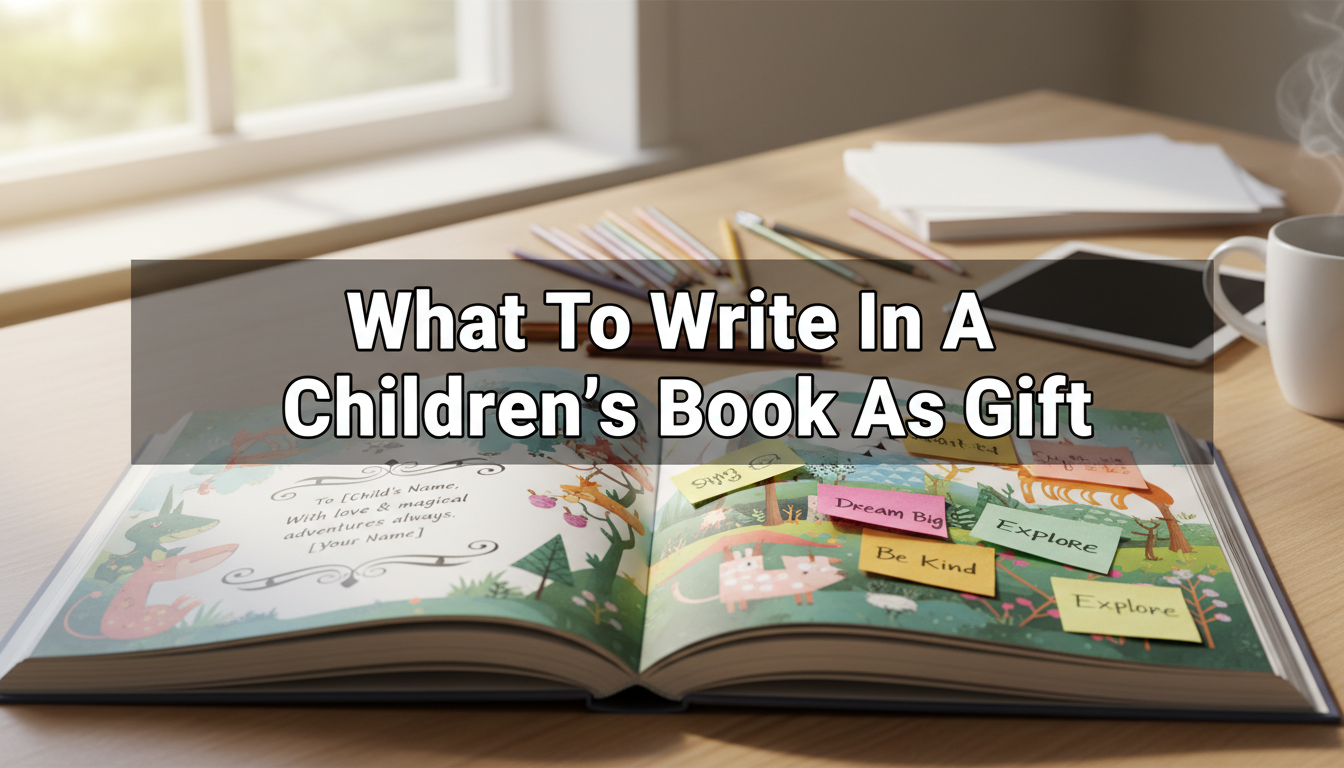
The Art of the Inscription: Transforming a Children’s Book into a Lifelong Heirloom
In an era dominated by digital media and fleeting screen time, the physical children’s book remains a bastion of tangible connection and enduring legacy. When selected as a gift, a book is more than a collection of pages and illustrations; it is a vessel for imagination, education, and emotional bonding. However, the true value of such a gift often lies not in the printed text of the author, but in the handwritten inscription on the inside cover. Knowing what to write in a children’s book as a gift is a nuanced skill that blends sentimentality with literary appreciation, transforming a standard retail item into a personalized artifact that a child may cherish well into adulthood.
The act of inscribing a book creates a temporal bridge. For the giver, it is a moment to impart wisdom, express love, or mark a milestone. For the child—and eventually the adult that child becomes—it serves as a permanent reminder of a relationship, a specific date in time, and the voice of a loved one. This guide provides a comprehensive, deep-dive analysis into the etiquette, creativity, and mechanics of writing book inscriptions, ensuring your message resonates for generations.
Understanding the Significance of the Book Inscription
Before putting pen to paper, it is vital to understand the function of a book dedication or inscription. Unlike a greeting card, which is often discarded after the occasion passes, a book is designed to be kept. It sits on shelves, moves between homes, and is frequently passed down to the next generation. Therefore, the message written inside acquires a permanent status. It is “metadata” for the child’s life library.
An inscription elevates the book’s provenance. It answers the questions: Who gave this? When? And why? From an archival perspective, this adds immense sentimental value. Professional archivists and rare book collectors often value “association copies”—books inscribed by authors or significant figures—but for a family, a book inscribed by a grandparent or parent holds infinitely more personal worth. Consequently, the tone should be timeless. While it is appropriate to reference the specific occasion (such as a 5th birthday), the core sentiment should be one that the reader can appreciate at age five, fifteen, and fifty.
The Anatomy of a Perfect Book Message
Writing a meaningful message requires structure. A wandering, disorganized scrawl can detract from the aesthetic of the book. To compose a high-quality inscription, one should adhere to a four-part structural framework: The Salutation, The Connection, The Wish, and The Sign-off.
1. The Salutation
This establishes the recipient. While “Dear [Name]” is standard, consider the longevity of the book. Using the child’s full name adds a sense of gravity and permanence to the gift. If the child is a newborn, addressing the baby directly (rather than the parents) ensures the book remains theirs as they grow.
2. The Connection (The “Why”)
This is the critical component where you contextualize the gift. Why did you choose this specific title? Does the protagonist remind you of the child? Is it a classic you loved when you were their age? Connecting the narrative of the book to the personality of the child demonstrates thoughtfulness. For example, if giving a book about space exploration, mention the child’s curiosity. If the book is about kindness, mention their gentle spirit.
3. The Wish
The “Wish” is the emotional core of the inscription. It is a projection of hope for the child’s future. This can be related to the reading experience (e.g., “May this story take you on wonderful adventures”) or life in general (e.g., “May you always have the courage to explore the unknown”). This section transforms the writing from a mere label into a blessing or benediction.
4. The Sign-off and Date
Never neglect the date. Dating the inscription anchors the memory in time. Years later, the recipient will look back and realize exactly how old they were when they received it. The signature should reflect your relationship (e.g., “Love, Aunt Sarah” or “With pride, Grandpa”).
Tailoring the Message by Occasion
The context of the gift dictates the tone of the writing. A baby shower inscription differs vastly from a graduation gift. Below is an analysis of how to adapt your writing for specific milestones.
Baby Showers and Newborns: The “Books Instead of Cards” Trend
A popular modern trend involves asking guests to bring a book instead of a greeting card. In this context, the inscription serves as a welcome to the world. Since the child cannot read yet, the message is effectively a promise of future bonding. The tone should be tender, welcoming, and focused on the joy of learning.
- Focus: Welcome, growth, and the start of a library.
- Key Themes: Dreaming big, the comfort of stories, parental love.
- Drafting Concept: “Welcome to the world, little one. May this be the first of many adventures you take through the pages of a book.”
Birthdays: Celebrating Milestones
Birthday inscriptions should acknowledge the child’s current stage of development. For a toddler, the message might be simple and rhythmic. For a pre-teen, it can be more complex, perhaps offering advice relevant to their age. If the book is a gift for a significant milestone (like turning 10 or 13), acknowledge the transition toward maturity.
- Focus: Personality traits, current interests, joy of the day.
- Key Themes: Fun, laughter, curiosity, specific age milestones.
- Drafting Concept: “Happy 5th Birthday! Just like the hero in this story, you are becoming brave, strong, and kind.”
Academic Milestones and “Moving Up” Ceremonies
Books like Dr. Seuss’s Oh, The Places You’ll Go! are staples for graduations, from kindergarten to college. Here, the inscription should act as a vote of confidence. It is an opportunity to validate the child’s hard work and express excitement for their future endeavors.
- Focus: Resilience, potential, future success.
- Key Themes: The journey ahead, overcoming obstacles, believing in oneself.
- Drafting Concept: “As you close this chapter and begin a new one, remember that you have the tools to move mountains.”
Strategic Messaging Based on Relationships
The nuance of what to write in a children’s book also depends heavily on the writer’s relationship to the recipient. The dynamic between a grandparent and grandchild is distinct from that of a teacher and student.
From Parents: The Legacy Message
Parental inscriptions often carry the most emotional weight. These messages are read during bedtime stories and rediscovered when the child leaves the nest. Parents should focus on unconditional love and the security of home. It is also the perfect place to record a parent’s hopes for who the child will become.
From Grandparents: The Voice of Wisdom
Grandparents occupy a unique role as keepers of family history and tradition. A book from a grandparent is often a classic—perhaps a story the grandparent read to the parent. The inscription should bridge the three generations. Mentioning, “I read this to your father when he was small,” adds a layer of historical continuity that is invaluable to family heritage.
From Aunts, Uncles, and Godparents: The Encouragers
This relationship allows for more playfulness. Aunts and uncles are often seen as co-conspirators in fun and adventure. Inscriptions here can be wittier, referencing inside jokes or encouraging the child to be bold and adventurous. Godparents, specifically, may wish to include spiritual encouragement or a promise of guidance.
Incorporating Literary Quotes
Sometimes, the most profound sentiments have already been written by masters of literature. Incorporating a quote into your inscription can lend authority and poetic beauty to your message. However, the quote must be relevant. Do not simply choose a famous line; choose one that resonates with the book’s theme or the child’s nature.
When using a quote, ensure it is attributed correctly. It serves as an educational moment for the child, introducing them to great authors. Use quotation marks and perhaps a different style of handwriting (like printing vs. cursive) to distinguish the quote from your personal message.
High-Impact Quote Categories:
- On Imagination: Quotes from Roald Dahl or J.M. Barrie work well for fantasy books.
- On Friendship: Quotes from A.A. Milne (Winnie the Pooh) are timeless for books about bonding.
- On Courage: Quotes from J.R.R. Tolkien or C.S. Lewis fit adventure novels.
The Mechanics of the Inscription: Technical Best Practices
Knowing what to write is only half the battle; knowing how to write it ensures the book remains pristine. The physical act of writing in a book requires consideration of paper quality, ink type, and placement. A poorly executed inscription can bleed through pages or fade over time, ruining the aesthetic of the gift.
Choosing the Right Writing Instrument
Not all pens are created equal. Standard ballpoint pens can indent the paper, leaving impressions on the reverse side. Heavy markers (like Sharpies) almost always bleed through, destroying the illustration on the back of the page. The elite choice for book inscriptions is an archival-quality, acid-free pigment liner or a high-quality gel pen that does not bleed.
- Avoid: Permanent markers (Sharpies), fountain pens with wet ink (unless the paper is thick), and standard pencils (which fade and smudge).
- Recommended: Pigma Micron pens, acid-free gel pens, or specific “book signing” pens found at stationery stores.
Placement of the Inscription
There is often debate regarding where to place the message. The most common locations are:
- The Front Endpaper: This is the colored or blank sheet glued to the inside of the front cover. It usually offers the most space and is the first thing seen when opening the book.
- The Title Page: Writing here places your message alongside the title and author’s name. This is a traditional spot but offers less white space.
- The Half-Title Page: The page containing only the book title, usually preceding the full title page. This is often the cleanest option for shorter messages.
Pro Tip: If you are nervous about your handwriting or making a mistake, write your message on a high-quality, acid-free bookplate (a decorative adhesive label) and stick it inside the cover. This allows you to write multiple drafts before committing to the final version.
Quick Reference: Thematic Inscription Guide
The following table provides a quick reference for matching book genres with appropriate inscription themes and keywords. This assists in crafting a cohesive message where the handwritten note complements the printed content.
| Book Genre/Type | Primary Emotion | Keywords to Include | Sample Phrase Fragment |
|---|---|---|---|
| Classic Fairy Tales | Wonder & Tradition | Magic, Dreams, Timeless, Once upon a time | “May your life be filled with as much magic as…” |
| Educational / Science | Curiosity & Growth | Explore, Discover, Questions, Knowledge | “Never stop asking ‘why’ and seeking the stars…” |
| Bedtime Stories | Comfort & Love | Sweet dreams, Snuggles, Moon, Peace | “For quiet moments and sweet dreams…” |
| Adventure / Heroism | Bravery & Resilience | Courage, Journey, Bold, Hero | “The world is big, and you are brave enough to…” |
| Humor / Silly Books | Joy & Laughter | Giggle, Smile, Fun, Happiness | “May you always find a reason to laugh…” |
Frequently Asked Questions (FAQ)
Should I write on the inside cover or the flyleaf?
The inside cover (the hard board) is often covered with slick paper that can cause ink to smudge. The flyleaf (the first paper page) is usually the safer option for ink absorption. However, test a small dot in a corner if you are unsure about the paper’s coating.
Does writing in a book decrease its value?
From a purely monetary standpoint regarding rare collectibles, a personal inscription can sometimes lower the resale value compared to a pristine copy. However, for a gift meant to be cherished by a child, the sentimental value added by the inscription far outweighs any potential loss in resale market value. The goal is to create a family heirloom, not a commodity.
What if I make a mistake while writing?
If you make a minor error, it is best to leave it or neatly cross it out with a single line. Using correction fluid (White-Out) often looks messy and degrades over time. If the mistake is catastrophic, you can paste a decorative bookplate over the error to cover it entirely.
Can I write a message if the book is second-hand?
Absolutely. Giving a vintage or pre-loved book is a sustainable and meaningful gesture. If there is already an inscription from a previous owner, you can write your message below it or on the opposite page. You might even acknowledge the book’s history, noting that stories are meant to be shared across different lives.
Conclusion: The Lasting Impact of Your Words
Deciding what to write in a children’s book as a gift is an exercise in emotional foresight. You are not merely defacing a page; you are embedding a piece of your heart into an object that will likely outlast the toys, clothes, and gadgets the child receives. A thoughtful inscription transforms a mass-produced publication into a unique artifact of love.
Whether you choose to be profound, humorous, or deeply sentimental, the most important element is authenticity. By following the structural guidelines of salutation, connection, and wish, and by utilizing the proper writing tools, you ensure that your message remains a legible and cherished voice in the child’s life for decades to come. When the child grows up and reopens the cover, they will read not just a story, but the story of your love for them.
