
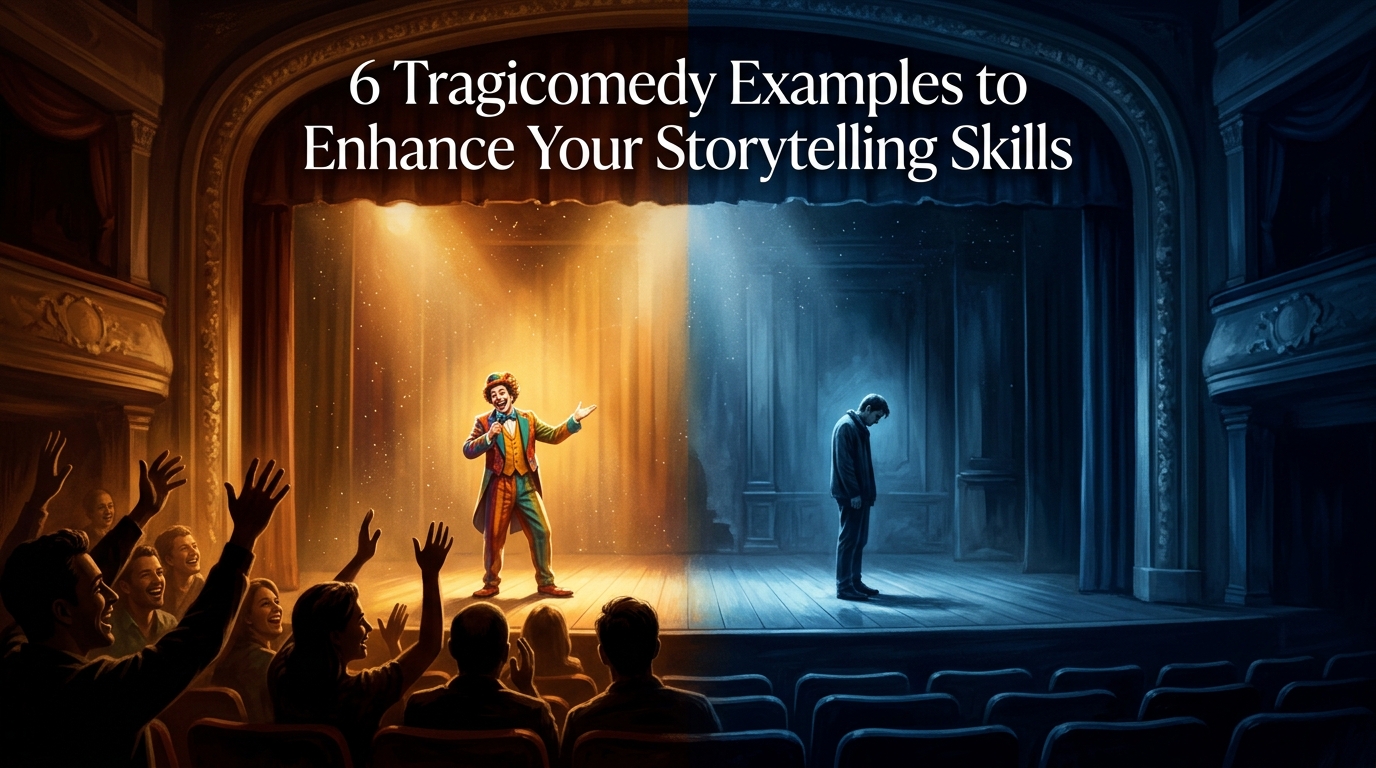
Tragicomedy is one of the most fascinating storytelling forms because it refuses to stay in a single emotional lane. It exists in the space where laughter and grief overlap, where absurdity softens pain, and where humor becomes a way to survive emotional collapse rather than escape it. Writers often underestimate how powerful this blend can be, but audiences have always responded deeply to stories that mirror real life—because real life is never purely tragic or purely comic. It is both, often at the same time.
The reason tragicomedy works so effectively is that it reflects emotional truth rather than genre expectation. A moment of laughter in a painful situation does not cancel the pain; it highlights it. Similarly, sorrow within humor does not weaken the humor; it deepens it. When used skillfully, tragicomedy becomes one of the most powerful tools a writer can master.
To understand how to use it effectively in storytelling, it helps to look at well-known tragicomedy examples from literature, theatre, film, and television. These works demonstrate how humor and tragedy can coexist without undermining each other, and instead elevate emotional resonance.
Understanding Tragicomedy as a Narrative Force
Before examining examples, it is important to understand what defines tragicomedy beyond the surface-level mix of humor and sadness. Tragicomedy is not simply a tragic story with jokes inserted or a comedy with a sad ending. It is a narrative structure where both emotional tones are essential and interdependent. The humor often arises from suffering, absurdity, or human contradiction, while the tragedy is often softened or made more complex through irony, wit, or emotional distance.
Historically, tragicomedy has been present since classical theatre, but it became more defined during the Renaissance and later evolved into modern storytelling across multiple mediums. Writers like Shakespeare blurred genre boundaries, while modern creators in film and television have refined the emotional layering even further.
The strength of tragicomedy lies in its ability to mirror real human experience, where people often laugh during grief, make jokes in stressful situations, and find irony in their own suffering. This emotional contradiction is what makes tragicomedy so relatable and powerful.
6 Tragicomedy Examples and Their Storytelling Techniques
| Title | Medium | Tragic Element | Comic Element | Key Storytelling Lesson |
| Hamlet | Play | Death, betrayal, madness | Wit, irony, dark humor | Use humor to deepen existential tension |
| The Catcher in the Rye | Novel | Alienation, grief | Sarcasm, teenage irony | Voice can balance emotional heaviness |
| Fargo | Film/TV | Murder, moral decay | Awkward humor, absurd dialogue | Contrast tone for emotional unpredictability |
| Jojo Rabbit | Film | War, loss, ideology | Childlike imagination, satire | Innocence can amplify tragedy |
| Fleabag | TV Series | Trauma, grief, loneliness | Breaking the fourth wall, humor | Direct audience engagement creates intimacy |
| Life Is Beautiful | Film | Holocaust, separation | Protective humor, fantasy | Humor can function as emotional survival |
1. Hamlet: Where Wit Becomes a Weapon Against Chaos
One of the earliest and most influential tragicomedies in Western literature is Hamlet. While it is often categorized as a tragedy, its comedic layers are impossible to ignore. The play constantly shifts between philosophical despair and sharp, ironic humor, particularly through Hamlet’s dialogue.
What makes this balance so powerful is that humor becomes a coping mechanism for existential crisis. Hamlet’s witty remarks, especially in moments of extreme emotional pressure, do not diminish the tragedy of his situation; instead, they intensify it. The audience becomes more aware of his psychological unraveling because of the contrast between his intelligence and his emotional collapse.
The storytelling lesson from Hamlet is that humor can be used to expose deeper philosophical and emotional conflict. When a character jokes in the middle of suffering, it reveals not only intelligence but also emotional fragmentation. This duality is what makes tragicomedy compelling.
2. The Catcher in the Rye: Sarcasm as Emotional Armor
In literature, The Catcher in the Rye offers a powerful example of tragicomedy through voice and perspective. The protagonist’s narrative is filled with sarcasm, observational humor, and cynical commentary, even while dealing with profound grief, alienation, and emotional instability.
What makes this tragicomic structure effective is that the humor is inseparable from the emotional pain. The narrator does not switch between being funny and being sad; instead, humor becomes his primary lens for interpreting the world. This creates a layered emotional experience for the reader, where laughter and sadness coexist in nearly every passage.
From a storytelling perspective, this example demonstrates the importance of narrative voice. A well-constructed voice can carry both comedic tone and emotional weight simultaneously. Writers can use internal monologue, irony, and subjective interpretation to create tragicomic depth without needing external comedic events.
3. Fargo: Absurdity Inside Violence
The world of Fargo is built on a foundation of crime and violence, yet it is consistently layered with dark humor and absurd situations. Whether in its original film form or its expanded television adaptation, the story thrives on the uncomfortable coexistence of brutality and comedy.
What makes Fargo particularly effective as a tragicomedy is its tone inconsistency. Characters often behave in ways that feel oddly polite, awkward, or irrational even in dangerous situations. This creates a sense of emotional dissonance that forces the audience to process tragedy through humor.
The storytelling lesson here is that humor does not have to come from jokes. It can come from behavior, timing, and contradiction. When serious events are handled with unexpected emotional tone, it creates a unique tragicomic rhythm that keeps the audience engaged while also emotionally unsettled.
4. Jojo Rabbit: Innocence in the Middle of Horror
Few modern films illustrate tragicomedy as clearly as Jojo Rabbit. The story takes place during World War II but is filtered through the perspective of a child whose imagination transforms reality into a distorted, often humorous version of itself.
The comedic element arises from the child’s innocence and imagined conversations, while the tragic reality remains ever-present beneath the surface. This contrast creates emotional tension that builds throughout the narrative, culminating in moments where humor abruptly gives way to devastating truth.
The key storytelling insight from Jojo Rabbit is that perspective determines tone. By filtering a tragic historical setting through innocence, the story becomes both heartbreaking and strangely humorous. Writers can use unreliable or limited perspective to create tragicomedy without changing the actual events of the story.
5. Fleabag: Humor as Emotional Exposure
The television series Fleabag is a modern masterclass in tragicomedy. The protagonist constantly breaks the fourth wall, directly engaging with the audience through sarcastic commentary, witty observations, and self-deprecating humor. However, beneath this humor lies deep emotional trauma, grief, and loneliness.
What makes Fleabag unique is that humor is not used to hide pain but to expose it. The audience is made complicit in the character’s emotional avoidance, and this creates an intimate tragicomic experience. The laughter is often uncomfortable because it is immediately followed by emotional vulnerability.
The storytelling lesson here is that breaking narrative boundaries can enhance tragicomedy. Direct audience address, shifting emotional tone, and self-aware humor can deepen emotional engagement while maintaining comedic rhythm.
6. Life Is Beautiful: Humor as Emotional Survival
The film Life Is Beautiful presents one of the most emotionally complex examples of tragicomedy. Set during the Holocaust, the story follows a father who uses humor and imagination to shield his child from the horrors of their environment.
The comedic elements are not meant to diminish the tragedy but to coexist with it as a form of emotional protection. The father’s humor becomes an act of love, transforming unbearable reality into something temporarily survivable.
This example teaches writers that tragicomedy can serve emotional function beyond storytelling. Humor can be symbolic, protective, and deeply meaningful, especially when used in extreme circumstances. It is not just about balance but about emotional purpose.
Why Tragicomedy Strengthens Storytelling
Tragicomedy works because it reflects how real human emotions actually function. In life, people rarely experience pure sadness or pure happiness for long periods. Even in painful situations, small ironic thoughts, nervous laughter, or absurd observations appear naturally. Similarly, even in happy moments, there can be an undercurrent of fear, memory, or emotional complexity. Tragicomedy captures this overlap instead of separating emotions into clean categories.
This emotional blending makes stories feel more realistic and relatable. Pure tragedy can sometimes feel overwhelming, while pure comedy can feel emotionally shallow if it avoids consequences. Tragicomedy sits between these extremes and creates balance. It allows the audience to feel laughter and pain within the same narrative space, which makes the emotional impact stronger and more memorable.
It also prevents storytelling from becoming predictable. When a story can shift between humor and sadness, the audience stays emotionally alert. They cannot settle into one fixed expectation, which increases engagement. This emotional unpredictability mirrors real life, where situations often shift tone without warning.
For writers, tragicomedy is powerful because it adds depth to characters and situations. Characters feel more human when they can express humor in difficult moments or show vulnerability inside comedic scenes. Instead of being one-dimensional, they become layered individuals with realistic emotional responses. This is what makes tragicomedy such a strong tool for meaningful storytelling.
Crafting Tragicomedy in Your Own Writing
Writing tragicomedy is less about adding jokes to serious scenes and more about blending emotional tones naturally within the same moment. The goal is not to separate humor and tragedy but to let them coexist in a believable way.
One effective method is emotional layering. A single scene can carry both sadness and humor if handled carefully. For example, a character dealing with loss might remember something oddly funny about the person they lost. The humor does not cancel the grief; instead, it deepens it by showing how memory and emotion overlap.
Character voice is another important element. The way a character sees the world can naturally create tragicomedy. A sarcastic or self-aware character might describe painful situations in a humorous way, not because the situation is funny, but because humor becomes a coping mechanism. This makes the emotional tone feel natural rather than forced.
Situational irony also plays a big role. When expectations and reality clash, humor and tragedy can appear at the same time. A moment can be funny because it is unexpected, but also sad because of what is lost or revealed in that moment. This dual reaction is the core of tragicomic storytelling.
Timing is equally important. Placing a humorous line just before or after an emotional moment can change the entire tone of a scene. When done correctly, it creates emotional contrast that feels smooth and realistic instead of jarring.
Ultimately, writing tragicomedy requires emotional honesty. Instead of trying to force humor or sadness, writers should observe how emotions naturally behave in real life. When this is done well, tragicomedy feels effortless, and the story becomes more engaging, human, and emotionally layered.
Conclusion
Tragicomedy is one of the most powerful storytelling tools because it refuses emotional simplicity. From Shakespearean wit to modern cinematic storytelling, it continues to evolve as writers explore the boundaries between laughter and grief. Works like Hamlet, The Catcher in the Rye, Fargo, Jojo Rabbit, Fleabag, and Life Is Beautiful show that the most memorable stories are often the ones that refuse to choose between joy and sorrow.
For writers, mastering tragicomedy means learning to hold emotional contradictions in the same space. When done well, it creates stories that feel not only entertaining but deeply, unmistakably human.
