
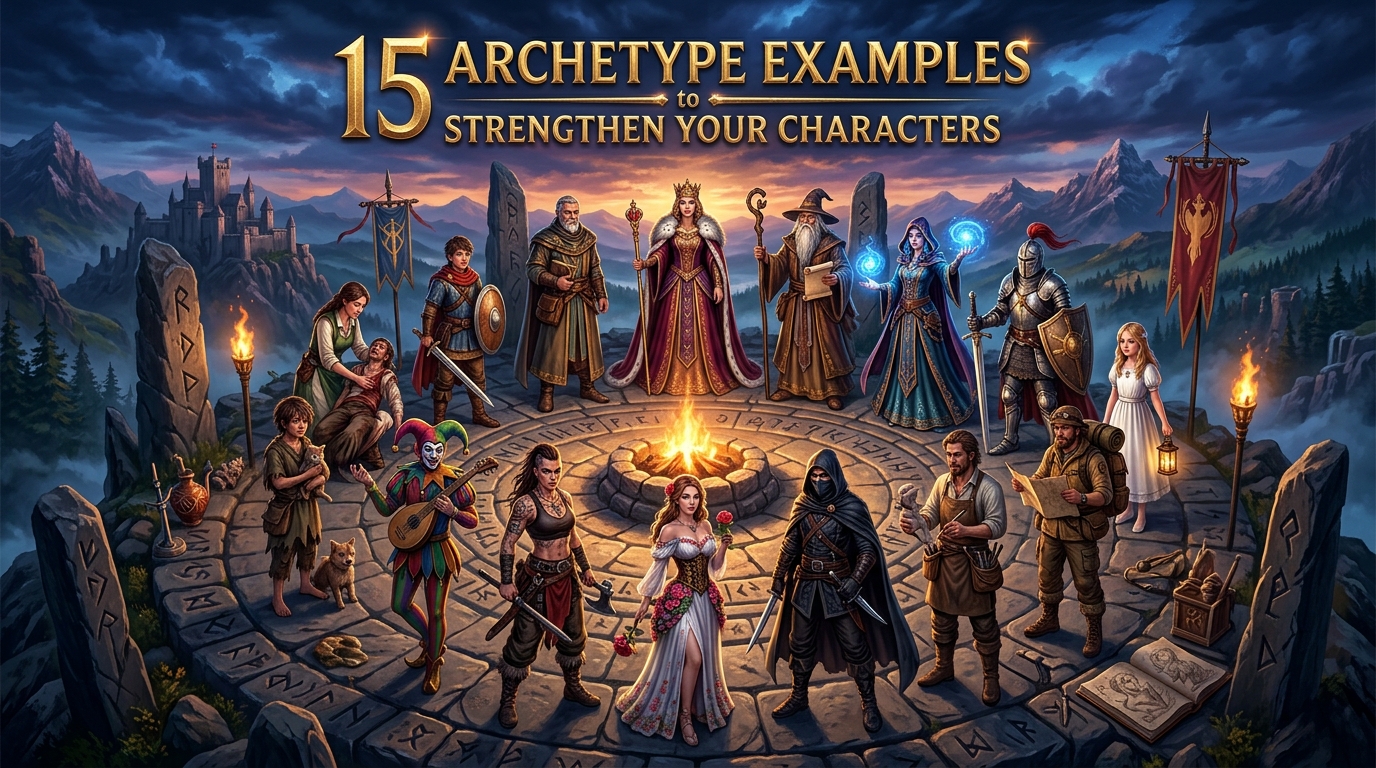
Stories do not emerge from nothing. Even the most original narratives are quietly shaped by patterns that have existed for centuries, patterns rooted in human psychology, shared fears, emotional desires, and cultural memory. These patterns are what we call archetypes, and despite how often they are misunderstood as clichés, they remain one of the most powerful tools a writer can use. The idea of archetypes was famously explored by Carl Jung, who believed that certain character types exist in the collective unconscious, meaning they resonate across cultures and time periods because they reflect universal human experiences.
In modern storytelling, where audiences consume content across novels, films, and streaming platforms, the demand for compelling characters has never been higher. Readers are no longer satisfied with surface-level personalities or predictable arcs. They want characters who feel layered, contradictory, and emotionally real. Archetypes help achieve this by providing a foundation that writers can build upon, twist, and reinvent. When used effectively, they do not make a story predictable; they make it resonate. This blog explores fifteen archetype examples in depth, showing how each one can strengthen your characters and give your narrative a deeper emotional core.
Understanding Archetypes Beyond Stereotypes
Before exploring specific examples, it is important to understand what archetypes truly are and what they are not. Archetypes are not rigid molds that force characters into predictable roles. Instead, they are starting points, frameworks that suggest certain tendencies, motivations, and emotional patterns. A stereotype, on the other hand, is fixed and often shallow, reducing a character to a single trait or assumption.
When writers confuse archetypes with stereotypes, their characters tend to feel flat. But when they treat archetypes as flexible structures, something more interesting happens. A hero can be afraid. A mentor can be wrong. A villain can be sympathetic. This flexibility is what transforms archetypes into powerful storytelling tools. The key lies in layering complexity, allowing characters to evolve beyond their initial roles and surprise both the reader and the writer.
The Hero: A Journey Defined by Transformation
The hero archetype is one of the oldest and most recognizable in storytelling, yet it remains endlessly adaptable. At its core, the hero represents transformation. This character begins in a place of limitation, whether emotional, physical, or moral, and gradually evolves through a series of challenges that force growth.
What makes the hero compelling is not their strength but their vulnerability. A flawless hero rarely feels real, but one who struggles with doubt, fear, or internal conflict becomes deeply relatable. The hero’s journey is not just about defeating an external enemy; it is about confronting an internal weakness. This dual conflict creates a layered narrative where every victory feels earned. When writing a hero, focusing on what they lack is often more effective than emphasizing what they possess.
The Mentor: A Guide Shaped by Experience
The mentor archetype serves as a guide, offering wisdom, tools, or perspective that helps the hero navigate their journey. However, a strong mentor is never just a source of knowledge. They are shaped by their own past, often carrying regrets, failures, or unfinished stories that influence how they guide others.
This complexity adds emotional depth to the mentor’s role. Instead of simply providing answers, they may challenge the hero, push them into uncomfortable situations, or even make mistakes. In some cases, the mentor’s limitations become a crucial part of the narrative, forcing the hero to eventually step out of their shadow and find their own path.
The Shadow: A Mirror of Inner Conflict
The shadow archetype is often seen as the antagonist, but its role goes far beyond opposition. The shadow represents aspects of the hero that are repressed, denied, or feared. In this sense, the conflict between hero and shadow becomes deeply personal.
A well-developed shadow is not purely evil. Instead, they operate from a belief system that makes sense to them, even if it leads to destructive actions. This moral complexity makes the story more engaging because the conflict feels inevitable rather than arbitrary. When the shadow reflects the hero’s potential for darkness, the narrative gains emotional intensity and thematic depth.
The Trickster: Breaking Patterns and Revealing Truths
The trickster archetype thrives on disruption. This character challenges rules, exposes hypocrisy, and introduces unpredictability into the story. While often associated with humor, the trickster’s role is far more significant. They force other characters to confront truths they might otherwise avoid.
By destabilizing the narrative, the trickster creates opportunities for growth and revelation. Their actions may seem chaotic on the surface, but they often lead to moments of clarity. A well-written trickster is both entertaining and meaningful, serving as a catalyst for change within the story.
The Caregiver: Compassion with Consequences
The caregiver archetype is driven by empathy and a desire to protect others. This character often serves as the emotional anchor of the story, providing support and stability in moments of crisis.
However, the caregiver’s strength can also become a source of conflict. Their tendency to prioritize others may lead to self-sacrifice or even emotional burnout. Exploring this tension adds depth to the character, showing that compassion is not always easy or straightforward. A caregiver who struggles with their own needs becomes far more compelling than one who exists solely to help others.
The Rebel: Challenging Authority and Norms
The rebel archetype is defined by resistance. This character questions authority, challenges systems, and seeks change, often at significant personal risk. The rebel’s journey is driven by a desire for freedom or justice, but their motivations can vary widely.
What makes the rebel interesting is the tension between idealism and reality. Are they fighting for a meaningful cause, or are they driven by personal anger? Do their actions lead to positive change, or do they create unintended consequences? These questions add layers to the character and prevent them from becoming one-dimensional.
The Lover: Emotion as Strength and Vulnerability
The lover archetype is guided by passion, whether it manifests as romantic love, creative expression, or deep loyalty. This character brings emotional intensity to the story, often serving as a reminder of what is at stake on a personal level.
The lover’s journey often involves navigating the balance between desire and reality. Their emotions can lead to profound connections, but they can also cloud judgment and create conflict. This duality makes the lover both relatable and unpredictable, adding richness to the narrative.
The Explorer: Driven by Curiosity and Discovery
The explorer archetype is fueled by a desire to understand the unknown. This character seeks new experiences, environments, and perspectives, often leaving behind comfort and familiarity.
While the explorer’s journey is outwardly focused, it also carries an internal dimension. Their constant search for meaning can lead to questions about identity and belonging. This tension between movement and stability creates a compelling narrative arc, where discovery becomes both a strength and a challenge.
The Ruler: The Weight of Power
The ruler archetype represents authority, leadership, and control. This character often holds a position of power and must navigate the responsibilities that come with it.
A compelling ruler is defined by the choices they make under pressure. Their decisions affect not only themselves but also those they lead, creating a constant tension between personal desire and duty. This internal conflict adds depth to the character, showing that power is not just a privilege but a burden.
The Innocent: Preserving Hope in a Complex World
The innocent archetype embodies optimism, trust, and a belief in goodness. This character often serves as a moral compass, reminding others of simpler truths.
However, the innocent’s journey is not without challenges. As they encounter the complexities of the world, they must decide whether to maintain their beliefs or adapt to reality. A well-written innocent evolves without losing their core essence, making their story both fragile and inspiring.
The Creator: Building Meaning Through Expression
The creator archetype is driven by the need to make something that matters. Whether they are artists, inventors, or visionaries, these characters are defined by their desire to bring ideas to life.
Their journey often involves grappling with perfectionism, self-doubt, and the fear of failure. This internal struggle adds depth to the character, showing that creation is not just about talent but also about resilience and persistence.
The Everyman: Finding Strength in Relatability
The everyman archetype represents the ordinary individual placed in extraordinary circumstances. This character connects with audiences through authenticity and realism.
What makes the everyman compelling is their grounded perspective. They react to situations in ways that feel genuine, allowing readers to see themselves in the story. Their journey often highlights the idea that heroism can emerge from the most unexpected places.
The Sage: The Pursuit of Truth
The sage archetype seeks knowledge and understanding. This character often provides insight, guidance, or philosophical perspective within the narrative.
A nuanced sage recognizes the limits of their own knowledge. This humility adds depth, preventing them from becoming distant or overly authoritative. Their role is not just to provide answers but to encourage others to ask meaningful questions.
The Jester: Humor with Insight
The jester archetype uses humor to entertain, but also to reveal deeper truths. This character often acts as a mirror, reflecting the absurdities and contradictions of the world.
A strong jester balances comedy with purpose. Their humor is not empty; it carries meaning, challenging other characters and the audience to see things differently. This makes them an essential part of many narratives.
The Magician: Transformation and Possibility
The magician archetype represents change, often in subtle or symbolic ways. This character understands how transformation works and helps others see beyond their limitations.
Their influence may not always be direct, but it is always significant. By shifting perspectives and guiding change, the magician adds a sense of wonder and possibility to the story.
A Quick Comparison of Archetypes
| Archetype | Core Motivation | Common Strength | Potential Weakness |
| Hero | Growth and purpose | Courage | Self-doubt |
| Mentor | Guidance | Wisdom | Rigidity |
| Shadow | Control or belief | Determination | Obsession |
| Trickster | Disruption | Creativity | Chaos |
| Caregiver | Protection | Empathy | Self-sacrifice |
| Rebel | Change | Courage | Recklessness |
| Lover | Connection | Passion | Impulsiveness |
| Explorer | Discovery | Curiosity | Restlessness |
| Ruler | Stability | Leadership | Control issues |
| Innocent | Hope | Optimism | Naivety |
| Creator | Expression | Imagination | Perfectionism |
| Everyman | Belonging | Relatability | Insecurity |
| Sage | Truth | Insight | Detachment |
| Jester | Humor | Wit | Avoidance |
| Magician | Transformation | Vision | Manipulation |
Conclusion: Turning Archetypes into Living Characters
Archetypes are not shortcuts to character development; they are foundations. They provide structure, but it is the writer’s responsibility to add depth, contradiction, and individuality. A character becomes memorable not because they fit an archetype perfectly, but because they transcend it.
When you approach archetypes with flexibility and intention, they become powerful tools for storytelling. They help you understand your characters more deeply, shape their journeys more effectively, and create narratives that resonate on a human level. In the end, the goal is not to follow archetypes but to use them as a starting point for something richer, more layered, and ultimately more real.
